
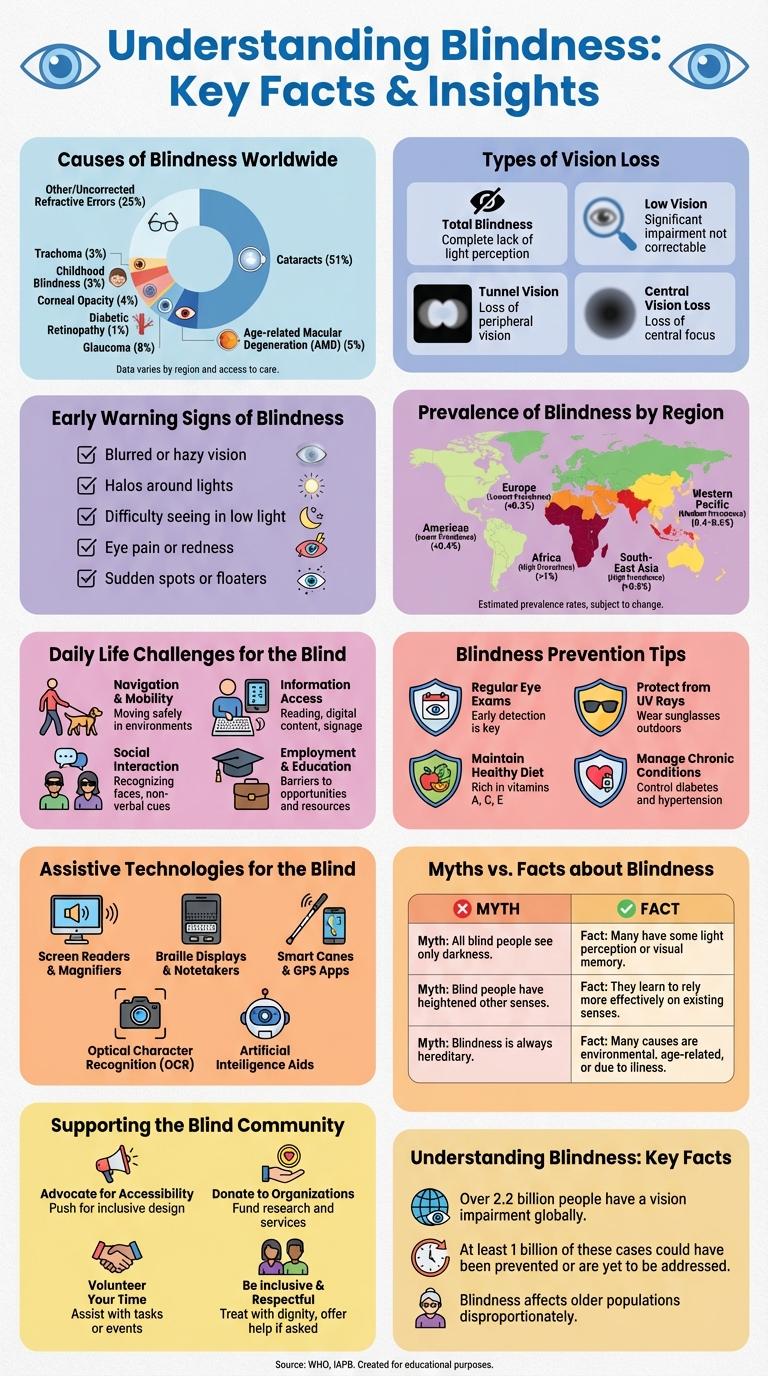
Blindness affects millions worldwide, impacting daily life and independence. Understanding causes, prevention, and available treatments is crucial for raising awareness and support. Infographics provide a clear, visual way to convey essential information about blindness and vision loss.
Understanding Blindness: Key Facts
Blindness affects over 285 million people worldwide, with 39 million classified as blind. The majority of these cases are due to preventable or treatable conditions such as cataracts and glaucoma.
Visual impairment significantly impacts quality of life, limiting independence and access to education. Early diagnosis and treatment can improve outcomes, emphasizing the importance of regular eye exams.
Causes of Blindness Worldwide
| Cause of Blindness | Worldwide Percentage |
|---|---|
| Cataracts | 51% |
| Glaucoma | 8% |
| Age-Related Macular Degeneration (AMD) | 5% |
| Diabetic Retinopathy | 4% |
| Corneal Opacity | 4% |
Types of Vision Loss
What are the main types of vision loss? Vision loss can vary depending on the affected part of the eye or brain. Understanding these types helps in identifying appropriate treatments and accommodations.
| Type of Vision Loss | Description |
|---|---|
| Peripheral Vision Loss | Loss of side vision, often caused by glaucoma or retinal diseases. |
| Central Vision Loss | Loss of sharp, detailed vision in the center, commonly due to macular degeneration. |
| Night Blindness | Difficulty seeing in low light, caused by conditions like retinitis pigmentosa. |
| Color Blindness | Inability to distinguish certain colors, mostly inherited from genetic factors. |
| Total Blindness | Complete lack of vision, resulting from severe eye injury or neurological disorders. |
Early Warning Signs of Blindness
Blindness often develops gradually, making early detection crucial for effective treatment. Key warning signs include sudden vision loss, persistent blurred vision, and difficulty seeing in low light. Recognizing these symptoms promptly can help prevent further deterioration and preserve eye health.
Prevalence of Blindness by Region
Blindness affects millions of people worldwide, with prevalence rates varying significantly by region. Low-income areas experience higher rates of blindness due to limited access to healthcare and preventive measures.
The regions with the highest prevalence include Sub-Saharan Africa, South Asia, and parts of Southeast Asia, where infectious diseases and malnutrition remain major causes. Developed regions like North America and Europe report lower blindness rates, primarily related to age-related conditions. Global efforts focus on improving eye care accessibility and preventing avoidable blindness.
Daily Life Challenges for the Blind
Blindness significantly impacts the ability to perform everyday tasks, leading to various challenges in daily life. Navigating environments, accessing information, and maintaining independence are core difficulties faced by blind individuals.
- Mobility Challenges - Navigating crowded or unfamiliar spaces requires additional tools and training such as white canes or guide dogs.
- Access to Information - Reading printed materials and digital content demands the use of Braille, screen readers, or audio books.
- Household Management - Performing tasks like cooking, cleaning, and organizing requires adaptive techniques to ensure safety and efficiency.
Blindness Prevention Tips
Blindness affects millions globally, but many cases can be prevented through simple eye care practices. Regular eye exams, protecting eyes from harmful UV rays, and managing chronic conditions like diabetes significantly reduce the risk of vision loss. Early detection and treatment of eye diseases are crucial in maintaining healthy eyesight.
Assistive Technologies for the Blind
Blindness affects millions worldwide, creating challenges in daily life that assistive technologies help to overcome. These innovations empower individuals by enhancing accessibility and independence.
- Screen Readers - Software like JAWS and NVDA convert text to speech, enabling blind users to navigate digital content.
- Braille Displays - Devices that translate on-screen text into braille, allowing tactile reading for blind individuals.
- Navigation Aids - GPS-based tools such as the WeWALK smart cane provide audio directions and obstacle detection to support mobility.
Myths vs. Facts about Blindness
Blindness affects millions worldwide, but many misconceptions persist about this condition. Understanding the truths can improve awareness and support for those affected.
Myth: All blind people can see complete darkness. Fact: Blindness varies from partial vision loss to total blindness, and experiences differ widely.
Myth: Blind individuals cannot live independently. Fact: With tools like Braille, screen readers, and mobility training, many lead full, autonomous lives.