
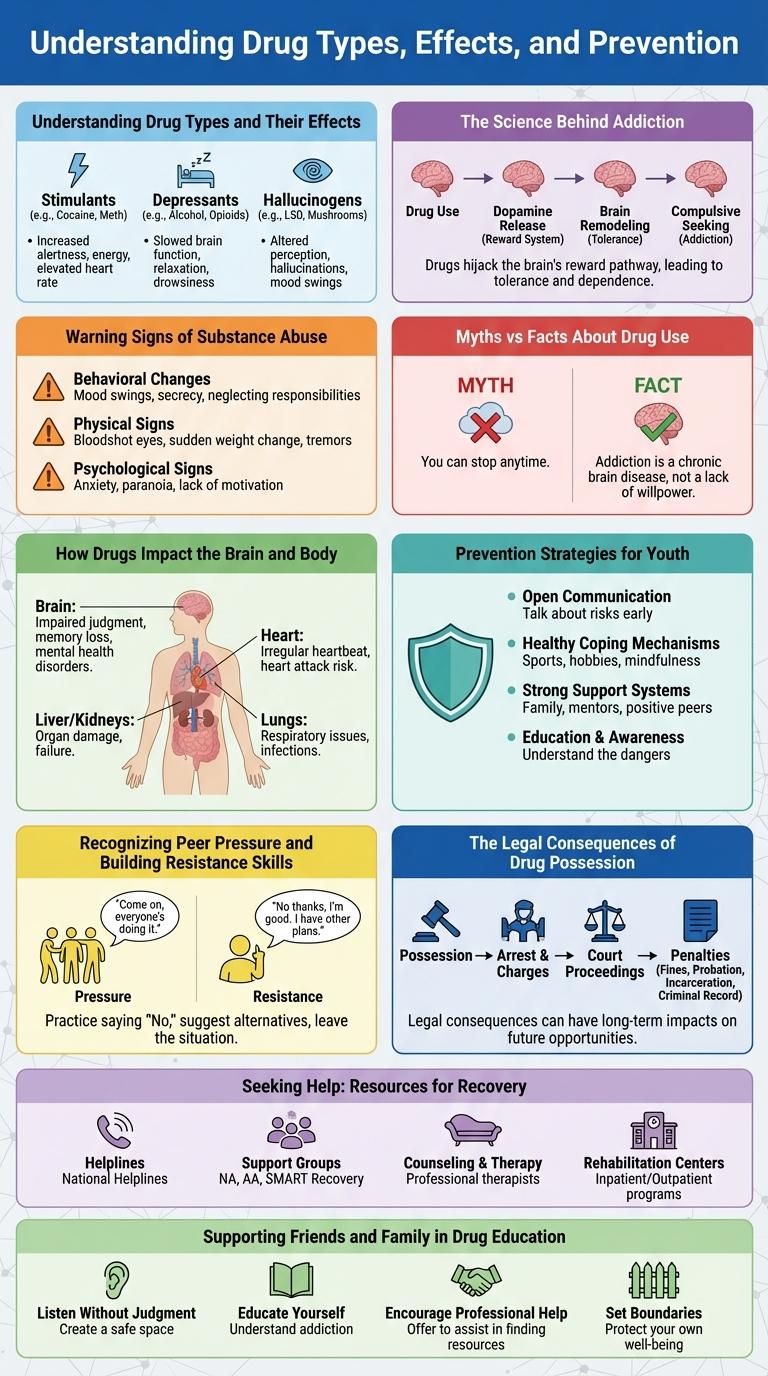
Effective drug education empowers individuals by providing clear, accurate information about the risks and consequences of substance use. Visual infographics simplify complex data into engaging, easy-to-understand formats that enhance learning and retention. By combining statistics, facts, and preventive strategies, these tools foster informed decision-making and promote healthier lifestyles.
Understanding Drug Types and Their Effects
Drug education plays a vital role in raising awareness about different drug types and their distinct effects on the human body. Understanding these substances helps individuals make informed choices and recognize potential health risks.
- Stimulants - Increase alertness, energy, and heart rate by stimulating the central nervous system.
- Depressants - Slow down brain function and reduce anxiety by depressing the central nervous system.
- Hallucinogens - Alter perception, mood, and cognitive processes, causing hallucinations and sensory distortions.
The Science Behind Addiction
Drug addiction is a chronic brain disorder characterized by compulsive substance use despite harmful consequences. Understanding the science behind addiction helps in developing effective prevention and treatment strategies.
- Neuroplasticity - Addiction changes brain circuits involved in reward, motivation, and memory, altering behavior and decision-making.
- Dopamine Release - Drugs increase dopamine levels in the brain, reinforcing drug-taking behavior and creating dependency.
- Genetic Factors - Hereditary influences contribute to an individual's vulnerability to addiction by affecting brain chemistry and response to drugs.
Scientific research continues to uncover how addiction reshapes brain function, aiding recovery efforts and public health approaches.
Warning Signs of Substance Abuse
| Warning Sign | Description |
|---|---|
| Behavioral Changes | Sudden mood swings, aggression, or withdrawal from family and friends. |
| Physical Symptoms | Bloodshot eyes, unusual body odors, frequent nosebleeds, or tremors. |
| Academic or Work Decline | Drop in grades, frequent absences, or loss of interest in tasks and responsibilities. |
| Changes in Appearance | Neglect of personal hygiene or a noticeable change in clothing style. |
| Secretive Behavior | Hiding substances, lying about activities, or avoiding social situations. |
Myths vs Facts About Drug Use
Is drug use always linked to criminal behavior? Many people believe drug users are criminals, but drug use is a complex health issue affecting diverse populations. Understanding facts rather than myths helps promote effective education and support.
Do prescription drugs pose no risk of addiction? Prescription medications can be addictive if misused, contrary to the myth they are completely safe. Proper education on drug use includes awareness of the risks associated with all substance types.
Can occasional drug use be harmless? Occasional drug use can still lead to serious health problems and addiction, debunking the myth that it is harmless. Drug education emphasizes that any drug use carries potential risks.
Are all drug users socially isolated? Many believe drug users are isolated, but drug use occurs in all social groups and environments. Dispelling stereotypes helps create supportive community responses to drug challenges.
Is it impossible to recover from drug addiction? Recovery is achievable with the right treatment and support, challenging the myth that addiction is permanent. Drug education promotes hope and access to recovery resources.
How Drugs Impact the Brain and Body
Drugs affect the brain by altering neurotransmitter function, which disrupts normal communication between neurons. This can lead to changes in mood, perception, and behavior.
In the body, drug use can damage organs such as the heart, liver, and lungs. Long-term use often impairs immune function and increases the risk of chronic diseases.
Prevention Strategies for Youth
Effective drug education for youth is essential in preventing substance abuse. Educating young people about the risks and consequences can empower informed decisions and promote healthy lifestyles.
Prevention strategies include school-based programs, community involvement, and parental guidance. These approaches build resilience, improve awareness, and reduce the likelihood of early drug experimentation.
Recognizing Peer Pressure and Building Resistance Skills
Understanding peer pressure is crucial for making informed decisions about drug use. Developing strong resistance skills empowers individuals to confidently say no and maintain their well-being.
- Identify Peer Pressure Signals - Recognize verbal and non-verbal cues that indicate attempts to influence your choices.
- Assertive Communication - Use clear and confident language to express your refusal without ambiguity.
- Seek Support Networks - Surround yourself with friends and mentors who respect your decisions and promote healthy habits.
The Legal Consequences of Drug Possession
Possessing illegal drugs can lead to severe legal consequences, including fines, imprisonment, and a permanent criminal record. Laws vary by country and state, but penalties generally increase with the amount and type of drug found.
First-time offenders may face probation or mandatory drug education programs, while repeat offenses often result in harsher sentences. Drug possession charges can impact employment opportunities and travel eligibility. Understanding the legal risks is crucial to making informed decisions about drug use.
Seeking Help: Resources for Recovery
Effective drug education emphasizes the importance of seeking help through professional recovery resources. Resources such as rehabilitation centers, counseling services, and support groups provide essential assistance for individuals battling substance abuse. Accessing these resources early improves recovery outcomes and promotes long-term sobriety.