
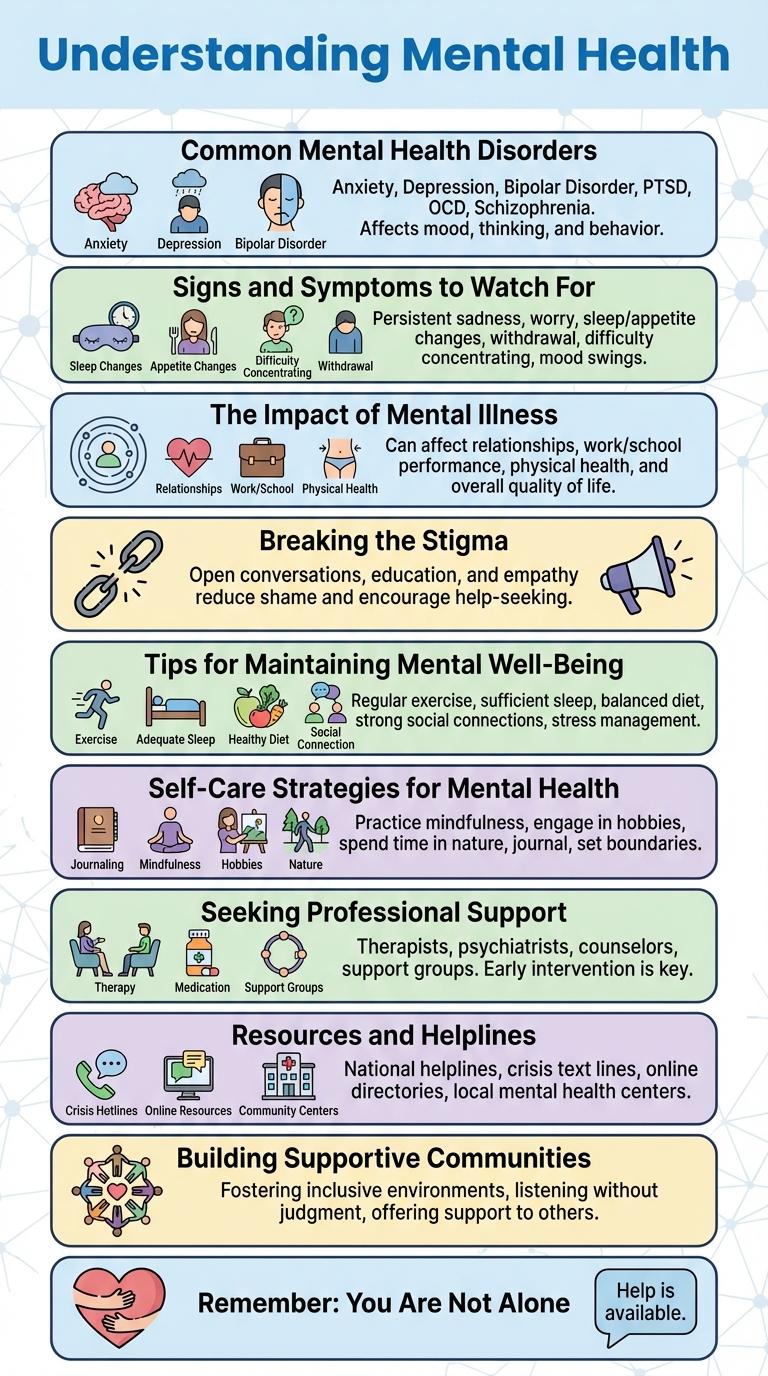
Understanding mental health is essential for overall well-being and productivity. This infographic highlights key statistics, common challenges, and effective strategies for managing mental health. Visualizing this information helps raise awareness and promotes proactive support.
Understanding Mental Health
| Aspect | Details |
|---|---|
| Definition | Mental health refers to emotional, psychological, and social well-being impacting thoughts, feelings, and behavior. |
| Importance | Good mental health supports stress management, productive work, and strong relationships. |
| Common Conditions | Anxiety, depression, bipolar disorder, and schizophrenia are widely recognized mental health disorders. |
| Signs & Symptoms | Changes in mood, withdrawal, fatigue, changes in sleep or appetite, and difficulty concentrating. |
| Support Strategies | Therapy, medication, lifestyle changes, social support, and self-care activities improve mental health. |
Common Mental Health Disorders
Mental health disorders affect millions globally, impacting daily functioning and quality of life. Recognizing common disorders helps in early intervention and effective management.
- Depression - A mood disorder characterized by persistent sadness and loss of interest in activities.
- Anxiety Disorders - Involve excessive fear or worry, causing significant distress and impairment.
- Bipolar Disorder - Marked by extreme mood swings ranging from manic highs to depressive lows.
Signs and Symptoms to Watch For
Mental health is crucial for overall well-being, yet signs and symptoms often go unnoticed. Common indicators include persistent sadness, excessive worry, and changes in sleep or appetite. Early recognition of these symptoms can lead to effective support and treatment.
The Impact of Mental Illness
Mental illness affects millions worldwide, influencing emotional, psychological, and social well-being. Its impact extends beyond individuals, affecting families, workplaces, and communities.
Conditions such as depression, anxiety, and bipolar disorder can reduce productivity and increase healthcare costs. Early intervention and mental health awareness significantly improve outcomes and quality of life.
Breaking the Stigma
Mental health affects millions worldwide, yet stigma often prevents individuals from seeking help. Breaking the stigma promotes understanding and support for those struggling.
Stigma leads to misconceptions, discrimination, and isolation around mental health issues. Open conversations about mental health encourage acceptance and reduce fear. Education and awareness campaigns play a critical role in changing societal attitudes.
Tips for Maintaining Mental Well-Being
How can you maintain your mental well-being daily? Prioritizing self-care and establishing healthy routines support emotional balance. Small, consistent actions contribute to long-term mental health.
What role does physical activity play in mental health? Regular exercise releases endorphins that reduce stress and anxiety. Even brief, daily movement improves mood and cognitive function.
How important is social connection for mental wellness? Engaging with supportive friends or family reduces feelings of loneliness. Positive relationships foster resilience during challenging times.
Why should you practice mindfulness and relaxation techniques? Mindfulness helps manage negative thoughts and increase self-awareness. Techniques like meditation lower stress and enhance emotional regulation.
How does sleep impact mental health? Quality sleep restores brain functioning and emotional stability. Establishing a consistent sleep schedule improves concentration and mood.
Self-Care Strategies for Mental Health
Self-care strategies play a crucial role in maintaining and improving mental health. These practices help reduce stress and promote emotional well-being.
Effective self-care includes regular physical activity, adequate sleep, and balanced nutrition. Mindfulness techniques and social connections also support mental resilience.
Seeking Professional Support
Seeking professional support is a crucial step in managing mental health effectively. Early intervention by mental health experts can lead to better long-term outcomes.
- Access to Expertise - Mental health professionals provide specialized knowledge and evidence-based treatments tailored to individual needs.
- Improved Coping Strategies - Therapy helps develop skills to manage stress, anxiety, and depression more effectively.
- Confidential and Safe Environment - Professionals offer a private space for open discussion without judgment, promoting healing and growth.
Consulting a mental health professional is a proactive way to enhance emotional well-being and resilience.
Resources and Helplines
Mental health resources and helplines provide vital support for individuals facing emotional and psychological challenges. Access to these services can improve well-being and foster recovery.
Helplines offer immediate assistance through trained professionals available 24/7 to guide callers in crisis or distress.
- National Suicide Prevention Lifeline - A free, confidential support service helping people in suicidal crisis or emotional distress.
- Crisis Text Line - Text-based counseling service accessible anytime for urgent mental health support.
- Mental Health America Resources - Comprehensive tools, screening tests, and guidance for various mental health conditions.