
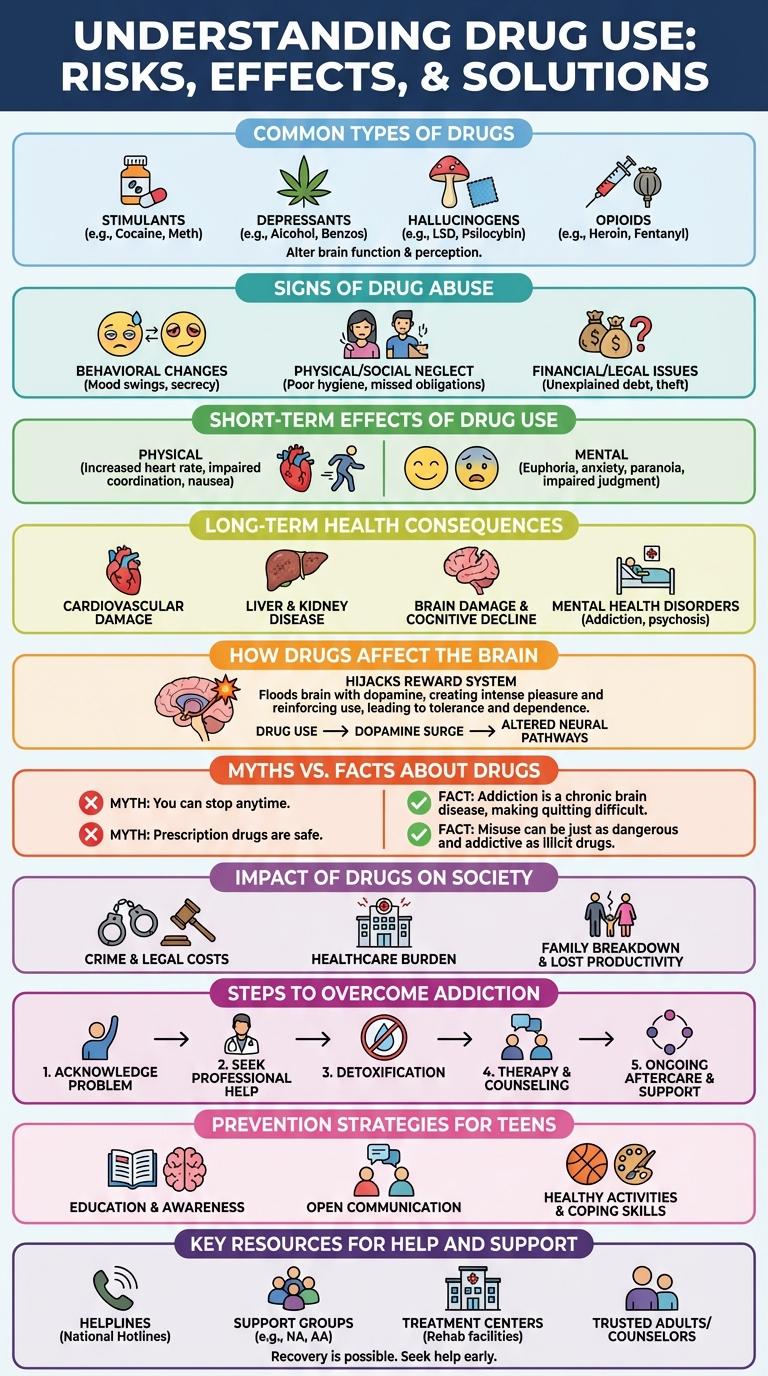
Infographics about drugs provide a clear visual representation of complex information, making it easier to understand key facts and statistics. These visuals highlight trends, health risks, and the impact of substance abuse on society. Clear infographics increase awareness and support informed decision-making regarding drug use and prevention.
Common Types of Drugs
Drugs are substances that alter the mind or body and can be categorized into various common types. Understanding these types helps in recognizing their effects and risks.
- Stimulants - Drugs like cocaine and amphetamines increase alertness and energy.
- Depressants - Substances such as alcohol and benzodiazepines slow down brain function and induce relaxation.
- Opioids - Pain-relieving drugs like heroin and prescription painkillers act on the nervous system to reduce pain.
Signs of Drug Abuse
| Signs of Drug Abuse | Description |
|---|---|
| Behavioral Changes | Sudden mood swings, increased secrecy, withdrawal from family and friends |
| Physical Symptoms | Red or glassy eyes, unusual body odors, poor hygiene, sudden weight loss or gain |
| Psychological Signs | Confusion, anxiety, paranoia, memory problems, decreased motivation |
| Academic or Work Issues | Decline in performance, frequent absences, lack of focus or interest |
| Financial Problems | Unexplained need for money, borrowing or stealing, sudden financial difficulties |
Short-Term Effects of Drug Use
Short-term effects of drug use vary depending on the substance but commonly include altered mood, impaired judgment, and physical symptoms such as increased heart rate and dizziness. Immediate consequences can range from euphoria and relaxation to anxiety, paranoia, and nausea. Understanding these effects helps in recognizing drug use and mitigating potential health risks.
Long-Term Health Consequences
Long-term drug use can severely impact physical and mental health, leading to chronic illnesses and cognitive decline. Understanding these consequences is essential for prevention and recovery efforts.
- Brain Damage - Prolonged drug use alters brain structure, causing memory loss, impaired decision-making, and emotional instability.
- Cardiovascular Diseases - Chronic use increases the risk of heart attacks, hypertension, and stroke due to vascular damage.
- Liver and Kidney Failure - Toxic substances in drugs strain these organs, often resulting in irreversible damage and organ failure.
Preventing long-term health consequences requires early intervention and sustained treatment strategies.
How Drugs Affect the Brain
How do drugs impact brain function?
Drugs alter the communication between brain cells by affecting neurotransmitter activity. This can lead to changes in mood, perception, and behavior.
Which part of the brain is most affected by drugs?
The limbic system, especially the reward circuit, is heavily influenced by drug use. This area controls feelings of pleasure and motivation.
What role do neurotransmitters play in drug effects?
Neurotransmitters carry signals between neurons and drugs can mimic or block their action. This disruption can cause euphoria or impair normal brain function.
Can drug use cause long-term brain changes?
Repeated drug exposure can lead to structural and chemical changes in the brain. These changes may result in addiction and cognitive impairments.
How does drug addiction affect brain health?
Addiction rewires brain pathways, making it difficult to feel pleasure from natural rewards. This leads to compulsive drug-seeking behavior despite negative consequences.
Myths vs. Facts About Drugs
Many misconceptions surround drug use and addiction, often leading to stigma and misinformation. Understanding the truth helps promote better health and support for those impacted by drugs.
- Myth: Drug addiction is a choice. Addiction is a complex brain disease influenced by genetics, environment, and behavior, not simply a matter of willpower.
- Myth: Only illegal drugs are harmful. Prescription drugs and legal substances like alcohol can also lead to dependence and serious health issues.
- Myth: You can quit using drugs anytime you want. Overcoming addiction often requires medical treatment, psychological support, and sustained effort.
Impact of Drugs on Society
Drug abuse significantly affects society by increasing healthcare costs and burdening medical facilities. The rise in addiction-related illnesses leads to more emergency room visits and long-term treatment expenses.
Crime rates often escalate due to drug-related activities, including trafficking and violence. Communities face social instability, with families suffering from the consequences of addiction and loss of productivity in the workforce.
Steps to Overcome Addiction
Overcoming drug addiction requires a structured approach that addresses both physical dependence and psychological triggers. Key steps include acknowledging the problem, seeking professional help, and committing to long-term recovery strategies.
Detoxification helps manage withdrawal symptoms safely under medical supervision. Continuous therapy, support groups, and lifestyle changes are essential to prevent relapse and rebuild a healthy life.
Prevention Strategies for Teens
Preventing drug use among teens requires targeted education and community support. Early intervention can reduce the risk of substance abuse and promote healthy decision-making.
Effective strategies include school-based programs that teach refusal skills and the consequences of drug use. Parental involvement and open communication play a critical role in prevention efforts. Access to extracurricular activities offers teens positive alternatives that reduce the temptation to use drugs.