
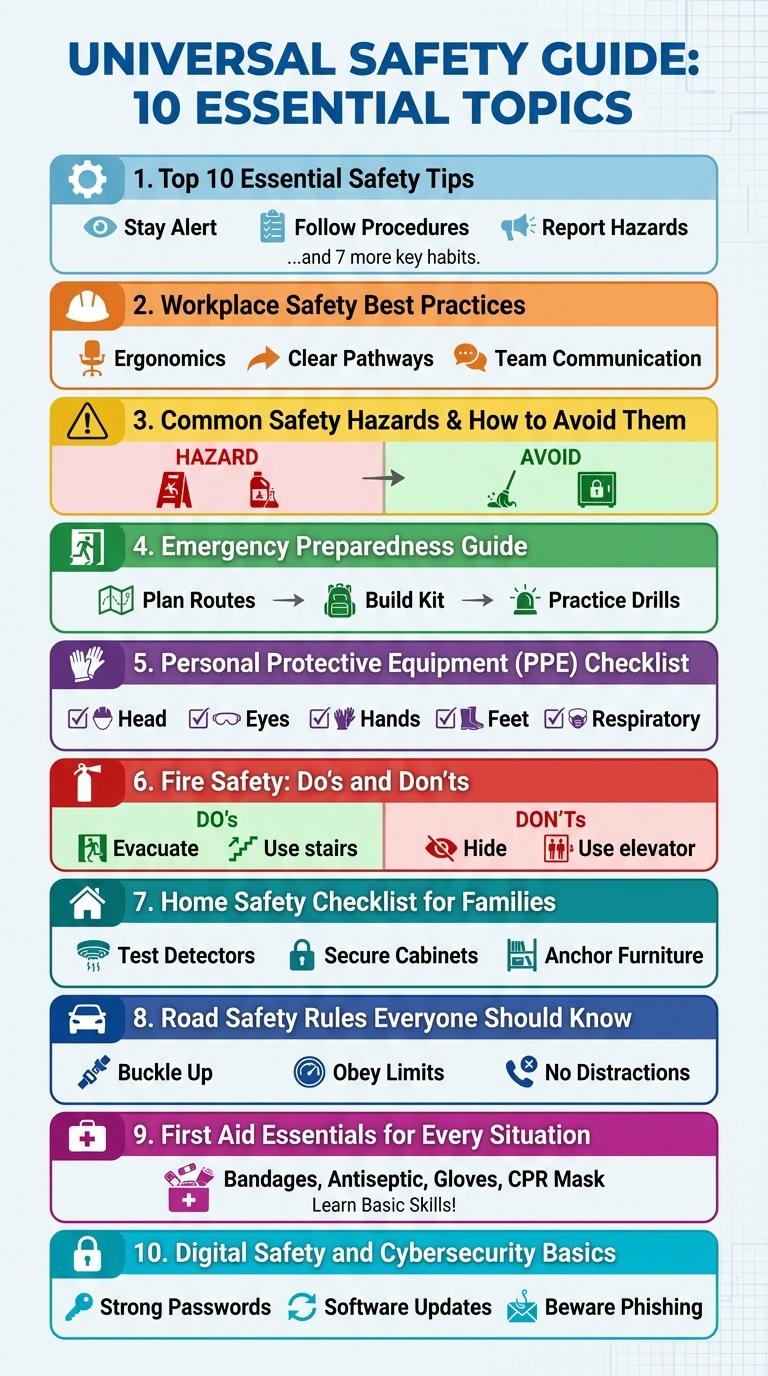
Infographics about safety visually communicate essential guidelines and precautions to prevent accidents and injuries. They utilize clear icons and concise text to enhance understanding and retention of safety protocols in various environments. These graphics serve as effective tools in promoting awareness and encouraging proactive safety measures.
Top 10 Essential Safety Tips
Safety should always be a top priority in every environment, whether at home, work, or outdoors. Following essential safety tips can prevent accidents and protect lives effectively.
Always stay aware of your surroundings and avoid distractions, especially when operating machinery or crossing streets. Keep emergency contact numbers accessible and learn basic first aid skills. Regularly check and maintain safety equipment such as smoke detectors, fire extinguishers, and personal protective gear.
Workplace Safety Best Practices
Workplace safety ensures a secure environment that reduces accidents and enhances employee wellbeing. Key best practices include proper training, use of personal protective equipment (PPE), and regular safety audits. Implementing clear communication and emergency protocols further strengthens organizational safety culture.
Common Safety Hazards and How to Avoid Them
Safety hazards are present in many environments and can lead to serious injuries if not properly addressed. Recognizing common dangers and implementing preventive measures reduces risk and promotes a secure workplace.
- Slips and Falls - Wet or uneven surfaces increase the risk of slipping; keep walkways dry and clear debris regularly.
- Electrical Hazards - Exposed wiring or faulty equipment can cause shocks or fires; ensure regular inspections and use proper insulation.
- Chemical Exposure - Improper storage or handling of chemicals leads to health risks; follow safety data sheets and wear protective gear.
- Fire Risks - Blocked exits or overloaded circuits can trigger fires; maintain clear escape routes and monitor electrical loads.
- Ergonomic Issues - Poor workstation setup causes strain injuries; adjust seating and equipment to support natural posture.
Consistently applying safety protocols helps prevent accidents and creates a healthier environment for everyone.
Emergency Preparedness Guide
How can you stay safe during an emergency? Prepare an emergency kit with essentials like water, food, and first aid supplies. Keep an evacuation plan for your family and regularly review it.
What should be included in an emergency kit? Include items such as bottled water, non-perishable food, flashlight, batteries, and important documents. Ensure the kit is easily accessible and updated every six months.
Why is having an evacuation plan important? A clear evacuation plan helps you leave quickly and safely during disasters. Identify multiple escape routes and designate a meeting place for all family members.
How do you stay informed during emergencies? Use a battery-powered radio or mobile alerts to receive real-time updates. Follow instructions from local authorities for your safety.
What safety measures help protect your home? Secure heavy furniture to walls and install smoke detectors in every room. Keep fire extinguishers in key locations and conduct regular safety drills.
Personal Protective Equipment (PPE) Checklist
Personal Protective Equipment (PPE) is essential for minimizing workplace hazards and ensuring employee safety. A comprehensive PPE checklist helps maintain compliance and safeguards against injuries.
Use the following checklist to verify all necessary PPE items are available and in good condition before starting work.
- Protective Headwear - Helmets and hard hats shield the head from impact and falling objects.
- Eye and Face Protection - Safety goggles and face shields protect against chemical splashes and airborne debris.
- Hand Protection - Gloves made from appropriate materials prevent cuts, burns, and chemical exposure.
Fire Safety: Do's and Don'ts
| Fire Safety Do's | Fire Safety Don'ts |
|---|---|
| Install smoke detectors on every floor and test monthly | Do not leave cooking unattended on the stove |
| Keep a fire extinguisher accessible and know how to use it | Do not overload electrical outlets or use frayed cords |
| Create and practice an evacuation plan with your family | Do not block exits or stairways with furniture or clutter |
| Store flammable materials away from heat sources | Do not smoke indoors or near flammable items |
| Maintain heating equipment and chimneys with annual inspections | Do not use water to extinguish grease or electrical fires |
Home Safety Checklist for Families
Ensuring a safe home environment is essential for protecting your family from common hazards. A comprehensive home safety checklist helps identify risks and implement preventive measures effectively.
- Install Smoke and Carbon Monoxide Detectors - Test detectors monthly and replace batteries annually to ensure proper functionality.
- Secure Windows and Doors - Use locks and safety latches to prevent accidental falls and unauthorized entry.
- Keep Emergency Contacts Accessible - Display important phone numbers, such as local fire, police, and poison control centers, in a visible area.
- Store Chemicals Safely - Keep cleaning supplies and medications out of reach of children in locked cabinets.
- Create a Fire Escape Plan - Practice evacuation routes with your family regularly to prepare for emergencies.
Road Safety Rules Everyone Should Know
Understanding road safety rules is essential for protecting yourself and others on the road. Following these guidelines reduces the risk of accidents and ensures smooth traffic flow.
Always obey traffic signals and speed limits to maintain safe driving conditions. Use pedestrian crossings and stay alert to your surroundings to prevent mishaps.
First Aid Essentials for Every Situation
First Aid Essentials for Every Situation include items like adhesive bandages, antiseptic wipes, and sterile gloves, which are crucial for treating minor injuries and preventing infections. A well-stocked first aid kit also contains a CPR mask, tweezers, and a thermal blanket to handle emergencies effectively. Having these essentials readily available can significantly improve response times and outcomes in various emergency situations.