
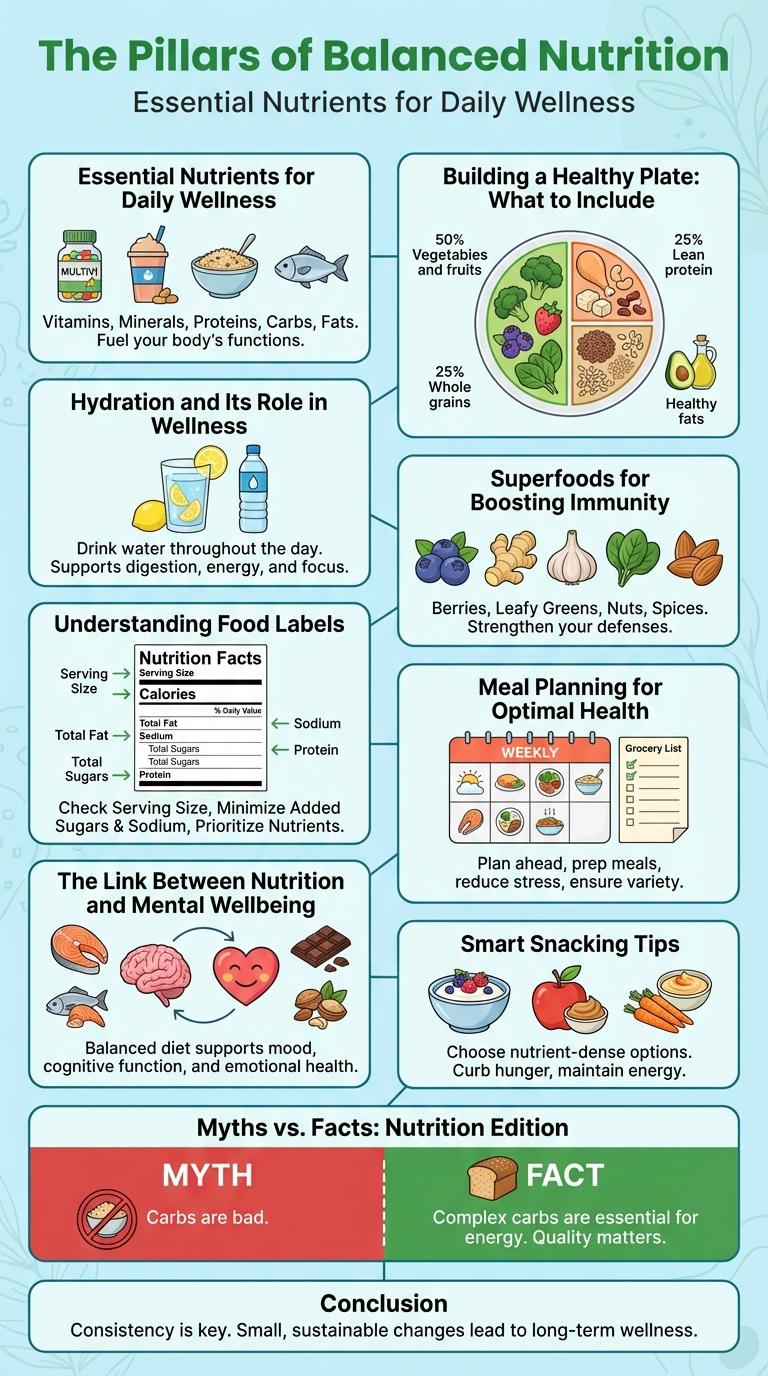
Nutrition plays a crucial role in maintaining overall wellness by providing the essential nutrients that support bodily functions and prevent chronic diseases. Understanding the balance of macronutrients, vitamins, and minerals helps individuals make informed dietary choices that enhance energy levels, mental clarity, and immune health. Visual representations like infographics simplify complex nutritional information, making it easier to adopt healthier lifestyle habits.
The Pillars of Balanced Nutrition
What are the fundamental components of balanced nutrition? Balanced nutrition relies on the pillars of macronutrients, micronutrients, hydration, and meal timing. These elements work together to support overall wellness and optimal body function.
How do macronutrients contribute to health? Macronutrients include carbohydrates, proteins, and fats, which provide the energy needed for daily activities and bodily processes. Proper balance among these macronutrients optimizes metabolism, muscle health, and brain function.
Why are micronutrients essential in a diet? Vitamins and minerals are critical micronutrients that regulate immune response, bone health, and cellular repair processes. Deficiencies in micronutrients can lead to chronic illnesses and reduced energy levels.
What role does hydration play in wellness? Adequate water intake maintains fluid balance, supports digestion, and enhances nutrient absorption. Hydration affects cognitive function and physical performance significantly.
How does meal timing influence nutrition? Eating at regular intervals helps stabilize blood sugar levels and improves nutrient utilization. Thoughtful meal timing can prevent overeating and support sustained energy throughout the day.
Essential Nutrients for Daily Wellness
Essential nutrients are vital for maintaining daily wellness and supporting bodily functions. A balanced intake of these nutrients fuels the body and promotes overall health.
- Macronutrients - Carbohydrates, proteins, and fats provide energy and are crucial for growth and repair.
- Vitamins - Organic compounds like vitamins A, C, and D support immune function and metabolic processes.
- Minerals - Elements such as calcium, iron, and potassium regulate nerve function and bone health.
Consuming a variety of nutrient-rich foods ensures optimal health and daily wellness.
Building a Healthy Plate: What to Include
Building a healthy plate involves balancing essential food groups to promote optimal nutrition and wellness. Include a variety of colorful vegetables and fruits, lean proteins like chicken or legumes, whole grains such as brown rice or quinoa, and healthy fats from sources like avocados and nuts. Staying hydrated and limiting added sugars and processed foods supports overall health and energy levels.
Hydration and Its Role in Wellness
Hydration is essential for maintaining bodily functions such as temperature regulation, nutrient transport, and joint lubrication. Proper water intake supports cognitive function, energy levels, and skin health. Staying hydrated reduces the risk of chronic illnesses and enhances overall wellness.
Superfoods for Boosting Immunity
Superfoods play a crucial role in enhancing the immune system. They are rich in vitamins, minerals, and antioxidants that support overall health.
Incorporating superfoods like kale, blueberries, and almonds into your diet provides essential nutrients such as vitamin C, vitamin E, and zinc. These nutrients help strengthen the body's natural defenses against infections. Regular consumption of immunity-boosting foods promotes faster recovery and better resistance to illnesses.
Understanding Food Labels
Understanding food labels is essential for making informed nutrition choices that support overall wellness. Food labels provide critical details about the nutrients and ingredients in packaged foods.
- Serving Size - Indicates the amount of food considered one serving, helping to accurately assess nutrient intake.
- Calories - Shows the energy provided by one serving, pivotal for managing daily caloric needs.
- Ingredients List - Displays all components in the product in descending order by weight, informing about additives and allergens.
Meal Planning for Optimal Health
Meal planning is a strategic approach to managing nutrition that supports overall wellness and health optimization. Thoughtful preparation of meals enables balanced intake of essential nutrients while reducing unhealthy food choices.
- Balanced Macronutrients - Ensuring meals contain appropriate proportions of carbohydrates, proteins, and fats promotes sustained energy and nutrient absorption.
- Consistent Meal Timing - Regular eating schedules help regulate metabolism and avoid excessive hunger that may lead to overeating.
- Inclusion of Whole Foods - Prioritizing fruits, vegetables, whole grains, and lean proteins increases vitamin, mineral, and fiber intake for improved digestion and immunity.
The Link Between Nutrition and Mental Wellbeing
Nutrition plays a crucial role in mental wellbeing by providing the brain with essential nutrients needed for optimal function. A balanced diet rich in vitamins, minerals, and antioxidants supports cognitive health and emotional stability.
Poor nutrition can lead to increased risks of depression, anxiety, and cognitive decline. Consuming foods high in omega-3 fatty acids, magnesium, and B vitamins helps improve mood and reduce stress levels.
Smart Snacking Tips
Smart snacking plays a crucial role in maintaining balanced nutrition and overall wellness. Choosing nutrient-dense snacks helps sustain energy levels and supports healthy metabolism throughout the day.
Incorporate snacks rich in fiber, protein, and healthy fats to keep hunger at bay and enhance mental focus. Avoid processed foods high in added sugars and unhealthy fats for optimal health benefits.