
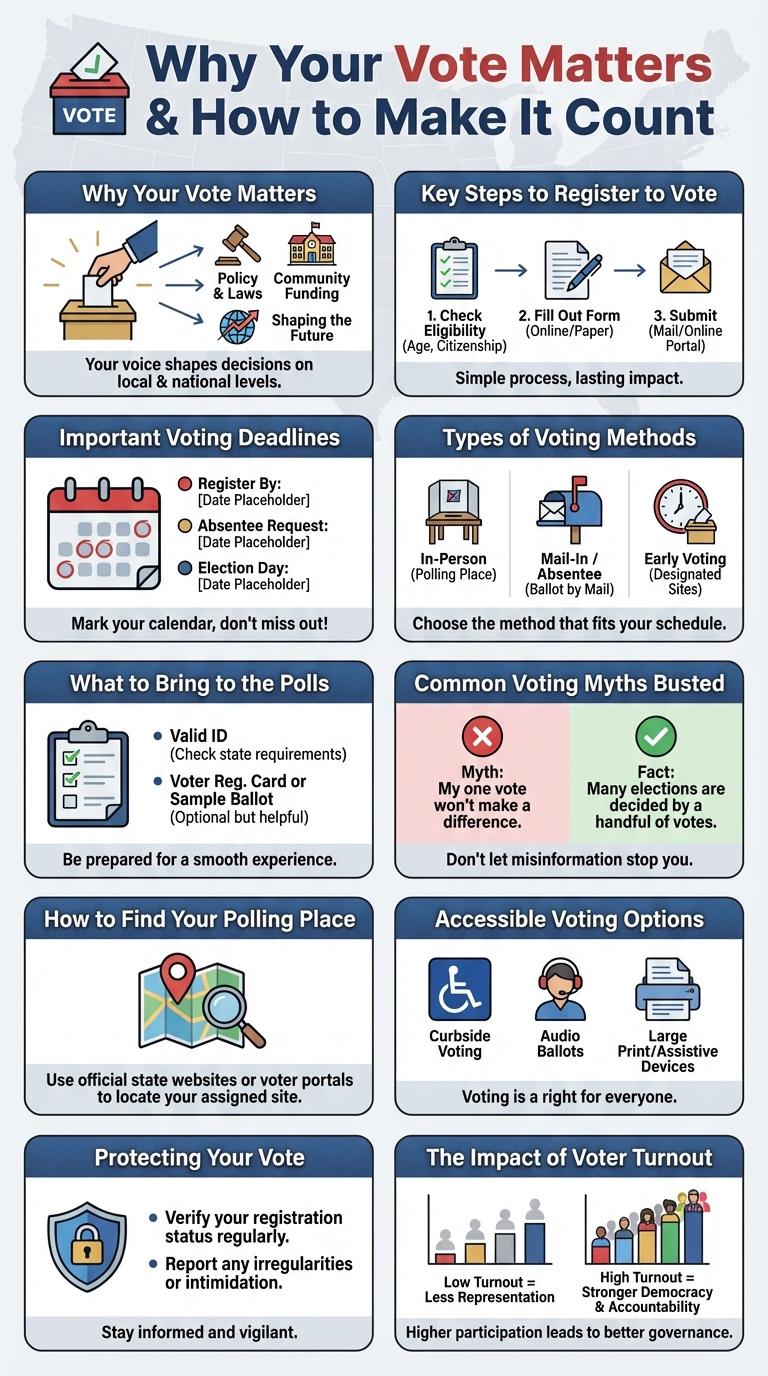
Infographics about voting visually simplify complex electoral processes, making information more accessible and engaging for readers. They highlight key topics such as voter registration, election deadlines, and the importance of participation. Using clear graphics and concise data, these infographics encourage informed decision-making and increased voter turnout.
Why Your Vote Matters
Voting is a powerful way to shape the future of your community and country. Every vote contributes to the decisions that affect daily life and public policy.
- Your Voice Counts - Voting ensures your opinions and preferences are represented in government decisions.
- Influence Policy - Elections determine who creates laws on education, healthcare, and infrastructure.
- Civic Responsibility - Voting strengthens democracy by promoting accountability and citizen participation.
Key Steps to Register to Vote
Registering to vote is a simple yet crucial step in participating in democratic elections. Understanding the key steps helps ensure your voice is heard on election day.
First, check your eligibility based on age, citizenship, and residency requirements. Next, complete the voter registration form online, by mail, or in person at designated locations. Finally, submit your form before the registration deadline to secure your place on the voter list.
Important Voting Deadlines
| Voting Deadline | Deadline Date |
|---|---|
| Voter Registration | 30 days before Election Day |
| Absentee Ballot Request | 7 days before Election Day |
| Early Voting Start | 20 days before Election Day |
| Early Voting End | 3 days before Election Day |
| Election Day | First Tuesday after the first Monday in November |
Types of Voting Methods
Voting methods vary widely to accommodate different election systems and populations. Common types include paper ballots, electronic voting machines, mail-in ballots, and ranked-choice voting. Each method offers distinct advantages in terms of accessibility, security, and voter engagement.
| Voting Method | Key Features |
|---|---|
| Paper Ballots | Simple, physical, easy to audit |
| Electronic Voting | Fast results, may include touchscreen interfaces |
| Mail-In Ballots | Convenient, increases participation |
| Ranked-Choice Voting | Voters rank candidates by preference |
What to Bring to the Polls
Preparing for election day ensures a smooth voting experience. Knowing what to bring to the polls helps avoid delays and disenfranchisement.
Bring a valid government-issued photo ID, such as a driver's license or passport. Some states also accept alternative documents, so check local requirements ahead of time.
Common Voting Myths Busted
Voting is a fundamental right that empowers citizens to influence government policies and leadership. Despite misconceptions, every vote counts and contributes to shaping a democratic society.
Myth 1: "My vote doesn't matter." In reality, many elections are decided by a small margin, making each vote crucial.
Myth 2: "Only certain groups can vote." Voting rights apply equally to all eligible citizens regardless of background.
Myth 3: "Voting is complicated and time-consuming." Most voting processes are streamlined and accessible, with options like mail-in ballots and early voting.
How to Find Your Polling Place
Where can I find my polling place for voting? Visit your state's official election website or use the national polling place locator tool. Enter your address to get accurate information on your designated voting location.
Accessible Voting Options
Accessible voting options ensure that all eligible voters can participate in elections without barriers. These options accommodate diverse needs by providing various methods tailored for accessibility.
- Early Voting - Allows voters to cast ballots before Election Day, reducing wait times and scheduling conflicts.
- Mail-In Voting - Enables voters to submit ballots from home, offering convenience for people with mobility challenges.
- Accessible Polling Places - Provides wheelchair ramps, tactile ballots, and audio assistance to support voters with disabilities.
Expanding accessible voting methods promotes inclusive democratic participation for all citizens.
Protecting Your Vote
Protecting your vote ensures the integrity of elections and strengthens democracy. Understanding how to safeguard your vote is crucial for every eligible voter.
- Verify Your Registration - Confirm your voter registration status to avoid issues on election day and ensure you can cast your ballot.
- Use Official Polling Locations - Vote only at designated polling places to prevent fraudulent activities and guarantee your vote counts.
- Secure Your Ballot - Follow proper procedures when submitting absentee or mail-in ballots to protect your vote from tampering.