
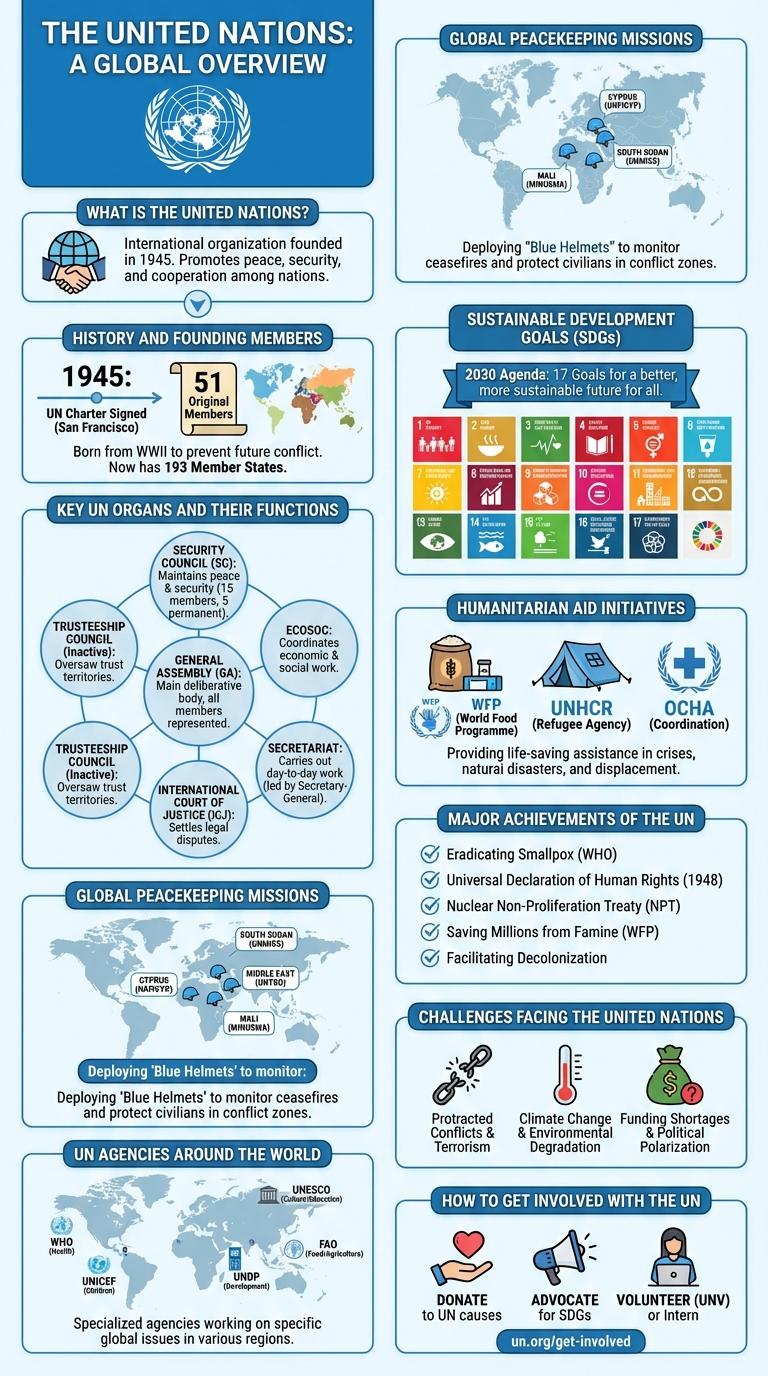
The United Nations infographic presents a visual overview of its core functions, member nations, and global impact. It highlights key areas such as peacekeeping, humanitarian aid, and sustainable development goals. This concise graphic illustrates the UN's role in fostering international cooperation and addressing worldwide challenges.
What is the United Nations?
The United Nations is an international organization founded in 1945 to promote peace, security, and cooperation among countries. It serves as a global forum for addressing international issues and fostering diplomatic relations.
- Global Peacekeeping - The UN deploys peacekeeping missions to conflict zones to maintain ceasefires and protect civilians.
- Human Rights Advocacy - It sets international human rights standards and works to uphold them worldwide.
- Sustainable Development - The UN leads efforts to achieve economic growth, environmental protection, and social equity globally.
The United Nations unites 193 member states to collaborate on solving global challenges for a safer and better world.
History and Founding Members
The United Nations was established in 1945 following the end of World War II to promote international peace and cooperation. It was founded by 51 member states committed to preventing future conflicts and fostering global development. The founding members include major countries such as the United States, United Kingdom, Soviet Union, China, and France.
Key UN Organs and Their Functions
| UN Organ | Primary Function |
|---|---|
| General Assembly | Deliberates on international issues, adopts resolutions, and approves the UN budget. |
| Security Council | Maintains international peace and security, makes binding decisions, and authorizes military actions. |
| Economic and Social Council (ECOSOC) | Coordinates economic, social, and related work of UN specialized agencies and promotes sustainable development. |
| International Court of Justice (ICJ) | Settles legal disputes between states and gives advisory opinions on international legal issues. |
| Secretariat | Implements UN decisions, administers day-to-day operations, and is led by the Secretary-General. |
Global Peacekeeping Missions
The United Nations leads numerous peacekeeping missions across the globe to maintain stability in conflict zones. These operations involve contributions from member states to support peace and security.
- Number of Missions - Over a dozen active UN peacekeeping missions operate worldwide as of 2024.
- Troop Contributions - More than 85,000 military personnel, police, and civilian staff participate in UN peacekeeping efforts.
- Mission Goals - UN peacekeeping focuses on conflict resolution, protecting civilians, and supporting political processes.
Sustainable Development Goals (SDGs)
The United Nations (UN) champions global progress through the Sustainable Development Goals (SDGs), targeting economic, social, and environmental advancement. These 17 goals address worldwide challenges to ensure a sustainable future for all by 2030.
- No Poverty - Eradicating poverty in all its forms remains a fundamental priority for the UN to promote equitable growth.
- Quality Education - Ensuring inclusive and equitable education empowers individuals and fosters innovation.
- Climate Action - Combating climate change and its impacts is crucial for preserving the planet's health and resources.
Humanitarian Aid Initiatives
The United Nations plays a crucial role in coordinating global humanitarian aid efforts. Its initiatives aim to provide emergency relief and long-term support to vulnerable populations worldwide.
UN humanitarian programs focus on food security, healthcare, and shelter for displaced persons and disaster victims. Agencies like UNICEF and the World Food Programme lead these efforts, delivering essential resources efficiently. Collaboration with local governments ensures aid reaches those most in need promptly and effectively.
UN Agencies Around the World
The United Nations operates through specialized agencies that address global issues such as health, education, and development. These agencies work in partnership with member countries to achieve sustainable development goals worldwide.
Key UN agencies include the World Health Organization (WHO), the United Nations Educational, Scientific and Cultural Organization (UNESCO), and the International Labour Organization (ILO). Each agency focuses on specific areas to improve the quality of life for people across continents.
Major Achievements of the UN
The United Nations has played a pivotal role in maintaining international peace and security through peacekeeping missions and conflict resolution. It has advanced global health initiatives, notably eradicating smallpox and combating pandemics via WHO programs. The UN promotes sustainable development, human rights, and humanitarian aid, impacting millions worldwide through agencies like UNICEF and UNDP.
Challenges Facing the United Nations
The United Nations faces significant challenges in maintaining global peace and security amid rising geopolitical tensions. Conflicts in various regions strain the organization's capacity to mediate and implement effective resolutions.
Funding shortages impact the UN's ability to deliver humanitarian aid and support sustainable development goals. Coordination among member states often stalls progress due to differing national interests and priorities.