
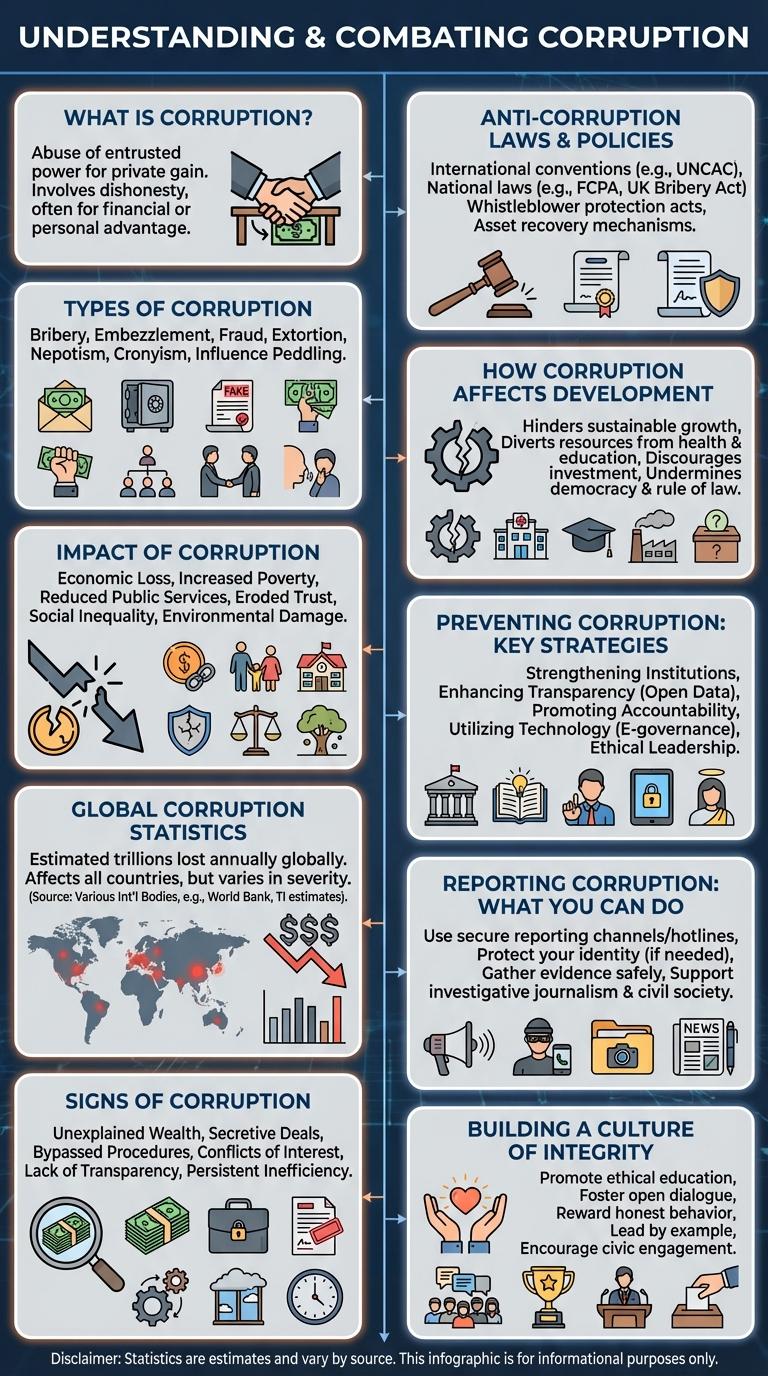
Infographics about anti-corruption vividly illustrate the impact of corruption on societies and highlight key strategies for prevention and transparency. By presenting data on corruption levels, its causes, and anti-corruption measures, these visuals empower citizens and policymakers to take informed actions. Clear and concise graphics enhance understanding, making complex information accessible and driving collective efforts toward ethical governance.
What is Corruption?
| What is Corruption? | Description |
|---|---|
| Definition | Corruption is the abuse of entrusted power for private gain, undermining trust in public institutions and disrupting economic development. |
| Types | Includes bribery, embezzlement, nepotism, fraud, and extortion, affecting both public and private sectors. |
| Impact | Leads to reduced economic growth, inequality, weakens governance, and erodes social trust. |
| Common Sectors | Frequent in government procurement, law enforcement, judiciary, and business dealings. |
| Prevention | Requires transparency, accountability, strong legal frameworks, and active citizen engagement. |
Types of Corruption
Corruption undermines trust, fairness, and economic development worldwide. Understanding its types helps in crafting effective anti-corruption strategies.
- Bribery - Offering or receiving something of value to influence actions or decisions improperly.
- Embezzlement - Theft or misappropriation of funds or property entrusted to an individual.
- Fraud - Deception intended to result in financial or personal gain.
- Extortion - Obtaining money or favors through force or threats.
- Collusion - Secret cooperation between parties to deceive or defraud others.
Impact of Corruption
Corruption undermines economic development by diverting public resources into private hands and increasing the cost of doing business. It erodes trust in government institutions, leading to decreased foreign investment and slowed growth.
Public services such as education, healthcare, and infrastructure suffer from reduced quality and accessibility due to corrupt practices. Social inequality worsens as marginalized groups are disproportionately affected by corruption's negative impact.
Global Corruption Statistics
How widespread is corruption globally? Corruption affects countries across all continents, impacting economic growth and public trust. According to Transparency International, over 70% of countries scored below 50 on the Corruption Perceptions Index in 2023.
What sectors are most affected by corruption worldwide? Public sectors such as government, law enforcement, and healthcare experience the highest corruption rates. These sectors often see bribery, embezzlement, and nepotism, undermining service delivery and justice.
Which regions face the highest corruption levels? Sub-Saharan Africa and Eastern Europe report the highest corruption scores globally. Several countries in these areas consistently rank in the bottom quartile of the Corruption Perceptions Index.
How does corruption impact global economies? Corruption leads to losses exceeding $2.6 trillion annually, representing over 5% of global GDP. These losses reduce foreign investment, distort markets, and increase inequality.
What role does public perception play in fighting corruption? Public awareness and citizen engagement are critical for anti-corruption efforts. Countries with higher transparency and media freedom show stronger anti-corruption outcomes.
Signs of Corruption
Corruption often manifests through bribery, favoritism, and embezzlement within organizations. Unusual financial transactions, lack of transparency, and inconsistent decision-making are key indicators. Vigilance in recognizing these signs helps promote integrity and accountability in both public and private sectors.
Anti-Corruption Laws & Policies
Anti-corruption laws and policies are essential frameworks designed to prevent, detect, and punish corrupt practices within public and private sectors. These regulations promote transparency, accountability, and integrity to foster economic growth and public trust.
Effective anti-corruption measures vary by country but share common elements that empower authorities and protect whistleblowers from retaliation.
- Transparency Laws - Require public disclosure of financial interests and government contracts to deter illicit activities.
- Whistleblower Protection - Safeguards individuals reporting corruption from harassment or job loss.
- Anti-Bribery Statutes - Criminalize offering or accepting bribes in exchange for favors or business advantages.
How Corruption Affects Development
Corruption undermines economic growth by diverting resources away from essential public services and infrastructure. It weakens institutions, reducing trust and deterring investment.
Development slows as funds meant for education, healthcare, and infrastructure are misappropriated. Poor governance due to corruption results in inefficient public spending and increased poverty rates. Foreign investors often avoid corrupt environments, limiting job creation and economic opportunities.
Preventing Corruption: Key Strategies
Preventing corruption requires a comprehensive approach that promotes transparency and accountability in all sectors. Effective strategies empower institutions and individuals to identify and eliminate corrupt practices.
- Establish Clear Policies - Implementing strict anti-corruption laws and codes of conduct sets standards for ethical behavior.
- Enhance Transparency - Open access to information and transparent decision-making processes reduce opportunities for corruption.
- Strengthen Oversight - Independent watchdogs and audit mechanisms help detect and prevent corrupt activities early.
Promoting a culture of integrity through education and whistleblower protection further supports sustainable anti-corruption efforts.
Reporting Corruption: What You Can Do
Reporting corruption is a vital step in promoting transparency and accountability in society. Knowing how and where to report suspicious activities empowers citizens to take action.
Use official channels such as government anti-corruption agencies, hotlines, or online platforms dedicated to whistleblowing. Protect your identity to ensure safety and encourage more people to come forward.