
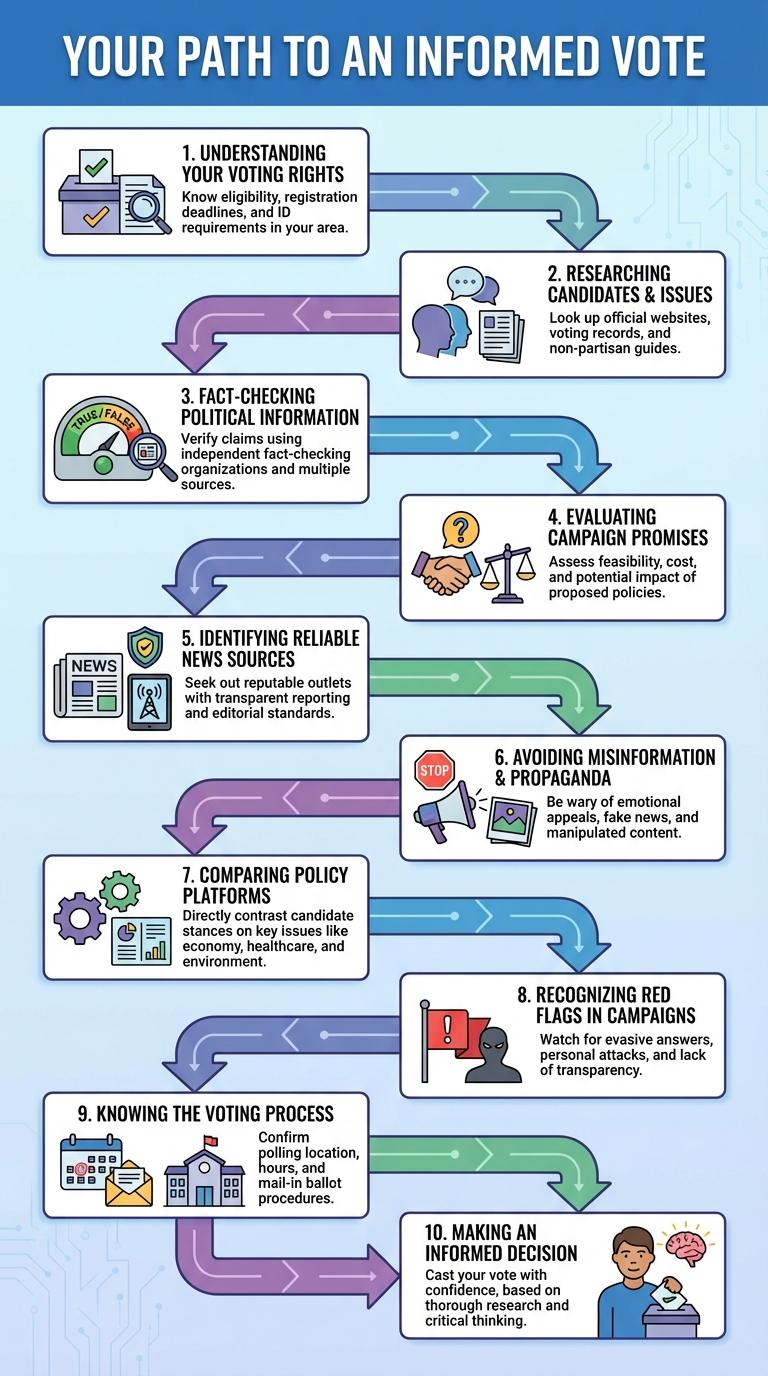
Voting wisely requires understanding key issues, researching candidates' policies, and reflecting on personal values to make informed decisions. An infographic clearly presents essential information and practical tips to guide voters through the election process effectively. Visual summaries help increase awareness, encouraging responsible participation in democratic elections.
Understanding Your Voting Rights
Voting wisely begins with a clear understanding of your voting rights to ensure your voice is heard accurately. Knowing these rights empowers you to participate confidently in the democratic process.
- Right to Register - Every eligible citizen has the right to register to vote without unreasonable restrictions.
- Right to a Secret Ballot - Voters can cast their ballots privately to protect their choices from influence or intimidation.
- Right to Receive Assistance - Assistance is available for voters with disabilities or those needing help with ballots without compromising ballot secrecy.
Being informed about your voting rights safeguards the integrity of your vote and strengthens democracy.
Researching Candidates and Issues
How can researching candidates and issues improve your voting decisions?
Gathering detailed information about candidates' backgrounds and policy positions empowers you to make informed choices. Understanding key issues allows you to align your vote with your values and community needs.
Fact-Checking Political Information
Fact-checking political information ensures voters make informed decisions based on accurate data. Reliable sources like official government websites and respected news organizations help verify claims. Cross-referencing multiple sources reduces the risk of misinformation affecting election outcomes.
Evaluating Campaign Promises
Evaluating campaign promises requires careful analysis of a candidate's track record and the feasibility of their commitments. Voters should research the consistency of promises with past actions and the clarity of proposed policies. Prioritizing realistic and detailed plans helps ensure informed and effective voting decisions.
Identifying Reliable News Sources
| Tip | Description |
|---|---|
| Check Source Credibility | Verify the news outlet's reputation and history of accuracy before trusting election-related information. |
| Look for Author Credentials | Identify if the article is written by a qualified journalist or expert in political reporting. |
| Cross-Verify Information | Confirm facts by comparing multiple trustworthy sources to spot inconsistencies or false claims. |
| Beware of Clickbait | Avoid headlines designed to provoke strong emotions or bias, which often mislead voters. |
| Use Fact-Checking Websites | Refer to established fact-check organizations to validate claims about candidates or policies. |
Avoiding Misinformation and Propaganda
Voting wisely starts with recognizing and avoiding misinformation and propaganda. Understanding the sources and verifying facts ensures informed decisions at the polls.
Check multiple reliable sources before accepting any political claims. Be cautious of emotionally charged messages designed to manipulate opinions. Fact-checking websites and official election resources help identify false information effectively.
Comparing Policy Platforms
Comparing policy platforms helps voters make informed decisions by understanding each candidate's priorities and proposed solutions. Analyzing these platforms reveals how candidates plan to address key issues such as healthcare, education, and the economy.
A clear comparison highlights differences in approach, allowing voters to align their choices with their values. Evaluating policy details ensures that votes contribute to effective and meaningful governance.
Recognizing Red Flags in Campaigns
Recognizing red flags in political campaigns helps voters make informed decisions. Watch for misleading statistics and unrealistic promises that lack clear plans.
Pay attention to candidates who use fear-mongering or attack opponents instead of addressing real issues. Transparency, consistency, and credible sources indicate a trustworthy campaign.
Knowing the Voting Process
Understanding the voting process is crucial for making informed decisions at the polls. Knowing how to register, where to vote, and what to expect ensures your vote counts.
- Voter Registration - Register early to confirm your eligibility and receive your ballot on time.
- Polling Locations - Identify your designated polling place to avoid delays on election day.
- Voting Methods - Choose from in-person, mail-in, or early voting options based on your convenience and state guidelines.