
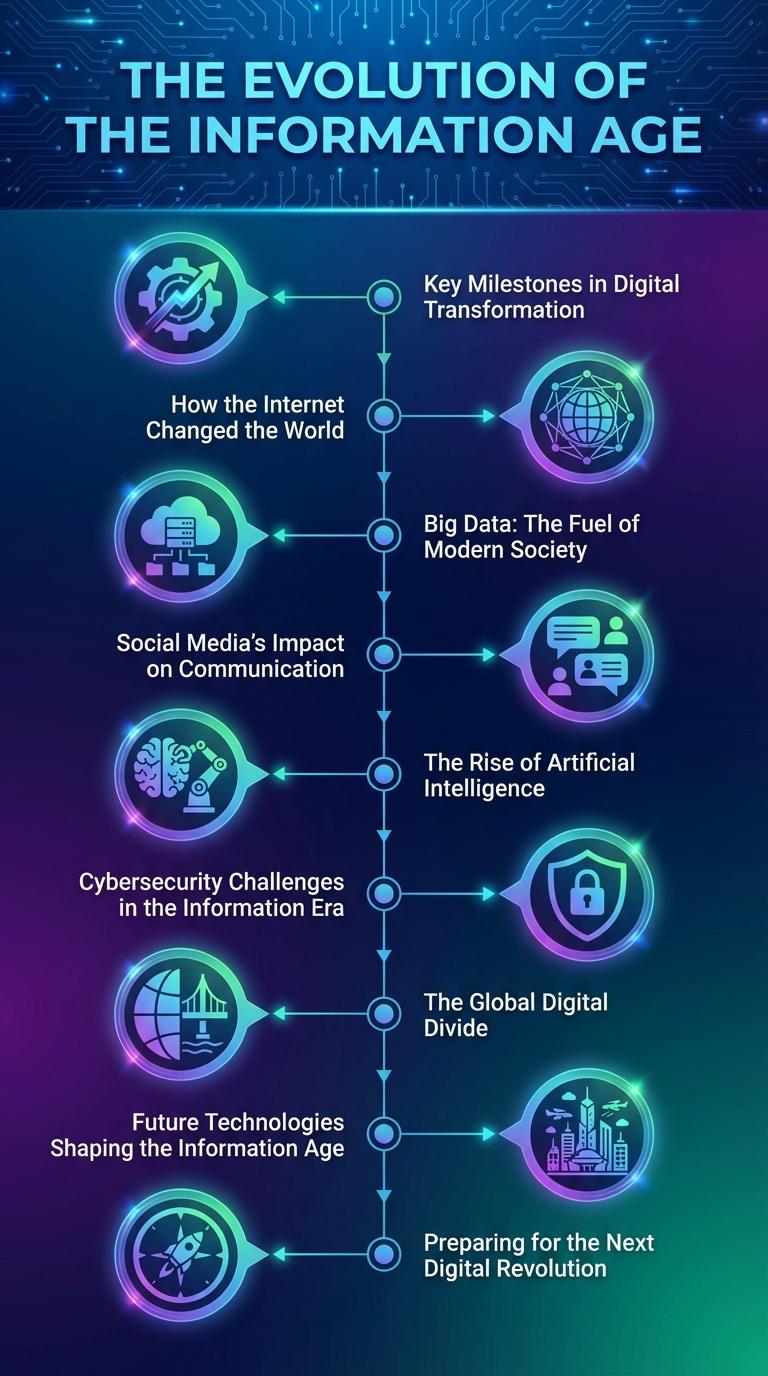
The information age has transformed how societies access, share, and utilize data at unprecedented speeds. Digital technologies and the internet have become central to communication, commerce, and education worldwide. Understanding this era reveals the profound impact of information flow on modern life and global connectivity.
The Evolution of the Information Age
How has the Information Age evolved over time? The Information Age began with the invention of the telegraph and telephone, revolutionizing communication. Advancements in computers and the internet further accelerated global information exchange, shaping modern society.
What key milestones define the evolution of the Information Age? Early innovations like the printing press laid the groundwork, followed by breakthroughs in digital technology during the late 20th century. The rise of mobile devices and cloud computing continues to transform access to information worldwide.
| Milestone | Impact |
|---|---|
| Printing Press (1440) | Mass dissemination of knowledge |
| Telegraph and Telephone (19th Century) | Instant long-distance communication |
| Digital Computers (Mid 20th Century) | Automated data processing |
| Internet (Late 20th Century) | Global information network |
| Mobile and Cloud Computing (21st Century) | Ubiquitous and real-time access |
How does the Information Age influence daily life today? It integrates technology into communication, education, and business, enabling instant information sharing. This continuous evolution supports innovation and connectivity on a global scale.
Key Milestones in Digital Transformation
The Information Age marks a significant era characterized by rapid digital transformation and technological advancement. Key milestones highlight the evolution of data processing, communication, and connectivity shaping today's digital world.
- Invention of the Microprocessor (1971) - The creation of the microprocessor enabled the development of personal computers and digital devices.
- Introduction of the World Wide Web (1989) - Tim Berners-Lee proposed the web, revolutionizing access to information and online communication.
- Launch of Smartphones (2007) - Smartphones integrated computing and communication, transforming mobile interaction and internet usage.
- Expansion of Broadband Internet (2000s) - High-speed internet connectivity facilitated faster data transfer and widespread digital adoption.
- Rise of Cloud Computing (2010s) - Cloud technology enabled scalable storage and computing power accessible via the internet.
These milestones collectively underpin the continuous digital transformation influencing modern society and business operations.
How the Internet Changed the World
The Internet has revolutionized global communication and access to information. It transformed how individuals, businesses, and governments interact worldwide.
- Global Connectivity - The Internet connects over 5 billion users, enabling instant communication across continents.
- Information Accessibility - Vast amounts of data and knowledge are available 24/7, supporting education and research.
- E-commerce Growth - Online marketplaces contribute trillions of dollars annually to the global economy.
Big Data: The Fuel of Modern Society
The Information Age is defined by the rapid generation and utilization of vast amounts of data. Big Data drives innovation, decision-making, and efficiency across industries worldwide.
Big Data serves as the critical resource powering technology, business strategies, and societal advancements.
- Exponential Data Growth - Over 2.5 quintillion bytes of data are generated daily from various digital sources.
- Enhanced Decision-Making - Big Data analytics enable organizations to gain actionable insights and optimize operations.
- Industry Transformation - Sectors like healthcare, finance, and retail leverage Big Data to innovate and improve customer experiences.
Social Media's Impact on Communication
The Information Age revolutionized global communication, with social media emerging as a powerful catalyst. Platforms like Facebook, Twitter, and Instagram transformed how people connect and share information instantly.
Social media enables real-time interaction, breaking geographical barriers and fostering global communities. It amplifies voices, promoting social movements and awareness on a massive scale. However, challenges such as misinformation and privacy concerns continue to impact digital communication dynamics.
The Rise of Artificial Intelligence
The Information Age has witnessed a transformative surge in artificial intelligence (AI), revolutionizing industries through advanced machine learning and data analytics. AI technologies enhance decision-making processes, automate complex tasks, and drive innovation across sectors such as healthcare, finance, and manufacturing. The rise of AI continues to shape the digital landscape, creating new opportunities and challenges in the era of big data and connectivity.
Cybersecurity Challenges in the Information Era
The Information Age has revolutionized communication, data storage, and access, but it has also introduced significant cybersecurity challenges. Cyber threats such as data breaches, ransomware attacks, and phishing schemes are increasingly sophisticated and frequent. Protecting sensitive information requires advanced security technologies and continuous vigilance.
The Global Digital Divide
The Global Digital Divide highlights disparities in internet access between developed and developing regions. Over 60% of the world's population remains offline, impacting education, economy, and social inclusion.
In high-income countries, over 90% of people have internet access, while in low-income regions, access can be as low as 20%. Bridging this divide is crucial to achieving global digital equity and sustainable development.
Future Technologies Shaping the Information Age
| Future Technology | Impact on the Information Age |
|---|---|
| Artificial Intelligence (AI) | Enhances data analysis, automates decision-making, and personalizes user experiences across digital platforms. |
| Quantum Computing | Accelerates complex problem-solving, improves encryption methods, and enables breakthroughs in big data processing. |
| 5G and Beyond | Provides ultra-fast, low-latency connectivity, supporting the growth of IoT devices and real-time data exchange. |
| Blockchain Technology | Ensures secure, transparent data transactions and decentralized information management systems. |
| Augmented Reality (AR) & Virtual Reality (VR) | Transforms digital communication, enhances remote collaboration, and creates immersive learning environments. |