
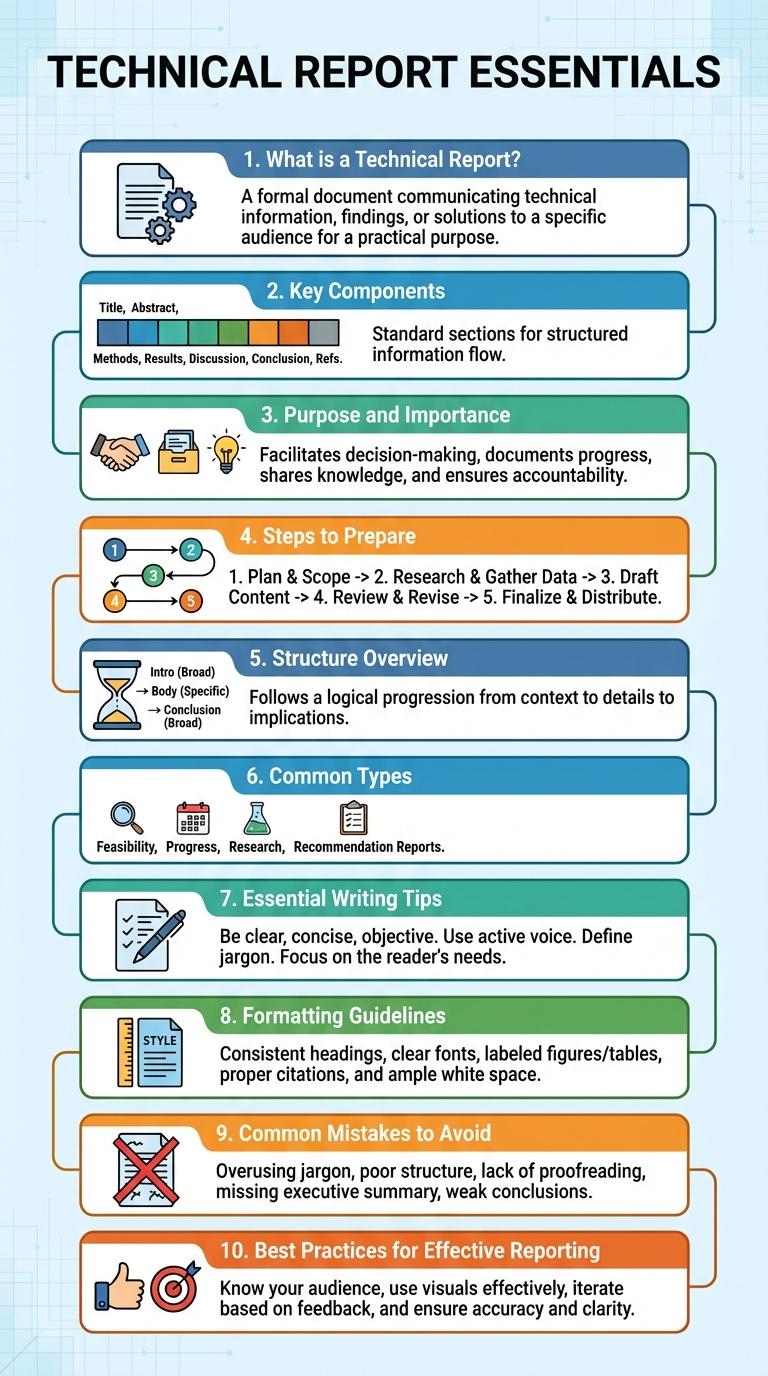
Technical reports convey detailed information and data essential for problem-solving and decision-making in various industries. An infographic about technical reports visually breaks down complex content, improving comprehension and retention through clear graphics and structured summaries. This approach enhances communication efficiency, making technical details accessible to diverse audiences.
What is a Technical Report?
A technical report is a detailed document that presents research findings, technical data, or project results. It serves as an essential tool for communicating complex information clearly and accurately to a specific audience.
- Purpose - To convey specialized information and research outcomes effectively to stakeholders.
- Structure - Typically includes abstract, introduction, methodology, results, discussion, and conclusion sections.
- Audience - Targeted at engineers, scientists, researchers, and technical professionals requiring precise data.
Key Components of a Technical Report
What are the key components of a technical report? A technical report includes essential sections that organize and present complex information clearly and effectively. These components ensure the report is structured, comprehensive, and accessible to its intended audience.
Which sections form the core of a technical report? Common key components are the Title Page, Abstract, Introduction, Methodology, Results, Discussion, Conclusion, and References. Each section serves a specific purpose to convey technical details, findings, and interpretations systematically.
Purpose and Importance
A technical report communicates detailed information about a specific project, research, or technical process. It serves as a structured document for presenting data, analysis, and conclusions to stakeholders.
Technical reports are important for decision-making, knowledge sharing, and maintaining records of technical work. They ensure transparency and provide a reliable source for future reference and audits.
Steps to Prepare a Technical Report
Preparing a technical report involves a clear step-by-step process to ensure accuracy and clarity. It begins with thorough research and data collection relevant to the technical subject.
Next, organizing the information logically helps in creating a structured outline. Writing the draft focuses on detailed explanations, supported by charts, graphs, and visuals for better understanding.
Structure Overview
A technical report presents detailed information on engineering, scientific, or technical activities. It follows a structured format to ensure clarity and precision in communication.
- Title Page - Provides the report title, author, date, and organization details for identification.
- Abstract - Summarizes the purpose, methods, results, and conclusions in brief.
- Introduction - Outlines the background, objectives, and scope of the technical report.
- Methodology - Describes the procedures, materials, and techniques used in the study or project.
- Results and Discussion - Presents findings supported by data, followed by analysis and interpretations.
Concluding sections include recommendations, references, and appendices to support and elaborate the report's content.
Common Types of Technical Reports
Technical reports serve as detailed documents that convey research findings, project progress, or technical analysis efficiently. Understanding common types of technical reports helps in selecting the appropriate format for specific professional needs.
- Research Reports - Present comprehensive research methodologies, data analysis, and conclusions to inform stakeholders or academic audiences.
- Progress Reports - Track ongoing project status, milestones achieved, and challenges encountered to update management or clients regularly.
- Feasibility Reports - Evaluate the practicality and potential success of proposed projects based on technical, economic, and operational factors.
- Design Reports - Detail engineering or architectural designs, specifications, and rationale to guide development or construction phases.
- Incident Reports - Document and analyze technical failures or accidents to recommend corrective actions and prevent recurrence.
Essential Writing Tips
| Essential Writing Tips | Details |
|---|---|
| Clarity | Use simple language and avoid jargon to ensure the report is easily understood by all readers. |
| Structure | Organize content into clear sections: Introduction, Methodology, Results, Discussion, and Conclusion. |
| Accuracy | Present data and facts precisely, supporting claims with reliable sources and evidence. |
| Conciseness | Eliminate unnecessary words and redundant information to maintain reader engagement. |
| Visual Aids | Incorporate charts, graphs, and tables to enhance understanding and emphasize key points. |
Formatting Guidelines
Technical report formatting requires clear headings, consistent font styles, and proper spacing to enhance readability. Use numbered sections, bullet points, and tables for organized data presentation. Adhering to formatting standards ensures professional appearance and improves information accessibility.
Common Mistakes to Avoid
Technical reports often contain errors that can undermine their effectiveness. Common mistakes include unclear objectives, insufficient data analysis, and poor formatting. Avoiding these errors ensures clarity and professionalism in technical communication.