
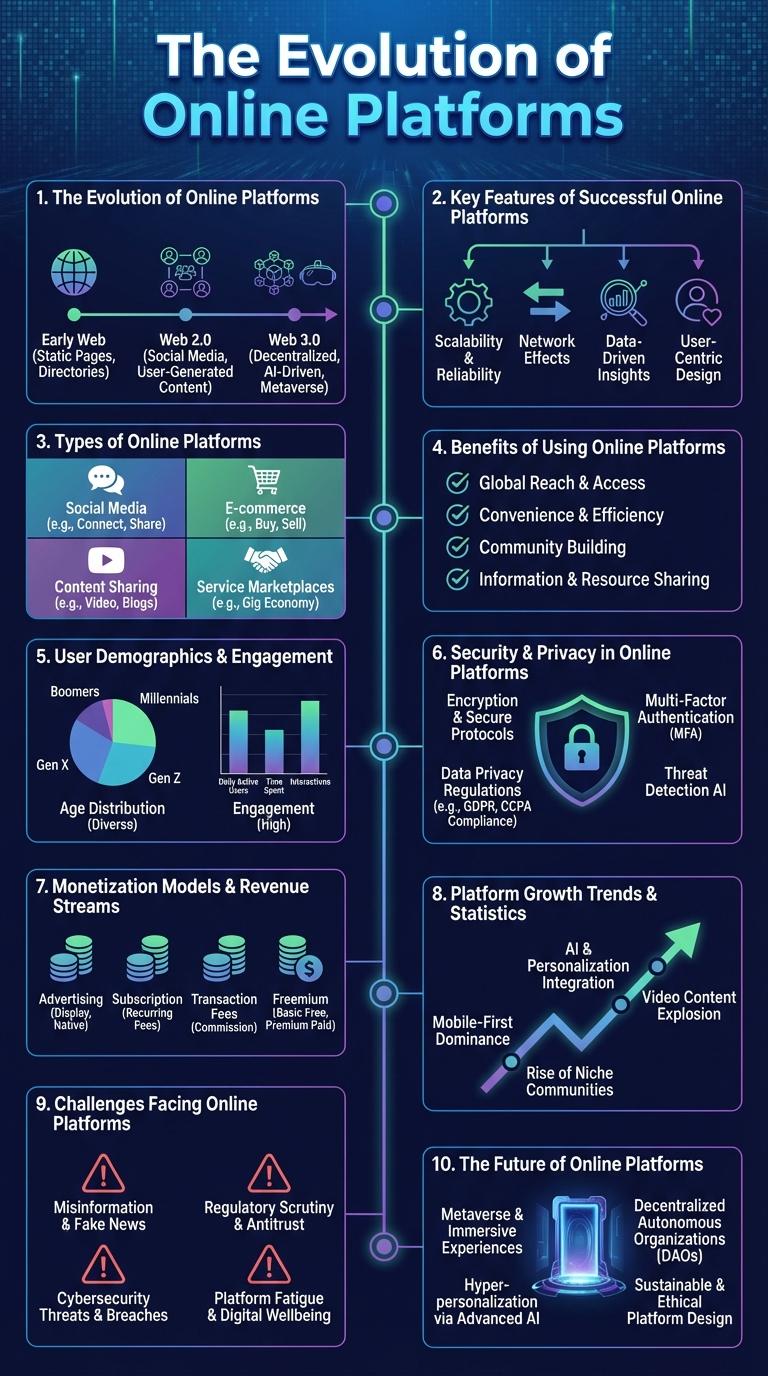
An online platform infographic visually presents key features, user statistics, and benefits in a clear, engaging format. This tool helps businesses and users quickly grasp essential information about the platform's functionality and growth. Visual elements like charts and icons enhance comprehension and retention of complex data.
The Evolution of Online Platforms
Online platforms have transformed the way people communicate, shop, and share information over the past decades. Their evolution reflects significant technological advancements and changing user behaviors.
- Early Bulletin Boards - These were the first online platforms enabling user interaction and content sharing through text-based forums.
- Social Media Emergence - Platforms like Facebook and Twitter introduced real-time social networking and multimedia sharing.
- E-commerce Expansion - Online marketplaces such as Amazon revolutionized shopping by integrating user-friendly interfaces and secure transactions.
Modern online platforms continue to innovate by incorporating AI, mobile access, and personalized experiences to meet diverse user needs.
Key Features of Successful Online Platforms
Successful online platforms integrate user-centric design and robust security measures to enhance user experience and trust. These platforms prioritize seamless navigation and data protection to retain and grow their user base.
Scalable infrastructure and real-time analytics empower platforms to adapt to increasing demand and optimize performance. Integration with third-party services and effective communication tools further boost platform functionality and user engagement.
Types of Online Platforms
Online platforms serve as digital environments where users interact, share content, and conduct transactions. Different types of platforms cater to varied user needs and business models.
- Social Media Platforms - Facilitate communication and content sharing among users worldwide.
- E-commerce Platforms - Enable buying and selling of goods or services online with secure payment options.
- Learning Management Systems (LMS) - Provide educational content and track learner progress in virtual classrooms.
Benefits of Using Online Platforms
Why choose online platforms for your needs? Online platforms offer convenience and accessibility, allowing users to connect or purchase services anytime from anywhere. They provide a wide range of options with user reviews, helping users make informed decisions quickly.
User Demographics & Engagement
Online platforms attract diverse user demographics, encompassing various age groups, geographic locations, and interests. Understanding these demographics helps tailor content and marketing strategies effectively.
User engagement on online platforms is measured through metrics like active users, session duration, and interaction rates. High engagement reflects content relevance and platform usability, driving user retention. Analyzing these patterns assists in optimizing user experience and increasing overall platform value.
Security & Privacy in Online Platforms
| Aspect | Details |
|---|---|
| Encryption | End-to-end encryption protects user data from unauthorized access during transmission. |
| Data Privacy Policies | Clear privacy policies inform users on data collection, storage, and sharing practices. |
| Multi-Factor Authentication (MFA) | Extra layer of security requiring multiple verification methods to access accounts. |
| Regular Security Audits | Routine checks identify vulnerabilities and ensure compliance with security standards. |
| User Control | Options for users to manage permissions, data visibility, and account settings. |
Monetization Models & Revenue Streams
Online platforms utilize diverse monetization models to generate sustainable revenue. Common revenue streams include subscription fees, advertising, affiliate marketing, and transaction commissions. Choosing the right model depends on the platform's target audience, content type, and engagement strategy.
Platform Growth Trends & Statistics
Online platforms have experienced rapid growth due to increasing global internet penetration and digital transformation. These platforms are evolving with enhanced user engagement, diversified content, and advanced monetization models.
- Global User Expansion - Over 4.9 billion people actively use online platforms, reflecting a 7% increase year-over-year according to recent data.
- Mobile Accessibility - 75% of platform traffic originates from mobile devices, emphasizing the importance of mobile-first design.
- Revenue Growth - The online platform market is projected to reach $1.5 trillion by 2025, driven by subscriptions and advertising.
Challenges Facing Online Platforms
Online platforms encounter numerous challenges that impact user experience and business growth. Key issues include data privacy concerns, content moderation, and maintaining platform security.
Balancing user engagement with regulatory compliance poses a significant challenge. Platforms must continuously adapt to evolving laws and technological risks to sustain trust and reliability.