
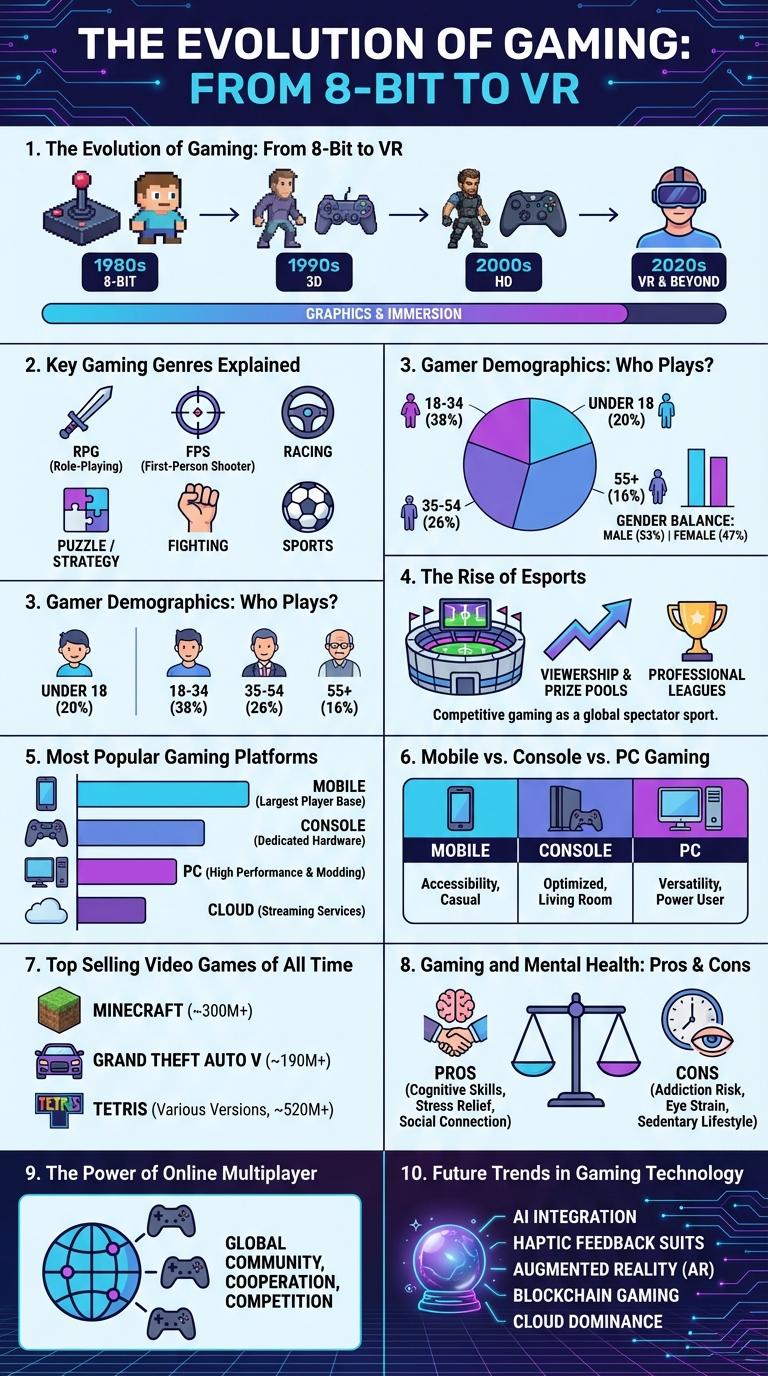
Gaming infographics visually highlight key statistics, trends, and insights, offering a clear snapshot of the industry's growth and player demographics. They simplify complex data like market size, popular genres, and device usage to enhance understanding for both casual and professional audiences. Such infographics serve as valuable tools for marketers, developers, and gamers seeking to stay informed about the dynamic gaming landscape.
The Evolution of Gaming: From 8-Bit to VR
The Evolution of Gaming: From 8-Bit to VR showcases the dramatic transformation of video games over decades. Early 8-bit games like Super Mario Bros. introduced pixelated graphics and simple gameplay that captivated millions.
Modern gaming now embraces immersive technologies such as Virtual Reality, delivering realistic experiences and interactive worlds. This shift highlights advancements in hardware, software, and player engagement.
Key Gaming Genres Explained
What are the key gaming genres? Gaming genres categorize games based on gameplay style and player experience. Understanding these genres helps players find games that suit their preferences.
| Genre | Description |
|---|---|
| Action | Fast-paced games focused on physical challenges and hand-eye coordination. |
| Role-Playing (RPG) | Games where players assume character roles and engage in story-driven quests. |
| Strategy | Games that require planning and tactical decision-making to achieve objectives. |
| Simulation | Realistic gameplay that mimics real-world activities or systems. |
| Sports | Games that replicate athletic competitions and sports events. |
Gamer Demographics: Who Plays?
Gaming has become a popular pastime across diverse age groups and genders worldwide. Understanding gamer demographics reveals insights into who plays and how the gaming community evolves.
- Age Diversity - The majority of gamers fall between 18 and 35 years old, with a growing segment of players aged 36 and above.
- Gender Representation - Approximately 45% of gamers identify as female, reflecting a near gender balance in gaming participation.
- Global Reach - Gamers come from all continents, with significant populations in North America, Europe, and Asia driving the gaming market.
The Rise of Esports
Esports has rapidly transformed from niche hobby to global phenomenon, attracting millions of viewers worldwide. The industry continues to grow in revenue, audience size, and professional opportunities.
- Massive Audience Growth - Over 500 million people watched esports events in 2023, highlighting its widespread popularity.
- Revenue Expansion - The global esports market reached $1.38 billion in 2023, driven by sponsorships, media rights, and merchandise sales.
- Professionalization of Players - Esports athletes earn lucrative salaries and endorsements, with top players competing internationally for multi-million dollar prizes.
Most Popular Gaming Platforms
Gaming has evolved into a global phenomenon, with various platforms catering to different types of players. The most popular gaming platforms include consoles, PCs, and mobile devices, each offering unique gaming experiences.
Consoles like PlayStation and Xbox dominate due to exclusive titles and high-performance hardware. PCs provide unmatched customization and access to a vast game library through platforms like Steam. Mobile gaming leads in accessibility, attracting millions with casual and free-to-play games on smartphones and tablets.
Mobile vs. Console vs. PC Gaming
Gaming has evolved into a versatile entertainment medium, with mobile, console, and PC platforms each offering unique experiences. Mobile gaming provides accessibility and convenience, while consoles focus on immersive gameplay and exclusive titles.
PC gaming delivers superior graphics and customization options, favored by hardcore gamers. Comparing these platforms reveals distinct advantages in performance, game selection, and user interaction.
Top Selling Video Games of All Time
| Video Game Title | Units Sold (Millions) |
|---|---|
| Minecraft | 238 |
| Grand Theft Auto V | 185 |
| Tetris (EA) | 100 |
| Wii Sports | 82.9 |
| PlayerUnknown's Battlegrounds (PUBG) | 70 |
Gaming and Mental Health: Pros & Cons
Gaming has a significant impact on mental health, offering both benefits and challenges. Understanding these effects helps promote a balanced gaming lifestyle.
- Improves Cognitive Skills - Video games enhance problem-solving, multitasking, and spatial awareness abilities.
- Reduces Stress - Playing games can provide a relaxing escape and lower cortisol levels, aiding stress relief.
- Risk of Addiction - Excessive gaming may lead to behavioral addiction, affecting emotional and social well-being.
Balancing gaming time and choosing appropriate content supports positive mental health outcomes.
The Power of Online Multiplayer
Online multiplayer gaming has revolutionized the way players connect and compete worldwide, fostering global communities and collaboration. Real-time interaction in multiplayer games enhances player engagement, driving millions of daily active users on platforms like Steam and Xbox Live. The market for multiplayer games is projected to exceed $30 billion by 2025, highlighting the economic impact and popularity of this gaming sector.