
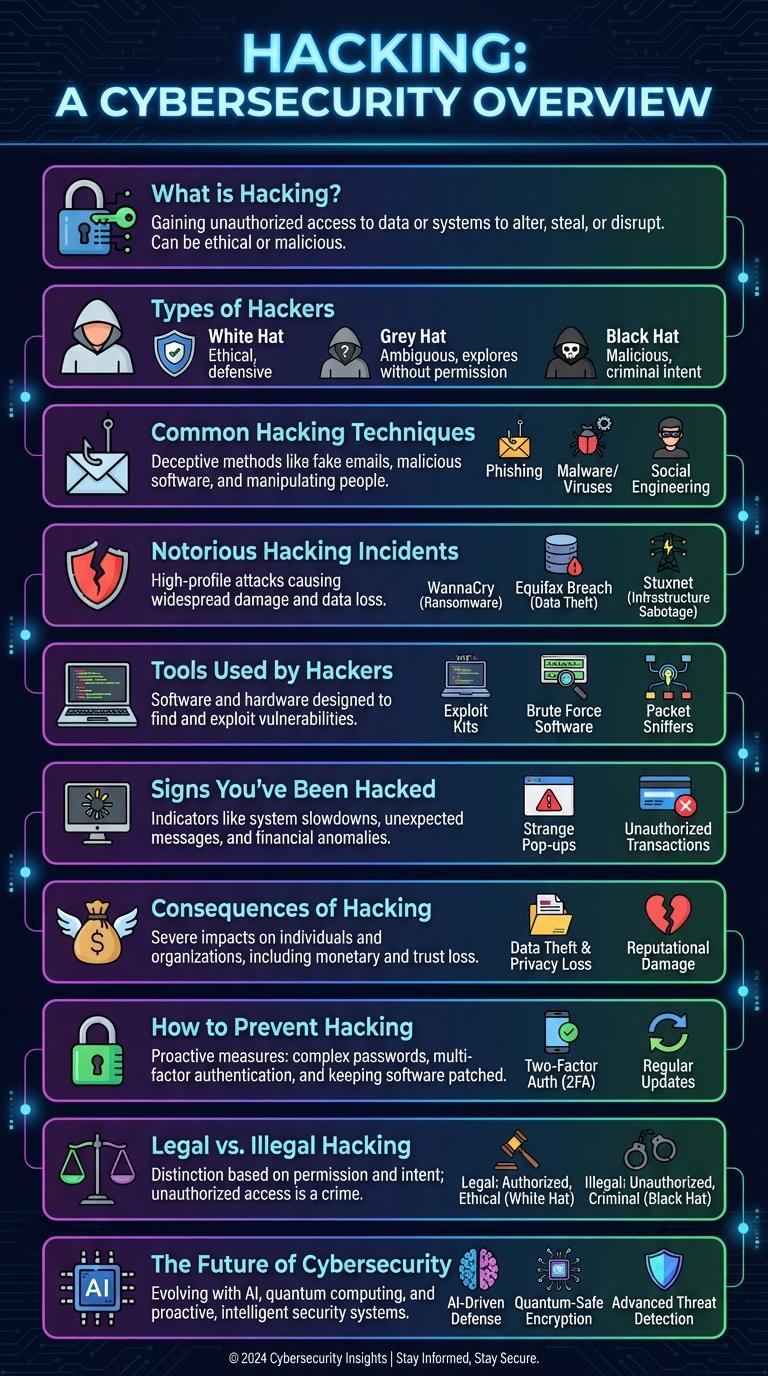
Hacking involves unauthorized access to computer systems to exploit vulnerabilities or steal sensitive information. It encompasses various techniques such as phishing, malware, and social engineering to breach security defenses. Understanding these methods is crucial for improving cybersecurity and protecting digital assets.
What is Hacking?
What is hacking? Hacking refers to the practice of exploring and manipulating computer systems or networks to identify vulnerabilities. It can be used for both malicious activities and ethical purposes such as cybersecurity testing.
Types of Hackers
Hacking involves various types of individuals who exploit computer systems and networks for different purposes. Understanding these hacker categories helps in identifying threats and improving cybersecurity defenses.
Hackers can be broadly classified based on their intent and methods used to gain unauthorized access to data or systems.
- Black Hat Hackers - Malicious actors who breach systems for personal gain, causing data theft or damage.
- White Hat Hackers - Ethical hackers authorized to identify vulnerabilities and improve security defenses.
- Grey Hat Hackers - Individuals who sometimes violate laws but without malicious intent, often exposing security flaws publicly.
Common Hacking Techniques
| Hacking Technique | Description |
|---|---|
| Phishing | Fraudulent attempts to obtain sensitive data by disguising as a trustworthy entity, often via email or fake websites. |
| SQL Injection | Inserting malicious SQL code into input fields to manipulate databases and access unauthorized information. |
| Malware | Software designed to disrupt, damage, or gain unauthorized access to computer systems or networks. |
| Brute Force Attack | Systematic trial of numerous passwords or keys until the correct one is found to gain unauthorized access. |
| Man-in-the-Middle (MitM) | Intercepting and altering communication between two parties without their knowledge to steal information. |
Notorious Hacking Incidents
Hacking incidents have repeatedly exposed vulnerabilities in digital systems worldwide. High-profile cyberattacks demonstrate the growing threat posed by cybercriminals targeting sensitive data and infrastructures.
Notorious hacking incidents include breaches like the 2017 Equifax attack, which compromised personal information of over 147 million people. Another significant case is the 2014 Sony Pictures hack, causing massive data leaks and financial losses.
Tools Used by Hackers
Hackers employ a variety of sophisticated tools to exploit system vulnerabilities and gain unauthorized access. Commonly used tools include network scanners, password crackers, keyloggers, and malware frameworks. Understanding these tools helps cybersecurity professionals develop stronger defenses against cyberattacks.
Signs You've Been Hacked
Detecting a hacking attempt early can protect your personal data and digital assets. Recognizing the signs of a security breach is crucial for prompt action.
- Unusual Account Activities - Unexpected login locations or password changes may indicate unauthorized access.
- Slow or Unresponsive Device - Malware or hacking processes can significantly degrade device performance.
- Unknown Software Installations - Programs installed without your consent might be malicious tools used by hackers.
- Strange Network Traffic - Unexpected spikes or unusual outgoing connections could signal data exfiltration.
- Disabled Security Features - Sudden deactivation of antivirus or firewall software suggests interference by attackers.
Consequences of Hacking
Hacking can lead to severe financial losses for both individuals and organizations. Personal data breaches often result in identity theft and long-lasting privacy violations. Cyberattacks also damage company reputations, causing loss of customer trust and legal penalties.
How to Prevent Hacking
Hacking poses significant risks to personal and organizational security. Preventative measures are essential to protect sensitive information from cyber threats.
- Use Strong Passwords - Create complex passwords combining letters, numbers, and symbols to prevent unauthorized access.
- Enable Two-Factor Authentication - Add an extra layer of security by requiring a second form of verification.
- Keep Software Updated - Regularly update operating systems and applications to patch security vulnerabilities.
- Be Cautious with Emails - Avoid clicking on suspicious links or downloading attachments from unknown sources.
- Install Security Software - Utilize antivirus and anti-malware programs to detect and block threats.
Consistent application of these strategies significantly reduces the risk of hacking incidents.
Legal vs. Illegal Hacking
Hacking involves gaining unauthorized or authorized access to computer systems. It can be classified into legal and illegal hacking based on intent and permission.
Legal hacking, often called ethical hacking, is performed by cybersecurity professionals to identify and fix vulnerabilities. Illegal hacking involves breaching systems without consent, leading to data theft, privacy invasion, or damage. Understanding the differences helps promote cybersecurity awareness and responsible behavior.