
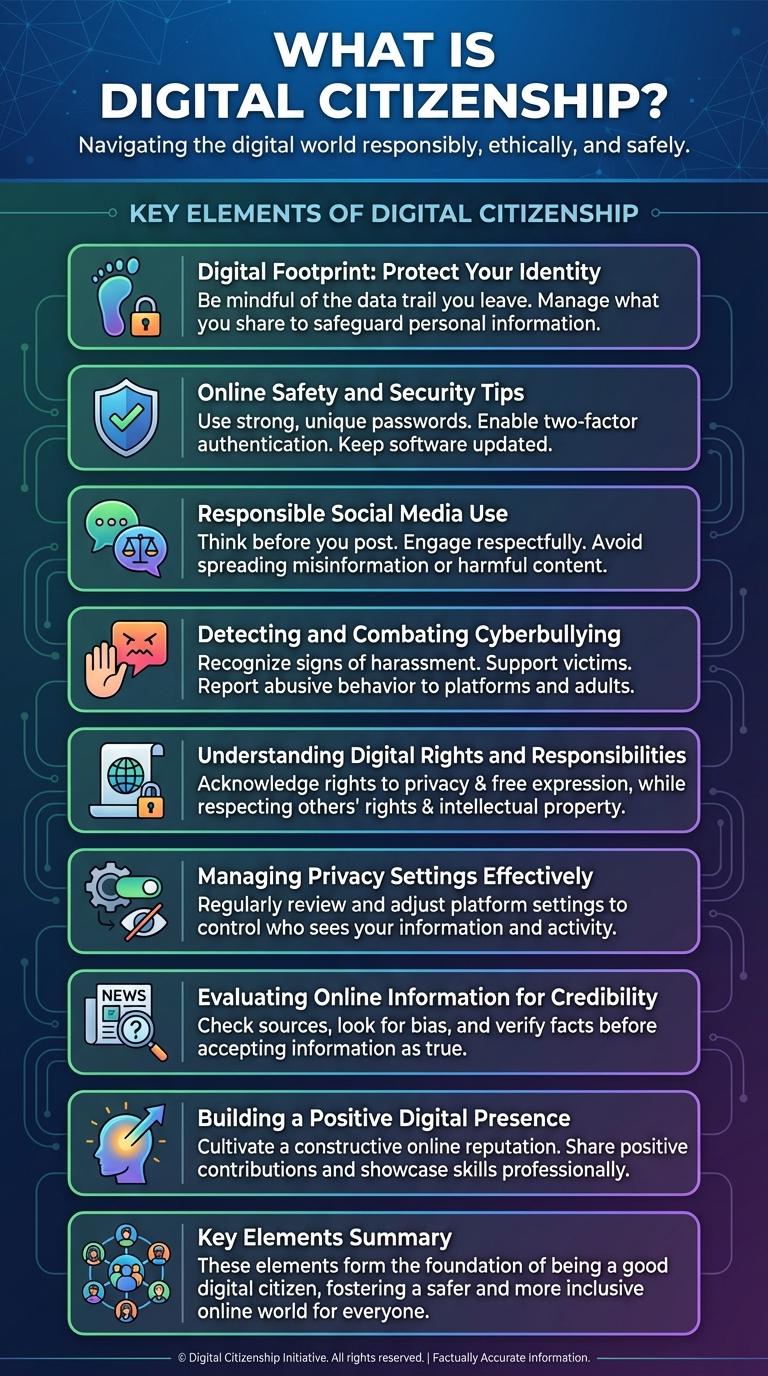
Digital citizenship encompasses responsible and informed use of technology, emphasizing online safety, privacy, and ethical behavior. Understanding digital rights and responsibilities helps individuals navigate the internet confidently and respectfully. This infographic highlights key aspects vital for fostering a positive digital community.
What is Digital Citizenship?
Digital citizenship refers to the responsible and ethical use of technology by individuals in digital environments. It encompasses understanding online behavior, safety, and participation in digital communities.
- Online Etiquette - Practicing respectful communication and appropriate behavior on digital platforms.
- Digital Literacy - Developing skills to effectively find, evaluate, and use information online.
- Cybersecurity Awareness - Recognizing potential online threats and protecting personal information.
Key Elements of Digital Citizenship
Digital citizenship encompasses the responsible and ethical use of technology by individuals in digital environments. Key elements include digital literacy, online safety, privacy management, digital communication, and cyberbullying awareness. Mastery of these components ensures users engage respectfully and securely in online communities.
Digital Footprint: Protect Your Identity
Digital citizenship involves responsible online behavior, with a key focus on protecting your digital footprint. Your digital footprint consists of all the information you share and leave behind on the internet, which can impact your privacy and reputation. Taking steps like using strong passwords, adjusting privacy settings, and thinking before posting helps safeguard your identity and personal data.
Online Safety and Security Tips
How can you protect your personal information online? Use strong, unique passwords for each account and enable two-factor authentication when available. Regularly update your software to guard against security vulnerabilities.
What measures help maintain privacy on social media platforms? Adjust privacy settings to control who can see your posts and personal details. Avoid sharing sensitive information that could be used for identity theft.
Why is recognizing phishing attempts crucial for online safety? Phishing attacks often disguise as trustworthy messages to steal your information. Verify email sources and avoid clicking on suspicious links or attachments.
How does using secure Wi-Fi contribute to online security? Public and unsecured Wi-Fi networks can expose your data to hackers. Use a virtual private network (VPN) to encrypt your internet connection on public networks.
What role does digital literacy play in online safety? Being informed about online threats empowers you to make safer decisions. Stay updated on emerging scams and educate yourself about safe browsing habits.
Responsible Social Media Use
| Aspect | Details |
|---|---|
| Definition | Responsible social media use involves engaging respectfully, sharing accurate information, and protecting personal privacy online. |
| Privacy Settings | Regularly update privacy controls to limit data exposure and manage who can see your posts. |
| Fact-Checking | Verify information through credible sources before sharing to prevent misinformation and fake news. |
| Respectful Communication | Use polite language, avoid online bullying, and respect diverse opinions to foster a positive online environment. |
| Time Management | Set limits on social media usage to maintain productivity and mental well-being. |
Detecting and Combating Cyberbullying
Cyberbullying involves using digital platforms to harass, threaten, or embarrass others. Recognizing signs like sudden emotional distress or withdrawal can help detect victims early.
Combating cyberbullying requires reporting abusive behavior on social media and supporting affected individuals. Promoting respectful online communication fosters a safer digital environment for all users.
Understanding Digital Rights and Responsibilities
Digital citizenship encompasses the norms of appropriate and responsible technology use. Understanding digital rights and responsibilities ensures safe, respectful, and ethical online behavior.
- Right to Privacy - Users have the right to protect their personal data and control who accesses it online.
- Responsibility to Respect Others - Maintaining respectful communication and avoiding cyberbullying supports a positive digital environment.
- Right to Access Information - Everyone should have equitable access to digital knowledge and resources for learning and growth.
Awareness of digital rights and responsibilities empowers individuals to participate confidently and ethically in the digital world.
Managing Privacy Settings Effectively
Digital citizenship involves responsible and ethical behavior when using technology. Managing privacy settings effectively is crucial to protect personal information online.
Adjusting privacy settings on social media platforms helps control who can see your content and personal data. Regularly reviewing these settings minimizes the risk of data breaches and identity theft. Understanding each platform's privacy options empowers users to maintain greater control over their digital footprint.
Evaluating Online Information for Credibility
Evaluating online information for credibility is essential in today's digital world to avoid misinformation. Users must assess the source's reliability and cross-check facts before sharing content.
Check the author's credentials, publication date, and website domain to ensure trustworthy information. Fact-checking websites and multiple reputable sources help verify the accuracy of online content.