
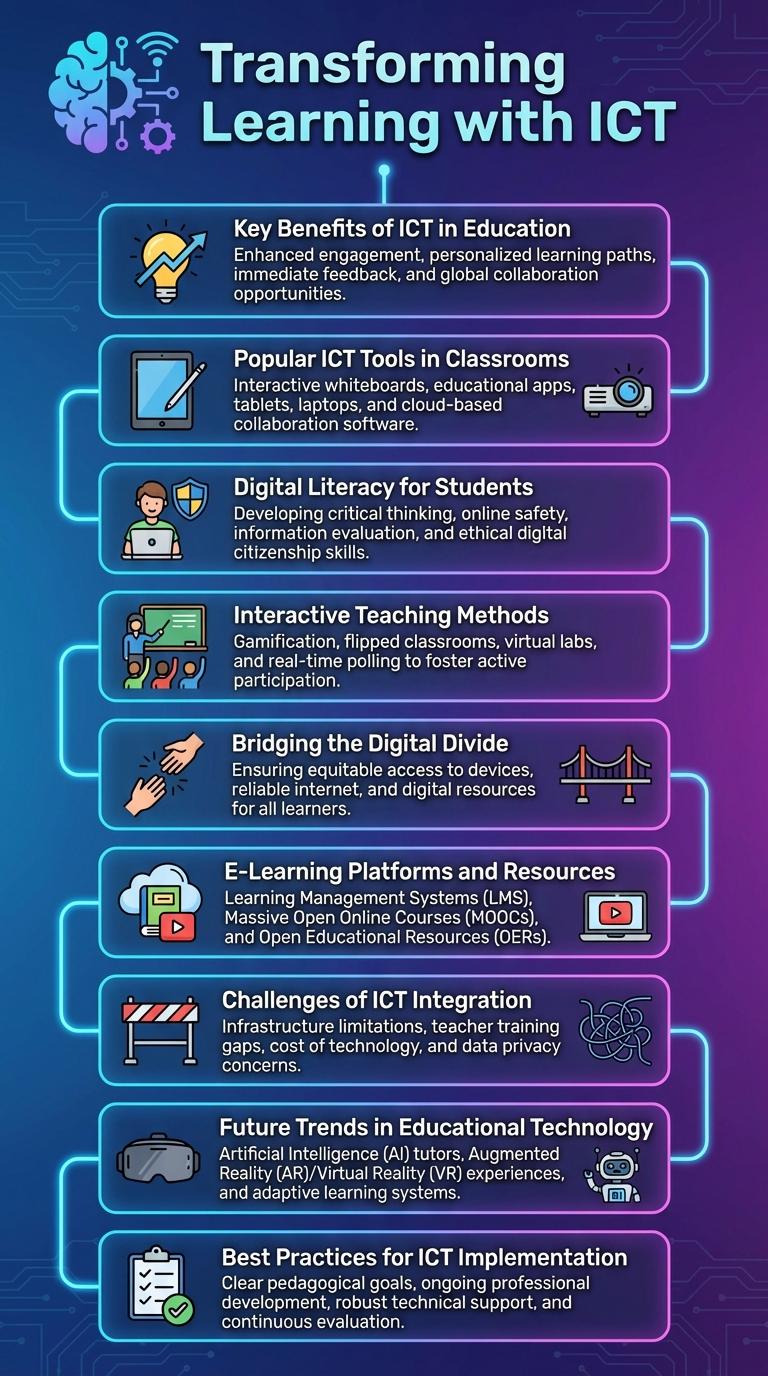
Infographics about ICT in education visually showcase how technology enhances teaching and learning processes through digital tools and resources. They highlight key statistics, benefits, and trends that demonstrate the integration of information and communication technology in classrooms worldwide. These visual presentations make complex data accessible and underscore the transformative impact of ICT on educational outcomes.
Transforming Learning with ICT
Information and Communication Technology (ICT) revolutionizes education by providing dynamic, interactive learning environments. Digital tools enhance student engagement and personalize learning experiences.
Schools integrate multimedia, virtual labs, and online resources to support diverse learning styles. ICT equips educators with data-driven insights to improve teaching strategies and outcomes.
Key Benefits of ICT in Education
Information and Communication Technology (ICT) has transformed modern education by enhancing learning experiences and enabling greater access to information. Integrating ICT in classrooms promotes interactive and personalized education.
- Improved Access to Resources - ICT provides students and teachers with access to a vast range of digital learning materials anytime, anywhere.
- Enhanced Student Engagement - Interactive tools like multimedia and simulations make learning more engaging and easier to understand.
- Facilitated Collaborative Learning - ICT supports communication platforms that encourage teamwork and knowledge sharing among students.
Popular ICT Tools in Classrooms
Information and Communication Technology (ICT) tools have revolutionized the educational landscape by enhancing learning experiences and fostering collaboration. Popular ICT tools in classrooms include interactive whiteboards, learning management systems (LMS), digital textbooks, educational apps, and video conferencing platforms. These tools support diverse learning styles, improve accessibility, and enable real-time feedback and assessment.
Digital Literacy for Students
Digital literacy is a fundamental skill for students in the modern educational landscape. It enables effective use of technology for learning, communication, and collaboration.
Developing digital literacy helps students critically evaluate information sources, navigate online platforms safely, and create digital content. Schools increasingly integrate ICT tools to enhance digital skills and prepare students for future careers. Mastery of digital literacy supports lifelong learning and adaptability in a technology-driven world.
Interactive Teaching Methods
How do interactive teaching methods enhance ICT in education? Interactive teaching methods leverage technology to create engaging and dynamic learning experiences. These methods promote student participation, collaboration, and immediate feedback, resulting in improved knowledge retention and critical thinking skills.
Bridging the Digital Divide
| Bridging the Digital Divide in Education | |
|---|---|
| Challenge | Lack of equitable access to technology and the internet among students worldwide |
| Impact | Limits opportunities for remote learning, digital literacy, and skill development |
| Key Strategies | Providing affordable devices, expanding broadband infrastructure, and enhancing digital skills training |
| Examples | Government initiatives offering subsidized laptops; Schools partnering with telecom companies to deliver free internet access |
| Benefits | Improved learning outcomes, greater student engagement, and reduced socio-economic educational gaps |
E-Learning Platforms and Resources
ICT in education has revolutionized the way students access learning materials through e-learning platforms. These resources provide flexible, interactive, and personalized educational experiences.
E-learning platforms offer diverse tools that enhance student engagement and support remote learning environments.
- Accessibility - E-learning platforms enable students to access educational content anytime and anywhere, breaking geographical barriers.
- Interactive Content - Multimedia tools such as videos, quizzes, and simulations increase student participation and comprehension.
- Personalized Learning - Adaptive learning technologies tailor experiences to individual student needs, improving learning outcomes.
Challenges of ICT Integration
Integrating ICT in education faces challenges such as limited access to reliable internet and inadequate infrastructure in many schools. Teachers often lack sufficient training to effectively use digital tools, hindering the potential benefits of technology-enhanced learning.
Resistance to change and lack of technical support further complicate the adoption of ICT in classrooms. Addressing these challenges requires investment in resources, professional development, and ongoing maintenance to ensure sustainable integration.
Future Trends in Educational Technology
Future trends in educational technology emphasize the integration of artificial intelligence to personalize learning experiences. Virtual and augmented reality tools are transforming immersive educational environments, enhancing student engagement. Data analytics and adaptive learning systems enable educators to track progress and tailor instruction effectively.