
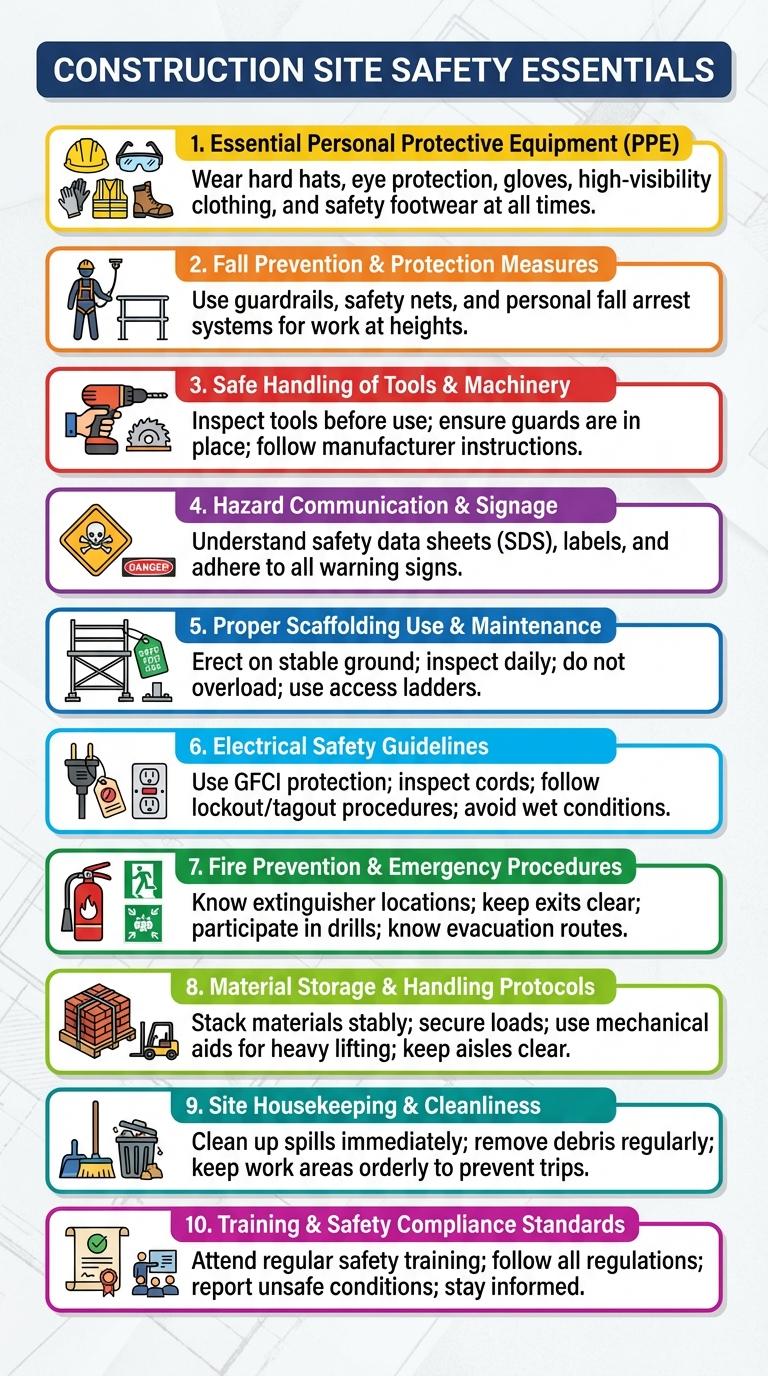
Implementing strict safety practices is essential in building construction to prevent accidents and protect workers on site. Key measures such as wearing personal protective equipment, adhering to safety protocols, and conducting regular training significantly reduce risks. Visualizing these practices through an infographic helps construction teams quickly understand and apply critical safety standards.
Essential Personal Protective Equipment (PPE)
Personal Protective Equipment (PPE) is crucial for ensuring safety in building construction sites. Using appropriate PPE reduces the risk of injuries and promotes a secure working environment.
- Hard Hats - Protect workers from head injuries caused by falling objects or bumps.
- Safety Glasses - Shield eyes from dust, debris, and chemical splashes on site.
- High-Visibility Clothing - Enhances visibility to prevent accidents involving machinery and vehicles.
- Gloves - Provide hand protection against cuts, abrasions, and harmful substances.
- Steel-Toe Boots - Safeguard feet from heavy impacts, punctures, and electrical hazards.
Consistent use of essential PPE is a fundamental practice to maintain safety and prevent construction site accidents.
Fall Prevention and Protection Measures
Effective fall prevention and protection measures are essential in building construction to minimize accidents and injuries. Common practices include using guardrails, personal fall arrest systems, and safety nets to protect workers from falling hazards. Proper training and regular equipment inspections ensure these safety measures are consistently applied on-site.
Safe Handling of Tools and Machinery
Safe handling of tools and machinery in building construction is crucial to prevent accidents and injuries. Workers must wear appropriate personal protective equipment (PPE) such as gloves, goggles, and helmets when operating equipment. Regular maintenance and proper training ensure tools and machinery function correctly and safely on-site.
Hazard Communication and Signage
Effective hazard communication and clear signage are crucial for safety in building construction. They ensure all workers are aware of potential dangers on site.
Using standardized signs and labels helps convey important safety information quickly and universally. Properly communicated hazards reduce accidents and improve compliance with safety regulations. Regular training on hazard symbols and signage enhances worker readiness and site safety.
Proper Scaffolding Use and Maintenance
Proper scaffolding use is essential to ensure worker safety and prevent accidents on construction sites. Regular inspection and maintenance of scaffolding structures reduce the risk of falls and collapse.
Workers must be trained to assemble, dismantle, and use scaffolding according to safety standards. Secure footing, guardrails, and load limits are critical components of safe scaffolding practices.
Electrical Safety Guidelines
| Electrical Safety Guidelines in Building Construction | |
|---|---|
| Use of Personal Protective Equipment (PPE) | Always wear insulated gloves, safety glasses, and flame-resistant clothing when working with electrical systems. |
| Lockout/Tagout Procedures | Ensure all electrical circuits are de-energized and properly locked out before maintenance to prevent accidental energization. |
| Grounding and Bonding | Verify that all electrical equipment and circuits are grounded to avoid electrical shock hazards. |
| Regular Equipment Inspection | Conduct daily inspections of electrical tools and cables for damage or wear to prevent short circuits and fires. |
| Training and Awareness | Provide specialized training to workers on electrical hazards, safe work practices, and emergency response procedures. |
Fire Prevention and Emergency Procedures
Fire prevention in building construction is critical to protect workers and materials from potential hazards. Implementing strict regulations for proper storage of flammable materials reduces the risk of fire outbreaks on site.
Emergency procedures involve clear evacuation plans and regular fire drills to ensure preparedness. Accessible fire extinguishers and trained personnel increase the effectiveness of response during emergencies.
Material Storage and Handling Protocols
Proper material storage and handling protocols are essential for maintaining safety on building construction sites. These practices minimize the risk of accidents and ensure efficient workflow during construction projects.
- Secure Storage Areas - Designate and organize storage zones to prevent materials from shifting or falling, reducing trip and fall hazards.
- Use Mechanical Aids - Employ forklifts, cranes, and hoists to handle heavy materials safely, minimizing physical strain on workers.
- Label Hazardous Materials - Clearly mark and store hazardous substances separately to prevent exposure and contamination risks.
Site Housekeeping and Cleanliness
Maintaining site housekeeping and cleanliness is crucial for minimizing hazards in building construction. A tidy construction site enhances worker safety and project efficiency.
- Regular Waste Removal - Frequent disposal of debris prevents trip hazards and maintains clear work areas.
- Organized Material Storage - Properly stored materials reduce clutter and facilitate easy access to tools and supplies.
- Clear Walkways - Keeping pathways free of obstructions ensures safe and quick movement for workers.