
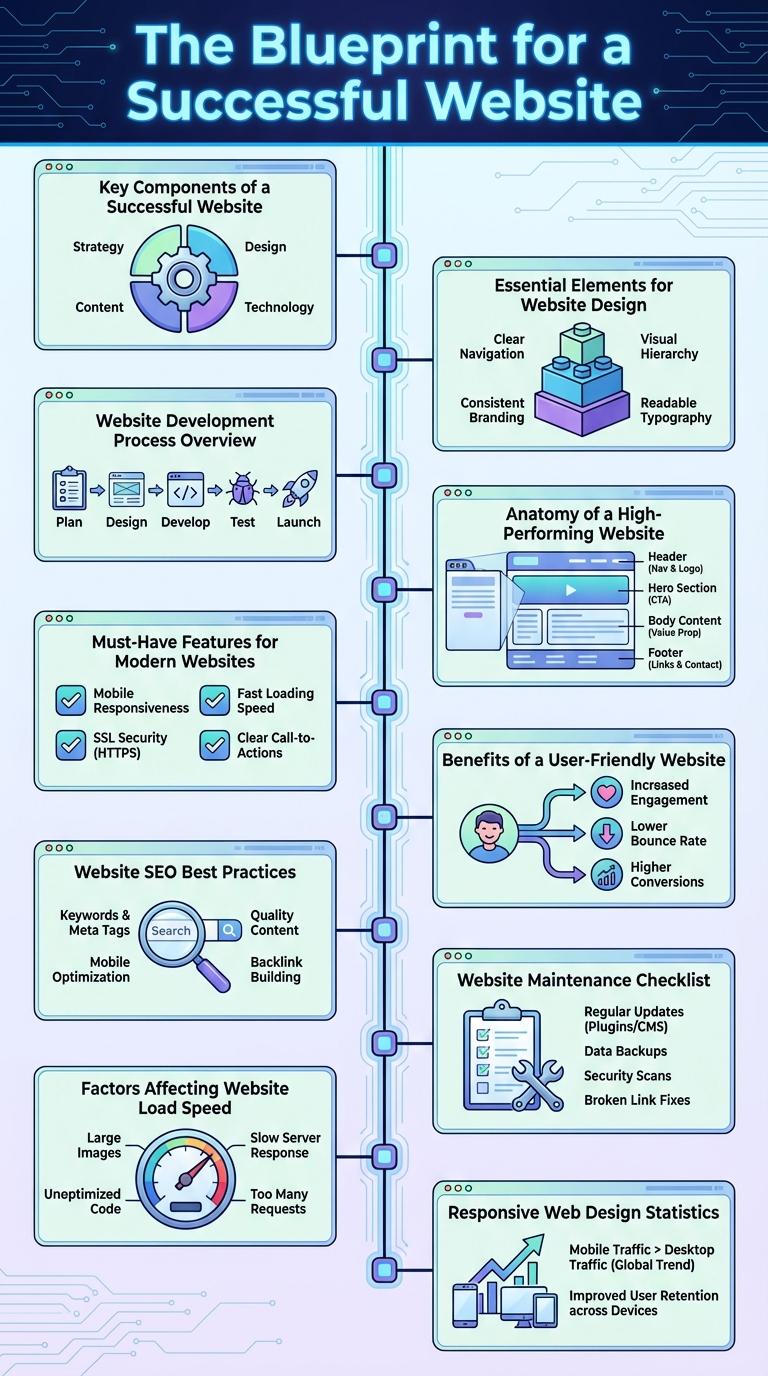
An infographic about a website visually presents key features, user statistics, and design elements to enhance understanding and engagement. It uses clear visuals such as charts, icons, and color schemes to highlight important information efficiently. This approach simplifies complex data, making it accessible for diverse audiences seeking quick insights.
Key Components of a Successful Website
A successful website combines essential components such as user-friendly design, fast loading speed, and mobile responsiveness. Clear navigation and compelling content keep visitors engaged and drive conversions. Optimizing SEO and integrating analytics tools enhance visibility and measure performance effectively.
Essential Elements for Website Design
Creating an effective website design requires attention to essential elements that enhance user experience and engagement. Key components include clear navigation, responsive layouts, and visually appealing graphics.
Content quality and fast loading times significantly impact website performance and user retention. Incorporating consistent branding and intuitive interface design ensures visitors easily find information and trust the site.
Website Development Process Overview
What are the key stages of the website development process? Website development involves several critical phases that ensure a functional and user-friendly site. Each stage focuses on distinct tasks that build toward the final product.
| Stage | Description |
|---|---|
| Planning | Defining the website's goals, target audience, and technical requirements. |
| Design | Creating wireframes and visual layouts to establish the site's look and feel. |
| Development | Writing code and building site functionality including backend and frontend work. |
| Testing | Ensuring all features work properly across devices and fixing any bugs. |
| Launch & Maintenance | Publishing the website and performing updates to keep it secure and current. |
Anatomy of a High-Performing Website
A high-performing website combines user-friendly design with fast loading speeds to enhance visitor experience and boost engagement. Clear navigation and responsive layouts ensure accessibility across all devices.
Optimized content using targeted keywords improves search engine visibility and drives organic traffic. Robust security features protect user data and build trust, cementing the website's reputation.
Must-Have Features for Modern Websites
| Feature | Description |
|---|---|
| Responsive Design | Ensures seamless viewing and navigation on all devices, from desktops to smartphones. |
| Fast Loading Speed | Improves user experience and search engine ranking by minimizing page load time. |
| Intuitive Navigation | Helps visitors find information quickly with clear menus and straightforward structure. |
| Secure HTTPS Protocol | Protects user data, builds trust, and is favored by search engines like Google. |
| SEO Optimization | Enhances visibility in search results through keyword integration and meta tags. |
Benefits of a User-Friendly Website
A user-friendly website enhances visitor experience by providing easy navigation and clear information. It increases engagement and conversion rates, making it a vital asset for any business.
- Improved User Engagement - A website that is easy to use encourages visitors to stay longer and explore more content.
- Higher Conversion Rates - Simplified user journeys lead to more completed actions such as purchases or sign-ups.
- Better SEO Performance - Search engines favor websites that offer seamless usability, boosting search rankings.
Website SEO Best Practices
Website SEO best practices enhance online visibility and improve search engine rankings. Implementing these strategies helps attract targeted traffic and boosts user engagement.
Use relevant keywords strategically throughout your content, titles, and meta descriptions to ensure search engines understand your site's purpose. Optimize website speed and mobile responsiveness to provide a better user experience. Regularly update content and build quality backlinks to maintain authority and relevance.
Website Maintenance Checklist
Regular website maintenance ensures optimal performance and security. A structured checklist helps in timely updates and problem prevention.
- Backup Data - Regular backups protect your website content and user data from unexpected loss or corruption.
- Update Software - Keeping CMS, plugins, and themes up-to-date prevents security vulnerabilities and ensures compatibility.
- Check Links - Identifying and fixing broken links improves user experience and SEO rankings.
Factors Affecting Website Load Speed
Website load speed is influenced by multiple critical factors that directly impact user experience and search engine rankings. Key elements include server performance, image optimization, and the use of efficient coding practices. Understanding these factors helps in creating faster, more responsive websites that retain visitors and improve overall engagement.