
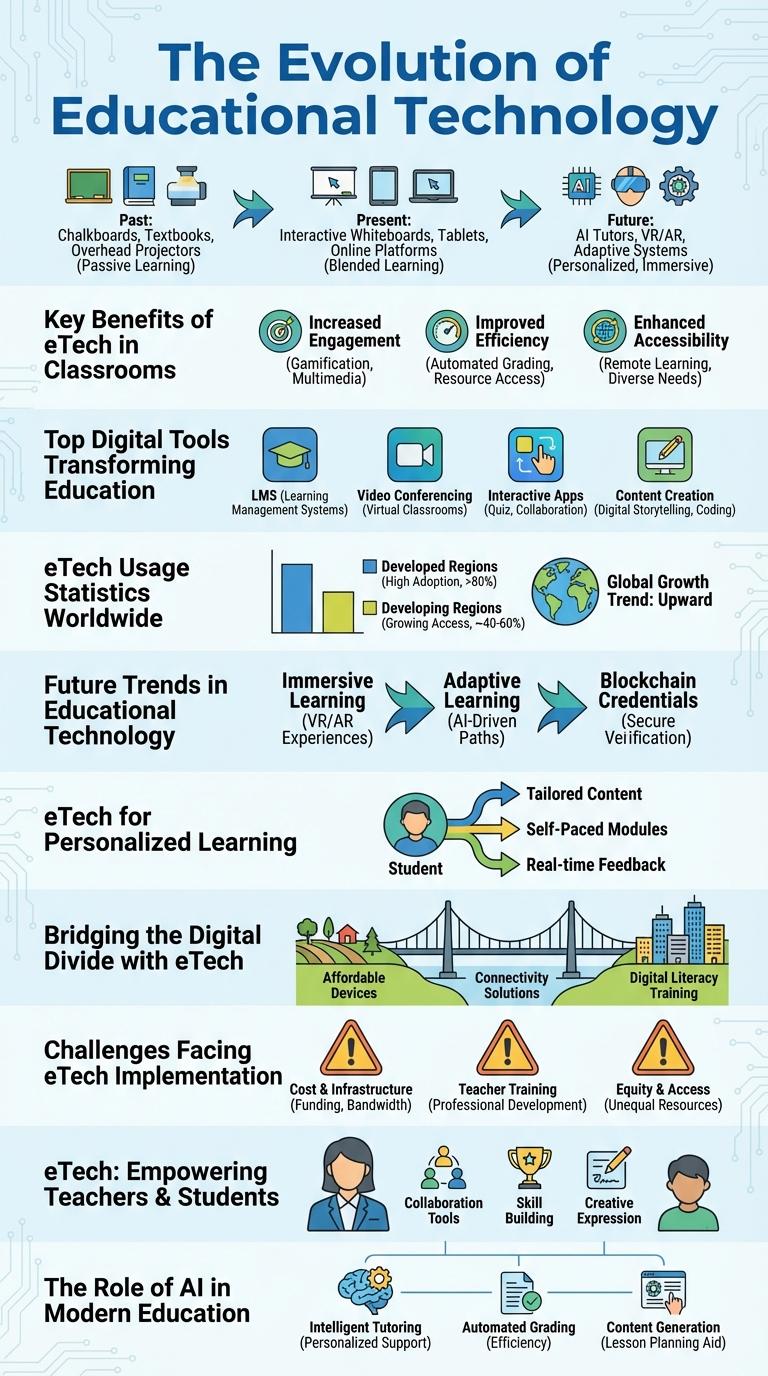
Etech combines technology and education to transform learning experiences through innovative tools and digital resources. Infographics about eTech highlight key trends, benefits, and emerging technologies shaping modern education. Visual representations make complex data accessible, enhancing understanding for educators and learners alike.
The Evolution of Educational Technology
Educational technology has transformed learning environments from traditional classrooms to dynamic digital platforms. The evolution of edtech reflects advances in digital tools and pedagogical methods that enhance student engagement.
- Early Tools - Chalkboards and overhead projectors were foundational aids in classrooms during the early 20th century.
- Computer Integration - The 1980s introduced personal computers, expanding access to interactive educational software.
- Internet Revolution - Widespread internet access in the 2000s enabled online learning and global information sharing.
Today, artificial intelligence and immersive technologies like VR are driving the next wave of personalized and experiential education.
Key Benefits of eTech in Classrooms
eTech transforms traditional classrooms by integrating advanced digital tools to enhance learning experiences. It empowers both educators and students with innovative resources for improved engagement and outcomes.
- Enhanced Student Engagement - Interactive technologies capture students' attention and increase participation in lessons.
- Personalized Learning - Adaptive software tailors educational content to meet individual student needs and learning paces.
- Access to Vast Resources - Digital platforms provide instant access to a wide range of educational materials and multimedia content.
Top Digital Tools Transforming Education
Educational technology, or EdTech, revolutionizes learning by integrating digital tools that enhance engagement and accessibility. Top digital tools transforming education include interactive platforms, virtual classrooms, and AI-powered tutoring systems. These innovations foster personalized learning experiences, improve collaboration, and streamline administrative tasks.
| Digital Tool | Impact on Education |
|---|---|
| Learning Management Systems (LMS) | Organize courses and track student progress efficiently |
| Virtual Reality (VR) | Provides immersive, experiential learning environments |
| AI Tutoring Systems | Deliver personalized instruction and feedback |
| Collaborative Tools | Enhance communication and teamwork among students |
| Educational Apps | Offer flexible, accessible learning on various devices |
eTech Usage Statistics Worldwide
| Metric | Statistic |
|---|---|
| Global eTech Users | 4.8 billion (2024) |
| Annual Growth Rate | 12.7% |
| Mobile eTech Access | 78% of total users |
| eTech Adoption in Education | 63% of schools worldwide |
| Enterprise eTech Integration | 58% of companies |
Future Trends in Educational Technology
Educational technology is rapidly evolving, transforming how students learn and educators teach. Future trends in edtech promise enhanced engagement, personalized learning, and greater accessibility across diverse environments.
- Artificial Intelligence Integration - AI will enable adaptive learning platforms that customize content to each student's needs, improving outcomes and efficiency.
- Virtual and Augmented Reality - Immersive VR/AR experiences will provide hands-on, interactive lessons that simulate real-world scenarios for deeper understanding.
- Data-Driven Insights - Advanced analytics will offer educators actionable insights on student performance to tailor instruction and intervene early when needed.
eTech for Personalized Learning
eTech for personalized learning leverages advanced technology to tailor educational experiences to individual student needs. Adaptive software analyzes learning patterns, enabling customized content delivery and pacing. Interactive tools and AI-driven assessments enhance engagement and improve learning outcomes.
Bridging the Digital Divide with eTech
eTech transforms education by making digital resources accessible to all, bridging the digital divide. Innovative technologies empower underserved communities to gain essential digital skills and knowledge.
Bridging the digital divide with eTech enhances educational equity and fosters inclusive learning environments. Interactive platforms, affordable devices, and widespread internet access create opportunities for all learners. These advancements reduce gaps in education quality and prepare students for a digital future.
Challenges Facing eTech Implementation
eTech implementation faces significant challenges that impact its effectiveness and adoption. These challenges include infrastructure limitations, high costs, and lack of skilled personnel.
Data security concerns and resistance to change further hinder successful integration. Addressing these issues is critical for maximizing the benefits of eTech solutions.
eTech: Empowering Teachers & Students
How does eTech empower teachers and students in the classroom?
eTech integrates advanced digital tools to enhance interactive learning and streamline lesson planning. It fosters collaboration, critical thinking, and personalized education for every student.
What are the key benefits of using eTech for educators?
Teachers gain access to real-time data analytics to monitor student progress and tailor instruction. eTech also reduces administrative tasks, allowing more focus on teaching quality.
How does eTech improve student engagement and performance?
Interactive multimedia resources and adaptive learning platforms keep students motivated and challenged. This technology helps address diverse learning styles for better academic outcomes.
What types of eTech tools support effective teaching?
Popular tools include learning management systems (LMS), virtual classrooms, and assessment software. These resources facilitate seamless communication and flexible education delivery.
How does eTech prepare students for future careers?
By integrating coding, problem-solving, and digital literacy into curricula, eTech equips students with essential 21st-century skills. This foundation supports lifelong learning and workforce readiness.