
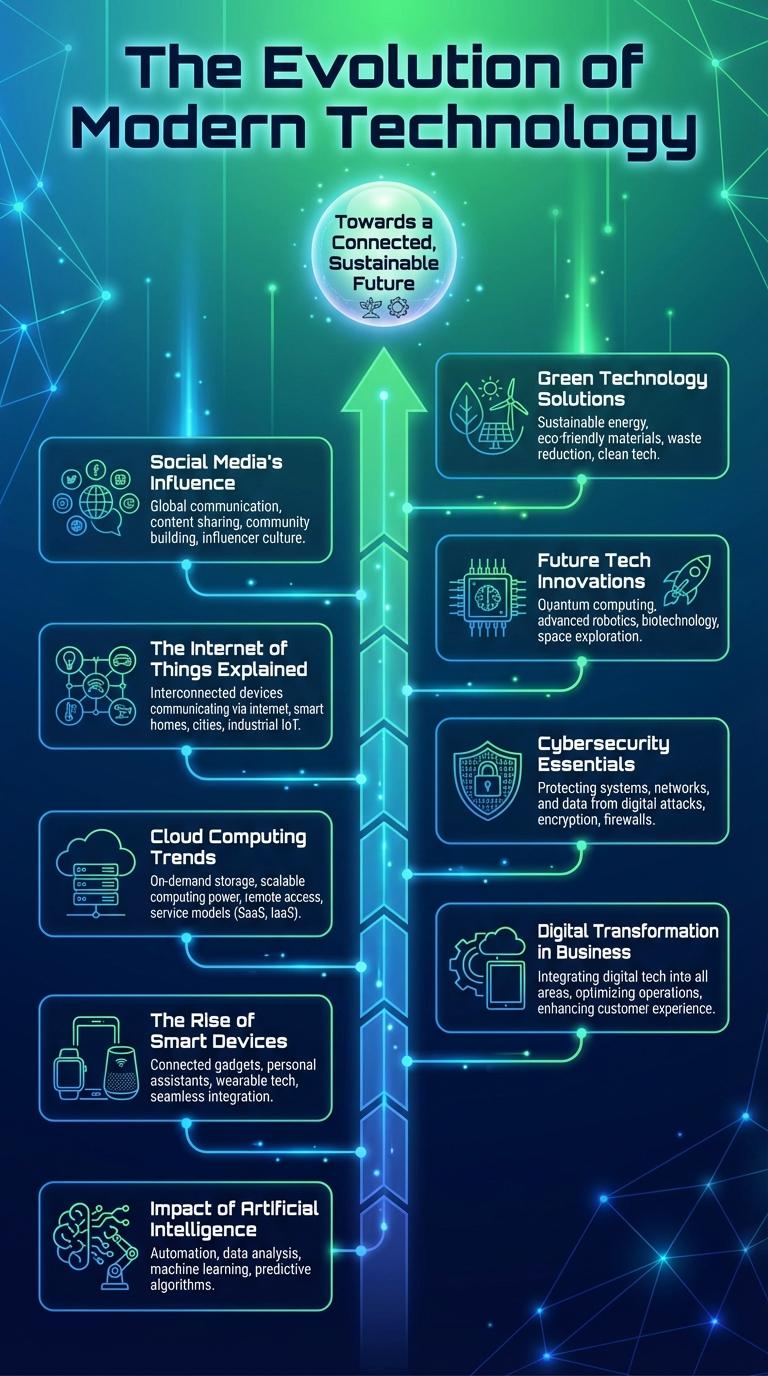
Infographics about technology visually present complex information in an easily digestible format, highlighting key trends and data. They integrate graphics, statistics, and concise text to showcase advancements and innovations across various tech sectors. This approach enhances understanding and engagement for diverse audiences interested in the digital age.
The Evolution of Modern Technology
The evolution of modern technology marks a remarkable journey from basic tools to advanced digital systems. Innovations in computing, communication, and automation have transformed everyday life globally.
Early inventions like the telegraph and steam engine paved the way for today's internet, smartphones, and artificial intelligence. Continuous advancements drive increased efficiency, connectivity, and access to information across multiple industries.
Impact of Artificial Intelligence
| Aspect | Impact of Artificial Intelligence |
|---|---|
| Healthcare | AI enhances diagnostics, personalizes treatment plans, and accelerates drug discovery processes. |
| Industry | Automation improves manufacturing efficiency, reduces errors, and lowers operational costs. |
| Transportation | AI powers autonomous vehicles, optimizes traffic management, and increases safety. |
| Education | Adaptive learning platforms provide personalized content and real-time feedback to students. |
| Business | AI-driven analytics support decision-making, enhance customer experience, and streamline workflows. |
The Rise of Smart Devices
The rise of smart devices has significantly transformed daily life by enhancing connectivity and automation. These advanced gadgets integrate artificial intelligence to deliver personalized experiences and increased efficiency.
- Growing Market - The global smart device market is projected to exceed $520 billion by 2025, reflecting rapid adoption worldwide.
- Internet of Things (IoT) - Over 14 billion IoT devices are currently connected, enabling seamless communication and data exchange across platforms.
- Enhanced User Experience - Smart devices utilize AI and machine learning to adapt to user preferences, improving convenience and productivity.
Digital Transformation in Business
Digital transformation in business integrates advanced technologies like AI, cloud computing, and IoT to enhance operational efficiency and customer experience. Companies adopting digital tools report increased productivity, faster decision-making, and improved market competitiveness. Strategic investment in digital infrastructure drives innovation and supports scalable business models in the evolving digital economy.
Cloud Computing Trends
Cloud computing continues to transform the technology landscape by offering scalable and flexible solutions. Emerging trends highlight advancements in security, hybrid models, and AI integration within cloud services.
These innovations drive efficiency, cost savings, and enhanced data management for businesses worldwide.
- Increased Adoption of Hybrid Cloud - Organizations combine private and public clouds to improve flexibility and optimize workloads.
- Enhanced Cloud Security - Advanced encryption and zero-trust models are implemented to protect sensitive data.
- Integration of Artificial Intelligence - AI-powered tools automate cloud operations and improve data analytics capabilities.
Cybersecurity Essentials
Cybersecurity essentials protect digital assets from unauthorized access and cyber threats. Implementing strong passwords and multi-factor authentication enhances security measures.
Regular software updates and data backups reduce vulnerabilities and safeguard information. Awareness of phishing attacks and safe browsing habits are critical for online safety.
The Internet of Things Explained
What is the Internet of Things (IoT)? The Internet of Things refers to the network of physical devices embedded with sensors, software, and connectivity enabling them to collect and exchange data. IoT connects everyday objects to the internet, making them smarter and more interactive.
How does IoT work? IoT devices use sensors to gather information, which is then transmitted via the internet to other devices or cloud platforms for processing. This enables real-time monitoring, automation, and improved decision-making across various applications.
Where is IoT commonly used? IoT is widely applied in smart homes, wearable health devices, industrial automation, and smart cities to optimize efficiency and enhance user experience. These applications provide seamless control and insights by connecting disparate systems.
What are the benefits of IoT? IoT improves operational efficiency, reduces costs, and enhances convenience by automating routine tasks and providing actionable data insights. It also supports innovation in healthcare, agriculture, transportation, and more industries.
What challenges does IoT face? Security and privacy concerns are significant challenges due to the vast amount of data IoT devices generate and share. Interoperability between diverse devices and managing large-scale data processing also require advanced solutions.
Future Tech Innovations
Future tech innovations are set to revolutionize industries with advancements in artificial intelligence, quantum computing, and biotechnology. These technologies promise enhanced efficiency, smarter solutions, and breakthroughs in healthcare and communication. Investing in future tech can drive sustainable growth and create new opportunities across global markets.
Social Media's Influence
Social media has revolutionized communication, connecting billions across the globe. Its influence extends into culture, politics, and consumer behavior, shaping modern society.
- Global Connectivity - Over 4.7 billion people use social media, enabling instant interaction worldwide.
- Information Sharing - Platforms facilitate rapid dissemination of news, influencing public opinion and awareness.
- Marketing Impact - Businesses leverage social media for targeted advertising, increasing brand engagement and sales.
Social media continues to evolve, driving technological advancement and transforming how individuals and organizations communicate.