
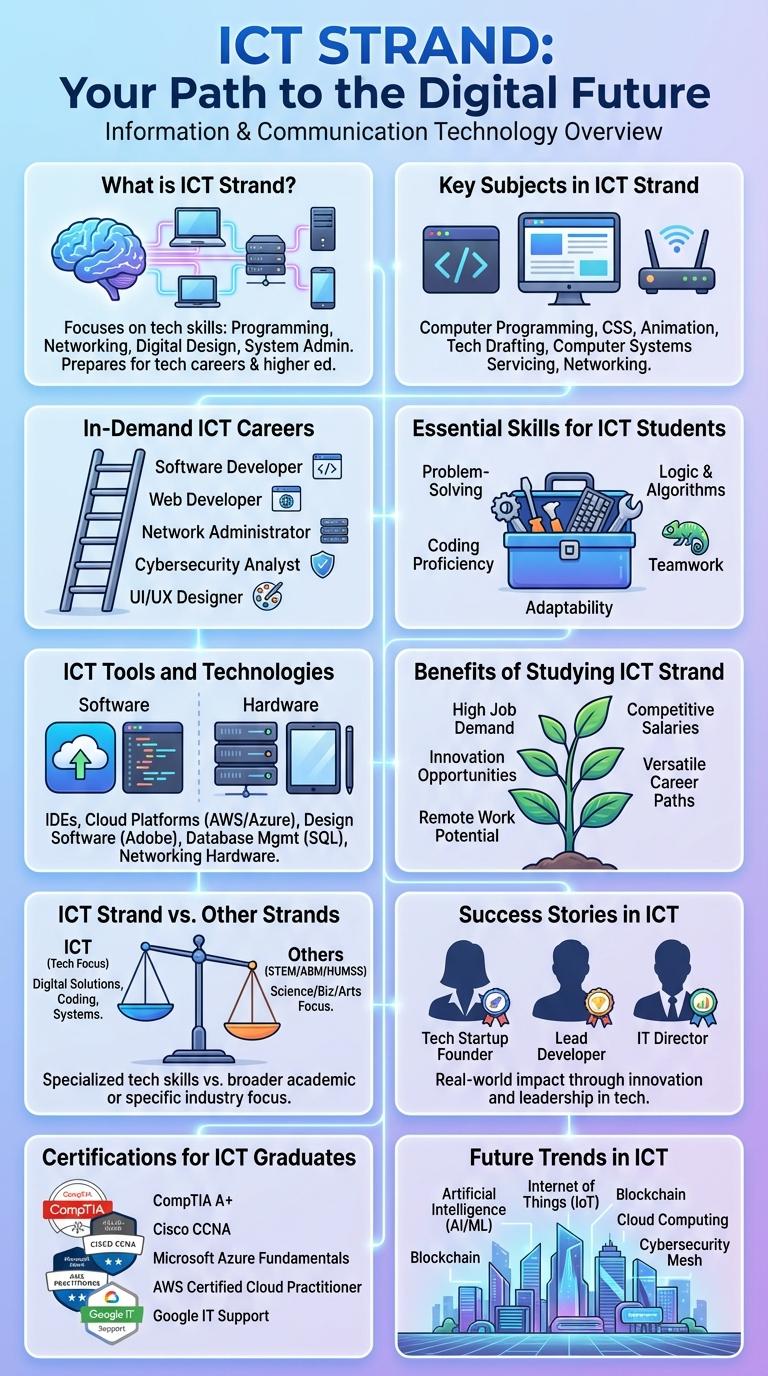
The ICT strand equips students with essential skills in information and communication technology, preparing them for careers in programming, networking, and multimedia. It focuses on developing problem-solving abilities and digital literacy through hands-on projects and theoretical knowledge. Mastery of this strand opens opportunities in the fast-growing tech industry and innovation-driven fields.
What is ICT Strand?
The ICT Strand stands for Information and Communications Technology, a specialized track in senior high school education that focuses on computer systems, software development, and digital networking. It prepares students for careers in technology, programming, and IT support.
Students in the ICT Strand learn essential skills such as web development, database management, and basic coding languages. This strand equips learners with practical knowledge to excel in the rapidly evolving digital world.
Key Subjects in ICT Strand
What are the key subjects in the ICT strand? The Information and Communications Technology (ICT) strand covers essential topics that prepare students for tech-driven careers. Core subjects include Programming, Networking, Web Development, Multimedia, and Database Management.
| Subject | Description |
|---|---|
| Programming | Focuses on coding languages and software development techniques. |
| Networking | Covers the design, implementation, and management of computer networks. |
| Web Development | Teaches building websites and responsive web applications. |
| Multimedia | Involves creating digital graphics, audio, and video content. |
| Database Management | Focuses on organizing and managing data using various database systems. |
In-Demand ICT Careers
The ICT strand offers numerous career opportunities in today's technology-driven world. Students gain skills that prepare them for high-demand jobs in various digital fields.
In-demand ICT careers include software developers, network engineers, cybersecurity specialists, data analysts, and web designers. These roles are critical for organizations aiming to innovate and maintain secure digital environments. The demand for skilled professionals in these areas continues to grow with advances in technology and digital transformation.
Essential Skills for ICT Students
The ICT strand equips students with critical technical and analytical skills essential for success in technology-driven industries. Mastery of these skills ensures adaptability and innovation in various ICT career paths.
- Programming Proficiency - Ability to write and understand code in multiple languages forms the foundation for software development and problem-solving.
- Network Management - Knowledge of network configurations and cybersecurity protects data integrity and enhances communication systems.
- Data Analysis - Skills in processing and interpreting data support informed decision-making and strategic planning.
Developing these essential skills prepares ICT students for dynamic roles in a rapidly evolving digital landscape.
ICT Tools and Technologies
The ICT strand focuses on the study and application of Information and Communication Technology tools and technologies. It covers hardware, software, networking, and emerging digital innovations essential for modern communication and business operations. Mastery of ICT tools equips students with skills in programming, database management, cybersecurity, and multimedia processing.
Benefits of Studying ICT Strand
Studying the ICT strand equips students with essential digital skills required in today's technology-driven world. It opens diverse career opportunities in various sectors including business, healthcare, and education.
The ICT strand enhances problem-solving abilities by teaching programming and system analysis. It also promotes innovation through hands-on experience with emerging technologies like AI and cybersecurity.
- Career Readiness - Graduates gain practical skills that prepare them for jobs in software development, network administration, and IT support.
- Technological Proficiency - Students become adept at using and managing modern digital tools and platforms critical in multiple industries.
- Innovative Thinking - The curriculum fosters creativity and critical thinking essential for developing new technologies and solutions.
ICT Strand vs. Other Strands
| ICT Strand | Other Strands |
|---|---|
| Specializes in Information and Communications Technology, focusing on programming, network management, and technical troubleshooting. | Includes strands like ABM (Accountancy, Business, Management), HUMSS (Humanities and Social Sciences), and STEM (Science, Technology, Engineering, and Mathematics). |
| Prepares students for careers in software development, IT support, cybersecurity, and web design. | Other strands prepare students for fields such as business management, social sciences, education, engineering, and pure sciences. |
| Emphasizes hands-on technical skills and practical applications in digital technologies. | Often focuses on theoretical knowledge, critical thinking, and research-based learning relevant to respective fields. |
| Offers specialized subjects like Programming, Networking, Animation, and Computer Systems Servicing. | Includes specialized subjects like Marketing, Psychology, Literature, Calculus, Physics, or Biology depending on the strand. |
| Leads directly to technology-related certifications and industry-specific licenses, enhancing job readiness. | Prepares students for diverse college courses and career paths, depending on academic and professional interests. |
Success Stories in ICT
The ICT strand has produced numerous success stories, showcasing the impact of information and communication technology on various industries and communities. Graduates and professionals in ICT have driven innovation, economic growth, and digital transformation worldwide.
Success in the ICT field is measured through achievements in entrepreneurship, technological development, and leadership roles in the digital era.
- Tech Startups Thriving Globally - ICT graduates have founded startups that revolutionize industries such as fintech, health tech, and e-commerce.
- Innovations in Software Development - Professionals developed cutting-edge applications improving efficiency in business processes and everyday life.
- Leadership in Digital Transformation - ICT experts lead digital projects that enhance connectivity and services in both public and private sectors.
Certifications for ICT Graduates
Information and Communications Technology (ICT) graduates have access to a variety of industry-recognized certifications that enhance their technical skills and career prospects. These certifications validate expertise in areas such as networking, cybersecurity, programming, and database management.
Popular certifications for ICT graduates include CompTIA A+, Cisco Certified Network Associate (CCNA), Microsoft Certified: Azure Fundamentals, Certified Information Systems Security Professional (CISSP), and Oracle Certified Professional (OCP). Earning these credentials helps graduates stand out in competitive job markets and meet the demands of evolving technology sectors.