
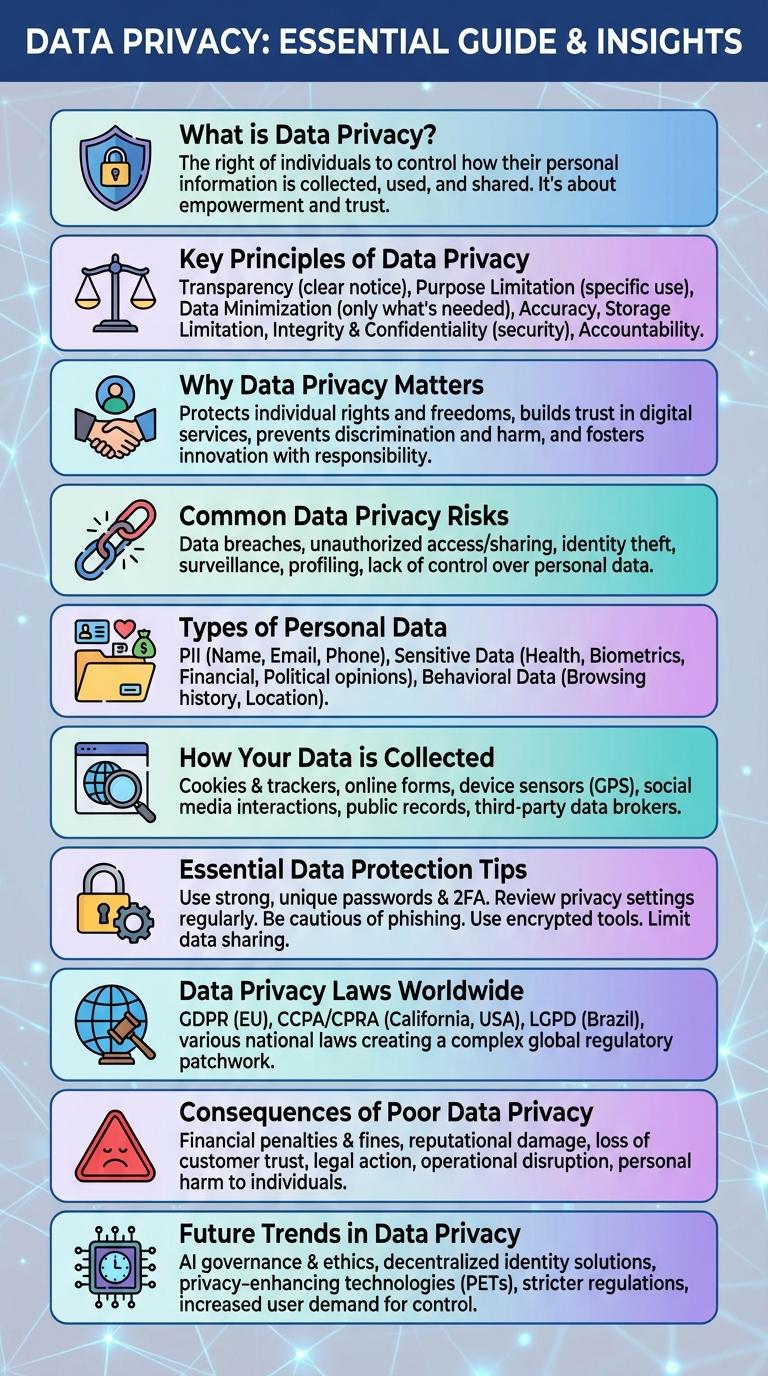
Data privacy remains a critical concern in the digital age as individuals and organizations seek to protect sensitive information from unauthorized access. Understanding key concepts such as data encryption, user consent, and regulatory compliance is essential for maintaining security. This infographic visually presents the most important aspects of data privacy, highlighting best practices and emerging trends.
What is Data Privacy?
Data privacy refers to the protection and proper handling of personal information collected by organizations and individuals. It ensures that sensitive data is stored, used, and shared in accordance with legal and ethical standards.
- Confidentiality - Ensures that personal data is accessible only to authorized individuals or entities.
- Consent - Requires individuals to give explicit permission before their data is collected or processed.
- Data Security - Involves technical and organizational measures to protect data from breaches or unauthorized access.
Key Principles of Data Privacy
Data privacy is crucial in protecting individuals' personal information from unauthorized access and misuse. Understanding key principles of data privacy helps organizations maintain trust and comply with regulations.
- Data Minimization - Only collect data that is necessary for the intended purpose to reduce exposure risks.
- Consent - Obtain clear and explicit permission from users before collecting or processing their data.
- Transparency - Inform users about how their data is collected, stored, and used.
- Security - Implement strong safeguards to protect data from breaches and unauthorized access.
- Accountability - Ensure organizations are responsible for data privacy practices and can demonstrate compliance.
Why Data Privacy Matters
Data privacy protects sensitive personal information from unauthorized access and misuse. It ensures individuals maintain control over their digital identities and personal data.
- Protects Personal Information - Safeguards data such as social security numbers, financial details, and health records from identity theft and fraud.
- Ensures Compliance - Helps organizations adhere to regulations like GDPR and CCPA, avoiding legal penalties and financial losses.
- Builds Trust - Encourages consumer confidence by demonstrating commitment to data security and responsible handling of information.
Prioritizing data privacy is essential for safeguarding rights and maintaining digital security in an interconnected world.
Common Data Privacy Risks
Data privacy risks arise from unauthorized access, data breaches, and improper data handling practices. Common threats include phishing attacks, malware infections, and weak password protection, leading to sensitive information exposure. Organizations must implement robust security protocols and educate users to mitigate these risks effectively.
Types of Personal Data
Data privacy centers on protecting various types of personal data collected from individuals. Understanding these data types helps in implementing effective privacy measures and compliance policies.
Personal data includes identifiable information such as names, addresses, and contact details. It also covers sensitive data like health records, financial information, and biometric identifiers that require enhanced protection.
How Your Data is Collected
How is your data collected online? Websites use cookies and tracking pixels to monitor your browsing habits, while apps request permissions to access personal information.
Data is also gathered through forms you fill out, including email subscriptions and account registrations. Social media platforms collect interactions and preferences to build detailed user profiles.
Essential Data Protection Tips
| Data Protection Tips | Description |
|---|---|
| Use Strong Passwords | Create complex passwords combining letters, numbers, and symbols. Avoid common words or easily guessed information. |
| Enable Two-Factor Authentication | Activate 2FA on accounts to add an extra layer of security beyond passwords. |
| Regular Software Updates | Keep operating systems, applications, and antivirus software up-to-date to protect against vulnerabilities. |
| Be Cautious with Public Wi-Fi | Avoid accessing sensitive information on public networks or use a VPN to encrypt data transmissions. |
| Limit Sharing Personal Information | Share only necessary personal data online; review privacy settings on social media platforms consistently. |
Data Privacy Laws Worldwide
Data privacy laws protect personal information by regulating how organizations collect, store, and share data. These regulations vary widely across different countries, reflecting diverse approaches to privacy rights.
Key legislation includes the European Union's General Data Protection Regulation (GDPR), which sets strict requirements for data handling and user consent. Other notable laws are the California Consumer Privacy Act (CCPA) and Brazil's Lei Geral de Protecao de Dados (LGPD), both enhancing consumer control over personal information.
Consequences of Poor Data Privacy
Poor data privacy can lead to identity theft, resulting in financial loss and damaged credit scores. Data breaches expose sensitive personal information, increasing vulnerability to cyber attacks and fraud. Companies face legal penalties, loss of customer trust, and significant reputational damage from inadequate data protection.