
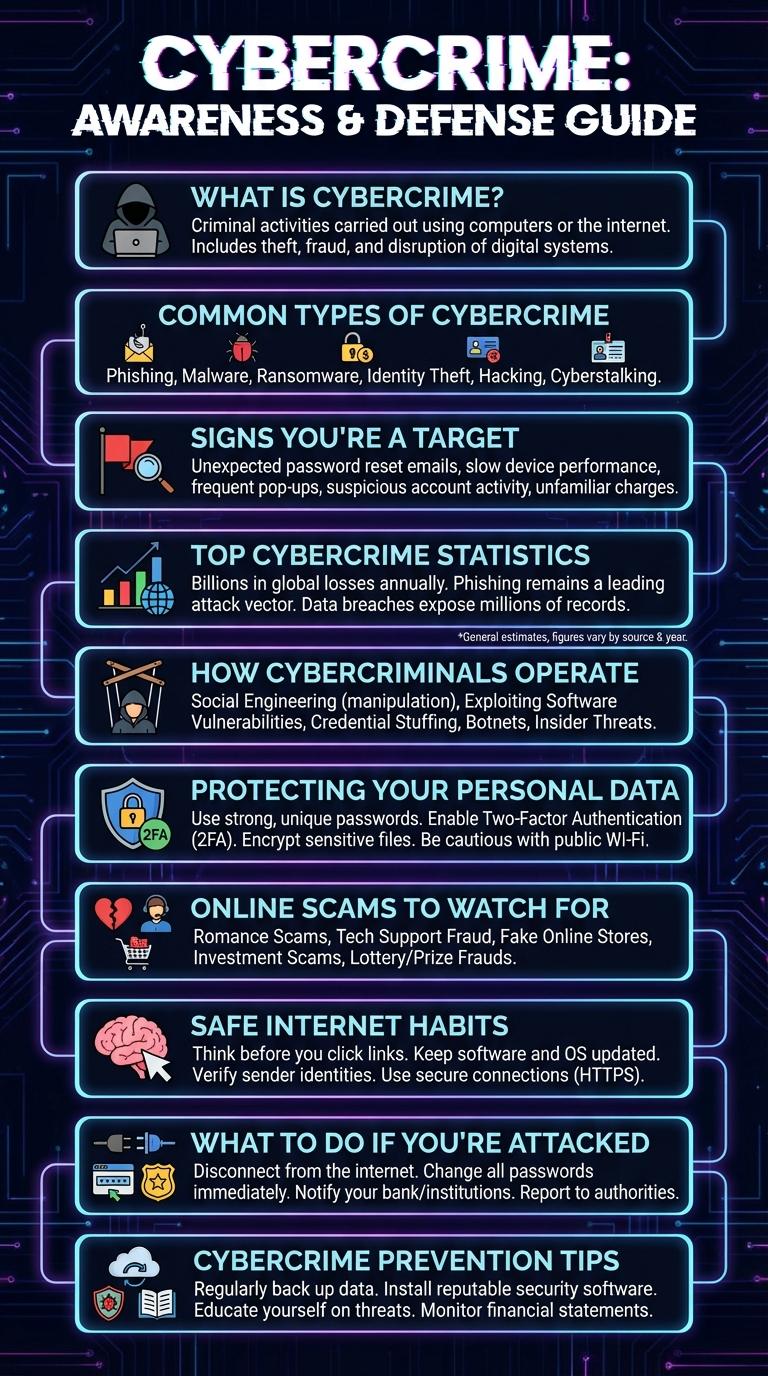
Cybercrime awareness is crucial in today's digital landscape where threats evolve rapidly and affect individuals and organizations alike. Understanding common cyber threats such as phishing, malware, and identity theft empowers users to recognize and avoid potential dangers. This infographic presents key information and practical tips to enhance online security and protect sensitive data effectively.
What is Cybercrime?
Cybercrime encompasses illegal activities conducted through digital devices and networks. It targets individuals, organizations, and governments to steal data, disrupt services, or cause harm.
- Types of Cybercrime - Includes hacking, phishing, identity theft, and ransomware attacks.
- Common Targets - Personal information, financial data, proprietary business secrets, and critical infrastructure.
- Consequences - Financial loss, privacy breaches, operational disruption, and reputational damage.
Common Types of Cybercrime
Cybercrime encompasses various illegal activities conducted through digital platforms, targeting individuals and organizations. Common types include phishing, ransomware attacks, identity theft, online fraud, and cyberstalking. Understanding these threats helps improve digital security and personal data protection.
Signs You're a Target
Cybercrime targets individuals showing signs of weak security habits or outdated software. Recognizing these signs early helps prevent potential attacks and data breaches.
Common indicators include frequent suspicious emails and unexpected account activity. Being alert to these warning signs strengthens your defense against cyber threats.
Top Cybercrime Statistics
Cybercrime continues to surge globally, with over 4.5 billion data records exposed in 2023. Financial losses from cybercrime are projected to reach $10.5 trillion annually by 2025.
Phishing attacks account for 36% of reported cyber incidents, targeting both individuals and organizations. Ransomware attacks have increased by 150% in the last two years, causing significant disruptions.
How Cybercriminals Operate
Cybercriminals exploit technology and human vulnerabilities to conduct illegal activities online. Understanding their methods helps protect individuals and organizations from cyber threats.
- Phishing Attacks - Cybercriminals send deceptive emails or messages to trick victims into revealing sensitive information.
- Malware Distribution - Malicious software is installed on devices to steal data, monitor activity, or cause damage.
- Social Engineering - Attackers manipulate people into divulging confidential information or performing actions that compromise security.
Awareness of these tactics is critical for enhancing cybersecurity and preventing cybercrime.
Protecting Your Personal Data
How can you effectively protect your personal data from cybercrime?
Understanding common cyber threats helps you take proactive measures. Use strong passwords, enable two-factor authentication, and regularly update your software to secure your sensitive information.
What are the best practices to avoid phishing attacks?
Avoid clicking on suspicious links or attachments in emails and messages. Verify the sender's identity before sharing personal data or login credentials to reduce the risk of fraud.
Why is it important to use secure connections when browsing online?
Secure connections encrypt your data, preventing hackers from intercepting private information. Always look for "https" in website URLs, especially when entering personal or financial details.
How can you manage your digital footprint to enhance data security?
Regularly review privacy settings on social media and limit the amount of personal information shared online. Minimizing your digital footprint reduces the chances of data breaches and identity theft.
What role do software updates play in protecting personal data?
Software updates fix security vulnerabilities that hackers exploit. Keeping your operating system and applications current strengthens your defenses against cyberattacks.
Online Scams to Watch For
Online scams continue to rise, targeting individuals with deceptive tactics aimed at stealing personal information and money. Recognizing common scams can help users stay vigilant and protect themselves from cybercriminals.
Phishing scams often come as emails or messages that appear legitimate but contain malicious links or requests for sensitive data. Tech support scams involve fake alerts prompting users to grant remote access or pay for unnecessary services. Always verify sources and avoid sharing personal details with untrusted contacts.
Safe Internet Habits
| Safe Internet Habit | Description |
|---|---|
| Use Strong Passwords | Create passwords with a mix of letters, numbers, and symbols. Change passwords regularly. |
| Enable Two-Factor Authentication | Add an extra layer of security by requiring a second verification step during login. |
| Avoid Public Wi-Fi for Sensitive Transactions | Use secured networks or VPNs to protect personal data from hackers on open Wi-Fi. |
| Keep Software Updated | Install the latest security patches to protect devices from vulnerabilities and malware. |
| Be Cautious with Emails and Links | Verify sender identities and avoid clicking on suspicious links to prevent phishing attacks. |
What To Do If You're Attacked
Immediately disconnect your device from the internet to prevent further unauthorized access. Report the attack to your local authorities and your organization's IT department for proper investigation. Change all passwords and enable two-factor authentication to secure your accounts from future attacks.