
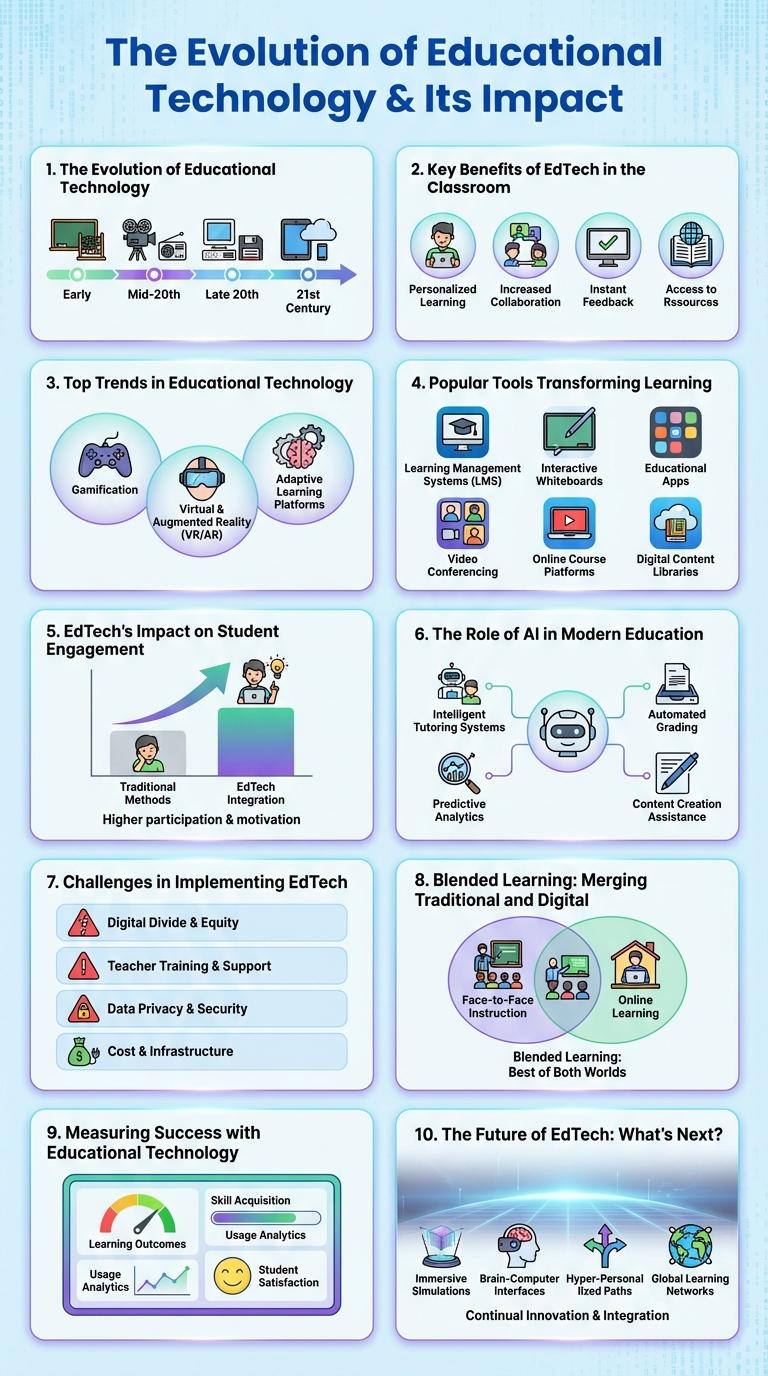
Educational technology transforms classrooms by integrating digital tools that enhance learning experiences and improve student engagement. Infographics visually present key trends, benefits, and challenges within this evolving field, making complex information easily accessible. This infographic highlights essential data on how educational technology shapes modern education and supports diverse learning needs.
The Evolution of Educational Technology
| Era | Key Innovations |
|---|---|
| 1800s | Blackboards and chalk introduced for visual learning |
| 1900s | Radio and educational television broaden access to lessons |
| 1980s | Personal computers bring interactive learning to classrooms |
| 2000s | E-learning platforms and Massive Open Online Courses (MOOCs) expand online education |
| 2010s - Present | Mobile apps, augmented reality, and AI-powered tools personalize learning experiences |
Key Benefits of EdTech in the Classroom
Educational technology (EdTech) enhances learning experiences by integrating digital tools into the classroom. It promotes interactive and personalized education, catering to diverse student needs.
Key benefits include improved student engagement, higher retention rates, and access to a vast range of resources anytime. EdTech also supports teachers with efficient classroom management and data-driven insights to track progress.
Top Trends in Educational Technology
Educational technology continues to transform classrooms by integrating innovative tools that enhance learning experiences and accessibility. Key trends include adaptive learning platforms, augmented reality (AR), and artificial intelligence (AI) that personalize education and improve student engagement. These advancements support diverse learning styles, foster collaboration, and streamline administrative tasks for educators.
Popular Tools Transforming Learning
Educational technology has revolutionized the way learners engage with content by integrating innovative tools that enhance collaboration and personalized learning. These tools support diverse learning styles and increase accessibility globally.
- Learning Management Systems (LMS) - Platforms like Moodle and Canvas organize course content and track student progress efficiently.
- Interactive Whiteboards - Devices that facilitate dynamic teaching through touch-based interaction and multimedia integration.
- Virtual Reality (VR) Tools - Simulate immersive environments to provide experiential learning in subjects like science and history.
- Video Conferencing Software - Enables real-time remote instruction and collaboration, breaking geographical barriers.
- Adaptive Learning Platforms - Use AI to tailor educational content based on individual learner performance and needs.
These technologies continue to transform education by making learning more engaging, accessible, and effective for all students.
EdTech's Impact on Student Engagement
Educational technology significantly enhances student engagement by integrating interactive tools that make learning more dynamic and personalized. The use of EdTech fosters motivation, encourages collaboration, and supports diverse learning styles through innovative digital resources.
- Interactive Learning Platforms - EdTech provides platforms with multimedia content and real-time feedback, increasing student participation and attention.
- Personalized Learning Experiences - Adaptive technologies tailor lessons to individual needs, promoting deeper understanding and retention.
- Collaborative Digital Tools - Online forums and group projects supported by EdTech boost peer interaction and teamwork skills.
The Role of AI in Modern Education
Artificial Intelligence (AI) is transforming modern education by providing personalized learning experiences tailored to individual student needs. AI-driven tools analyze learning patterns to adapt content and pace, enhancing student engagement and outcomes.
AI technologies such as intelligent tutoring systems, automated grading, and virtual assistants streamline administrative tasks and support teachers. These innovations foster efficient learning environments and enable data-driven decision-making in educational institutions.
Challenges in Implementing EdTech
Implementing educational technology (EdTech) faces challenges such as limited access to reliable internet and digital devices in many schools. Teachers often require specialized training to effectively integrate EdTech tools into curricula. Data privacy concerns and budget constraints further complicate widespread adoption of educational technology.
Blended Learning: Merging Traditional and Digital
Blended learning combines traditional classroom methods with digital tools to create a dynamic educational experience. This approach enhances student engagement and allows for personalized learning paths.
- Flexible Learning Environments - Students experience both face-to-face instruction and online activities, adapting to diverse learning styles.
- Enhanced Student Engagement - Interactive digital content promotes active participation and deeper understanding of material.
- Data-Driven Insights - Technology provides real-time feedback, enabling educators to tailor instruction to individual needs.
Measuring Success with Educational Technology
How can success be measured effectively in educational technology? Measuring success in educational technology involves assessing student engagement, learning outcomes, and technology adoption rates. Metrics such as test scores, completion rates, and user feedback provide valuable insights into the effectiveness of digital learning tools.