
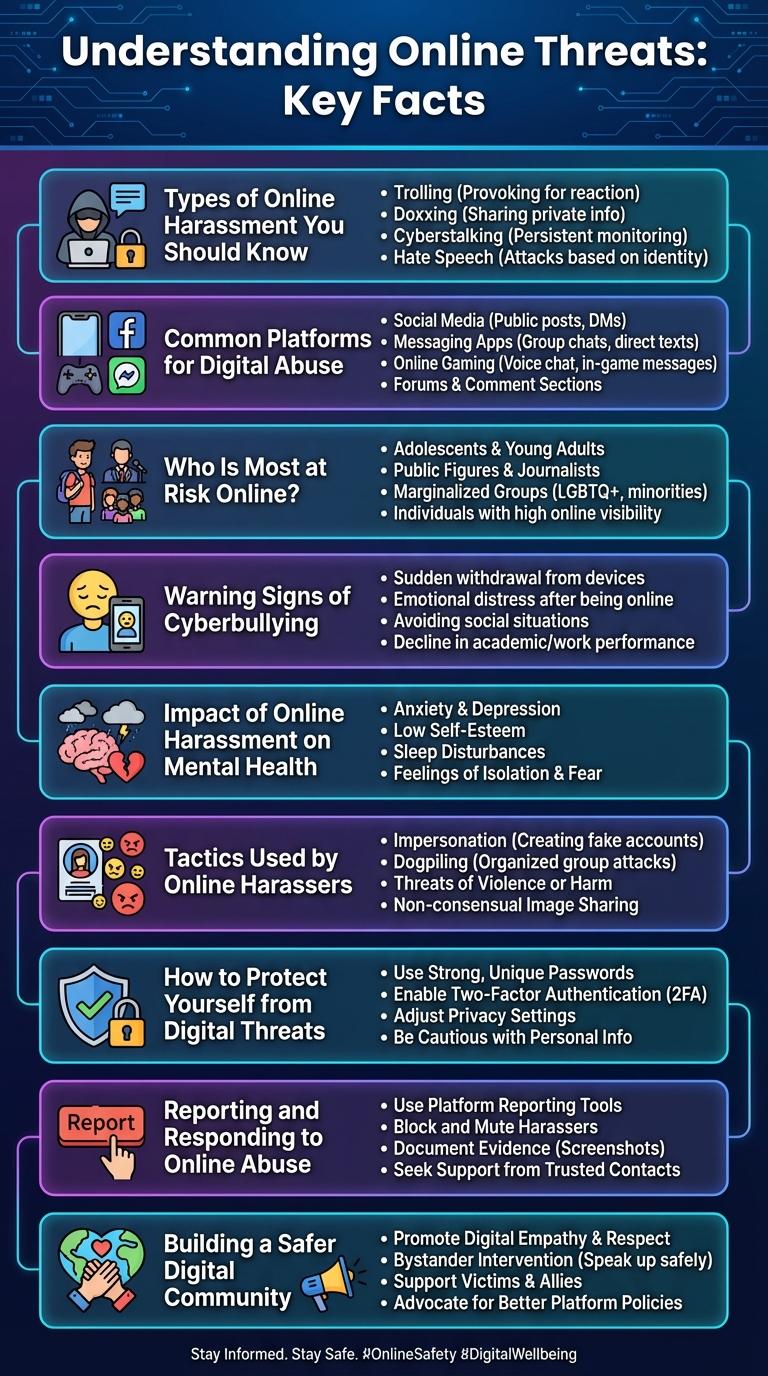
Online threats and harassment pose significant risks to individuals and communities across digital platforms. These dangers include cyberbullying, identity theft, and stalking, impacting mental health and personal security. Understanding the prevalence and types of online abuse empowers users to take proactive steps for safer internet experiences.
Understanding Online Threats: Key Facts
Online threats and harassment pose significant risks to digital safety and mental health. Awareness of key facts helps individuals recognize and combat these dangers effectively.
- Cyberbullying Incidence - Over 40% of internet users experience some form of online harassment during their lifetime.
- Phishing Attacks - Phishing attempts account for more than 80% of reported online security breaches.
- Social Media Abuse - Nearly 60% of harassment cases occur on social media platforms, impacting diverse age groups.
Types of Online Harassment You Should Know
Online harassment encompasses various harmful behaviors that target individuals through digital platforms. Common types include cyberbullying, doxxing, trolling, and online stalking. Recognizing these threats is crucial for protecting personal safety and mental health in the online environment.
Common Platforms for Digital Abuse
Online threats and harassment occur across various digital platforms, impacting users globally. Understanding where these abuses commonly happen can help individuals stay vigilant and protect themselves effectively.
Social media sites like Facebook, Twitter, and Instagram are frequent venues for digital abuse due to their large user bases. Messaging apps such as WhatsApp and Discord also become channels for harassment because of their private and group chat features.
Who Is Most at Risk Online?
Online threats and harassment affect diverse groups, but certain populations face higher risks. Recognizing who is most vulnerable aids in creating targeted protective measures.
- Teenagers - Young users aged 13-19 experience higher levels of cyberbullying and online harassment.
- Women - Female internet users are disproportionately targeted with gender-based harassment and threats.
- LGBTQ+ Individuals - Members of the LGBTQ+ community often encounter online discrimination and abuse at increased rates.
Awareness of these at-risk groups is essential for developing effective online safety strategies.
Warning Signs of Cyberbullying
What are common warning signs of cyberbullying? Victims often feel isolated and anxious when subjected to online harassment. Sudden changes in device usage or emotional distress can signal harmful interactions on digital platforms.
Impact of Online Harassment on Mental Health
Online harassment significantly affects mental health, leading to increased levels of anxiety, depression, and stress among victims. Recognizing these impacts is crucial for developing effective support systems and preventive measures.
Victims of online harassment often experience feelings of isolation and lowered self-esteem, which can exacerbate existing mental health conditions. Prolonged exposure to negative online interactions may lead to chronic mental health disorders, including PTSD. Creating safe online environments helps reduce the psychological toll on affected individuals and promotes digital well-being.
Tactics Used by Online Harassers
Online harassers employ a variety of tactics designed to intimidate, embarrass, or threaten their targets. These methods often exploit anonymity and the vast reach of digital platforms to maximize impact.
Common tactics include cyberstalking, where perpetrators repeatedly send threatening messages or monitor the victim's online activity. Other methods involve doxxing, which is the malicious sharing of private information to cause harm or fear.
How to Protect Yourself from Digital Threats
| Protection Method | Key Actions |
|---|---|
| Use Strong Passwords | Create complex passwords with letters, numbers, and symbols; update regularly |
| Enable Two-Factor Authentication | Activate multi-step verification on all important accounts to prevent unauthorized access |
| Be Cautious with Personal Information | Avoid sharing sensitive data on social media and unknown websites |
| Update Software Regularly | Install security patches and software updates promptly to fix vulnerabilities |
| Recognize Phishing Attempts | Verify email senders, avoid clicking unknown links, and do not download suspicious attachments |
Reporting and Responding to Online Abuse
Online threats and harassment impact millions of users worldwide, requiring effective reporting and response strategies. Understanding how to identify and act against online abuse is crucial for digital safety.
- Use Platform Reporting Tools - Most social media sites provide in-app options to report abusive content quickly and anonymously.
- Document Evidence - Save screenshots and messages before reporting to support investigations and legal actions.
- Engage Support Networks - Contact trusted friends, family, or professional organizations to help address the emotional impact and provide guidance.