
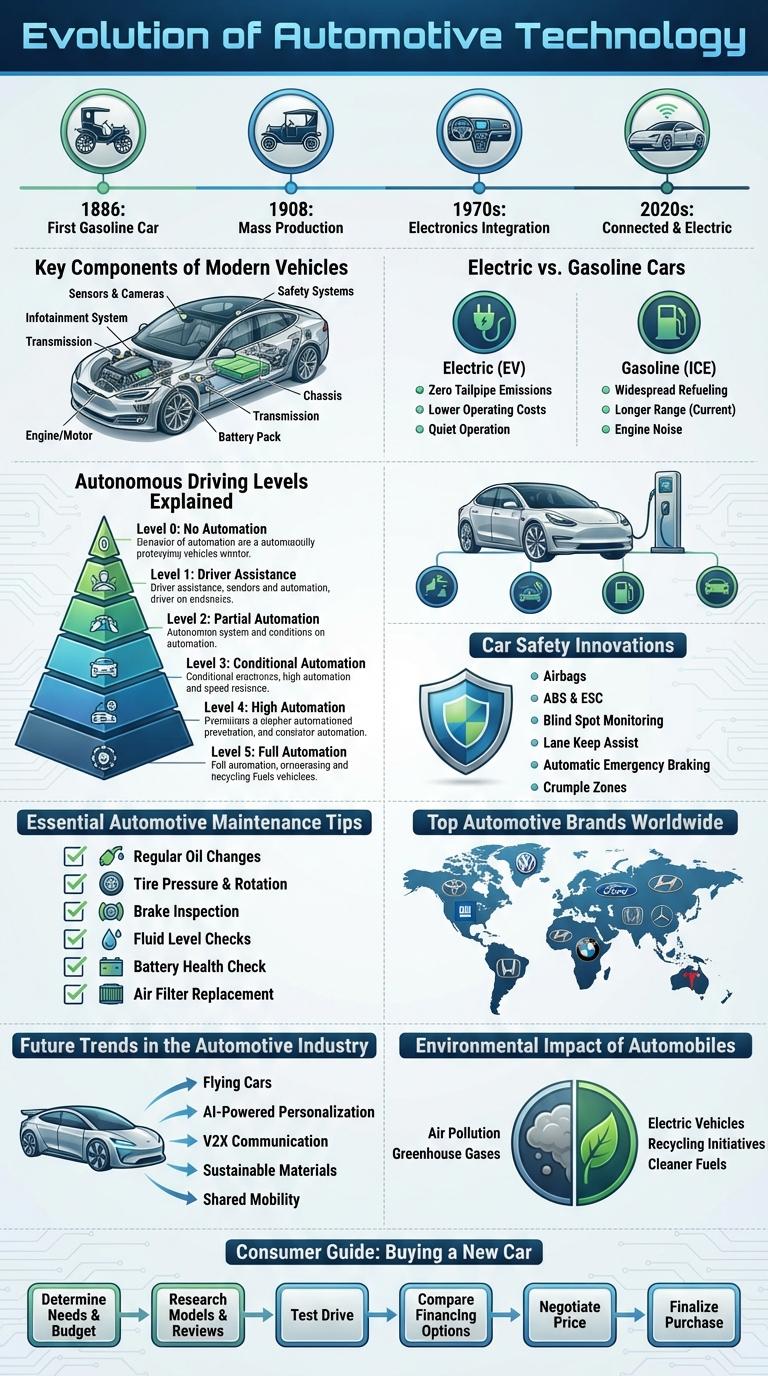
Automotive infographics visually simplify complex data about vehicle technology, industry trends, and market statistics. They highlight key information such as fuel efficiency, safety features, and emerging innovations. Clear visuals enhance understanding for both enthusiasts and professionals in the automotive sector.
Evolution of Automotive Technology
The evolution of automotive technology has transformed vehicles from simple mechanical machines to sophisticated smart systems. Key advancements include the introduction of electric engines, autonomous driving features, and enhanced safety mechanisms like adaptive cruise control and collision avoidance. These innovations have improved fuel efficiency, reduced emissions, and increased driver convenience and road safety.
Key Components of Modern Vehicles
What are the key components of modern vehicles? Modern vehicles consist of advanced systems designed for safety, efficiency, and comfort. These components work together to deliver enhanced driving experiences and improved performance.
| Component | Description |
|---|---|
| Engine Control Unit (ECU) | Manages engine performance and fuel efficiency through electronic control. |
| Anti-lock Braking System (ABS) | Prevents wheel lockup during sudden braking to maintain steering control. |
| Transmission System | Transfers engine power to the wheels and adjusts speed and torque. |
| Airbag System | Deploys airbags upon collision to protect occupants. |
| Infotainment System | Provides navigation, entertainment, and connectivity features. |
Electric vs. Gasoline Cars
Electric cars use battery-powered motors, offering zero tailpipe emissions, while gasoline cars rely on internal combustion engines fueled by petrol. The shift toward electric vehicles (EVs) is driven by environmental concerns and advancements in battery technology.
Electric cars provide instant torque and quieter operation compared to gasoline vehicles. Charging infrastructure and battery range continue to improve, making EVs more practical for daily use. Gasoline cars remain widely available with a larger refueling network and generally lower upfront costs.
Autonomous Driving Levels Explained
Autonomous driving technology is categorized into six levels, ranging from Level 0 (no automation) to Level 5 (full automation). Each level represents the extent of a vehicle's self-driving capabilities and the driver's involvement.
Level 1 includes basic driver assistance features like cruise control, while Level 3 allows the car to manage most driving tasks but requires driver intervention if needed. Level 5 represents complete autonomy, where no human driver is needed under any conditions.
Car Safety Innovations
Car safety innovations have transformed modern vehicles, significantly reducing accidents and saving lives. Advanced technologies such as airbags, anti-lock braking systems (ABS), and electronic stability control (ESC) enhance driver and passenger protection.
Recent developments include adaptive cruise control, lane departure warning, and automatic emergency braking, which improve situational awareness and prevent collisions. These systems work together to create safer driving environments and promote responsible road behavior.
Essential Automotive Maintenance Tips
Automotive maintenance is critical for vehicle safety, performance, and longevity. Regular upkeep prevents costly repairs and ensures optimal driving conditions.
- Check Engine Oil - Regularly inspect and change engine oil to keep the engine lubricated and avoid wear.
- Monitor Tire Pressure - Maintain correct tire pressure to improve fuel efficiency and enhance road safety.
- Replace Air Filters - Clean or change air filters to ensure proper airflow and engine efficiency.
Top Automotive Brands Worldwide
The global automotive industry is dominated by several top brands known for innovation, quality, and market presence. These brands lead in production volume, technological advancement, and consumer preference worldwide.
Understanding the influence of these automotive giants highlights trends and key players shaping the future of mobility.
- Toyota - Toyota is the world's largest automaker by production volume, renowned for reliability and hybrid technology.
- Volkswagen - Volkswagen Group owns multiple brands and excels in global sales with a strong footprint in Europe and China.
- Ford - Ford remains a leader in pickup trucks and SUVs, emphasizing innovation in electric and autonomous vehicles.
Future Trends in the Automotive Industry
The automotive industry is rapidly evolving with advancements in electric vehicles, autonomous driving, and connected car technology reshaping the market. Major automakers are investing heavily in sustainable energy solutions and AI-driven safety systems to enhance vehicle performance and reduce environmental impact. Emerging trends like smart mobility services and vehicle-to-everything (V2X) communication are expected to revolutionize urban transportation over the next decade.
Environmental Impact of Automobiles
| Aspect | Impact |
|---|---|
| Carbon Emissions | Automobiles contribute approximately 24% of global CO2 emissions from fossil fuel combustion. |
| Air Pollution | Vehicle exhaust releases nitrogen oxides (NOx) and particulate matter, leading to respiratory problems and smog. |
| Resource Consumption | Manufacturing vehicles consumes vast amounts of metals, plastics, and petroleum-based materials. |
| Oil Dependency | Automobiles largely depend on gasoline and diesel, contributing to oil depletion and geopolitical tensions. |
| Mitigation | Electric vehicles and fuel-efficient technologies reduce emissions and lower environmental footprints. |