
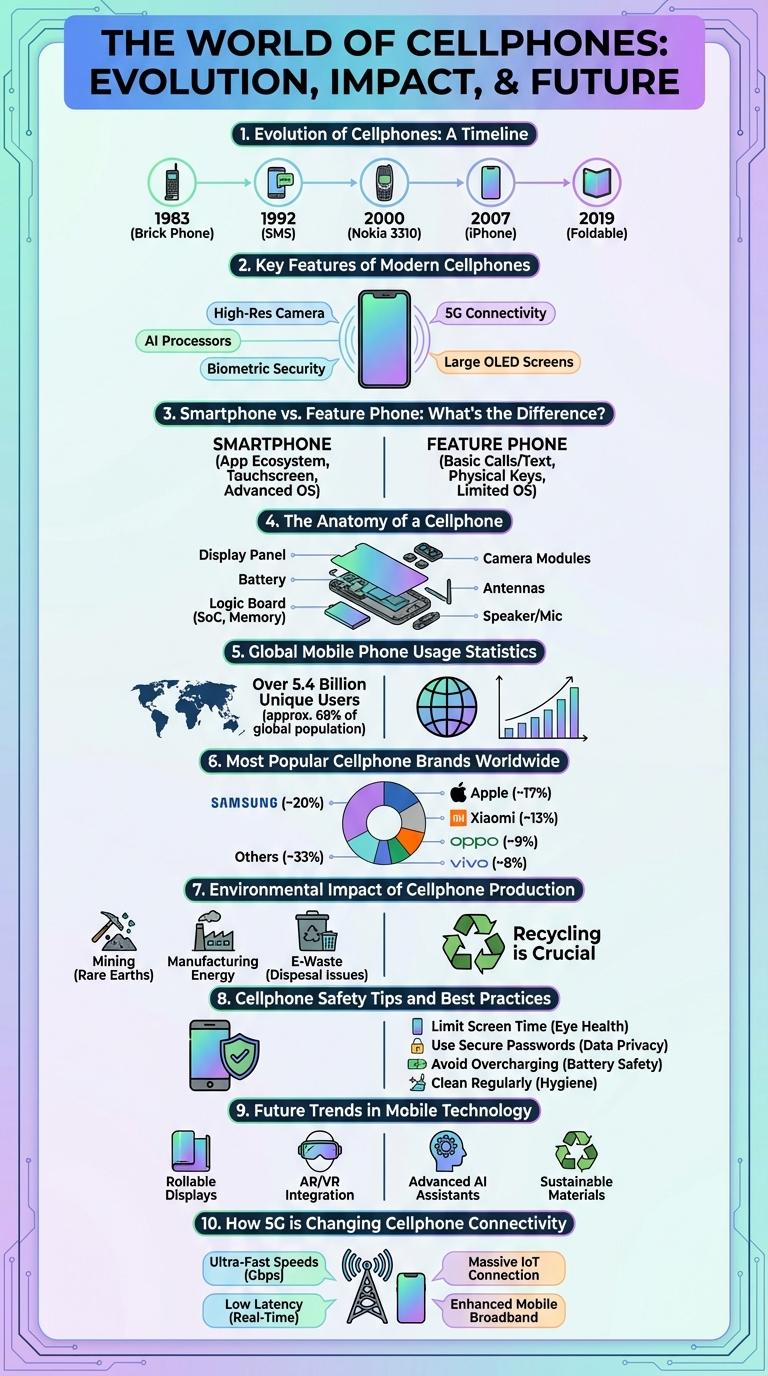
Cellphones have become essential tools in daily life, dramatically transforming communication and access to information. Infographics efficiently display key statistics and trends, highlighting usage patterns, technological advancements, and societal impacts. Visual data presentations make it easier to understand the evolution and significance of cellphones worldwide.
Evolution of Cellphones: A Timeline
| Year | Key Development |
|---|---|
| 1973 | First handheld mobile phone call by Motorola |
| 1983 | Introduction of the first commercial cellphone, Motorola DynaTAC 8000X |
| 1992 | First SMS text message sent |
| 2007 | Launch of the first iPhone, revolutionizing smartphones |
| 2019 | Introduction of 5G networks, enabling faster connectivity |
Key Features of Modern Cellphones
What are the key features of modern cellphones? Modern cellphones combine advanced technology with user-friendly designs to enhance communication. Essential features include high-resolution cameras, fast processors, and extended battery life, making them versatile tools for everyday use.
Smartphone vs. Feature Phone: What's the Difference?
Smartphones and feature phones serve different user needs, offering varied functionalities and user experiences. Understanding their differences helps consumers choose the right device based on preferences and requirements.
Smartphones provide advanced capabilities like internet access, app installations, and high-resolution cameras, making them versatile tools for communication and entertainment. Feature phones prioritize basic functions such as calling, texting, and long battery life, often at a lower cost. The choice between the two depends on whether users value sophistication or simplicity in their mobile devices.
The Anatomy of a Cellphone
Cellphones are complex devices composed of various essential components working together. Understanding the anatomy of a cellphone reveals the technology behind everyday communication.
- Display Screen - The screen is the interface for user interaction, often made with LCD or OLED technology for clear visuals.
- Battery - A rechargeable lithium-ion battery powers the cellphone, providing hours of use on a single charge.
- Processor - The central processing unit handles all the phone's operations and runs applications efficiently.
- Camera Modules - Integrated lenses and sensors capture photos and videos with high resolution and clarity.
- Wireless Antennas - These components enable cellular, Wi-Fi, and Bluetooth connectivity for communication and data transfer.
Global Mobile Phone Usage Statistics
Global mobile phone usage has surged to over 7.5 billion active devices worldwide as of 2024. Smartphone users now represent approximately 80% of global mobile subscribers, with rapid growth in emerging markets.
The average person spends more than 4 hours daily on mobile devices, driven by social media, apps, and streaming services. Mobile internet penetration reached 75%, highlighting the shift towards digital connectivity and mobile-first access.
Most Popular Cellphone Brands Worldwide
Cellphones are essential devices that connect people globally, with several brands dominating the market. Understanding the most popular cellphone brands worldwide highlights consumer preferences and market trends.
- Samsung - Samsung leads the global market share due to its wide range of models and innovative features.
- Apple - Apple's iPhone is favored for its premium design, operating system, and ecosystem integration.
- Xiaomi - Xiaomi has gained popularity by offering high-quality smartphones at competitive prices.
Environmental Impact of Cellphone Production
Cellphone production generates significant environmental impact due to the extraction of rare metals like lithium, cobalt, and gold, which leads to habitat destruction and water pollution. Manufacturing processes consume vast amounts of energy and produce greenhouse gas emissions contributing to climate change. Recycling rates for cellphones remain low, resulting in electronic waste that contaminates soil and water with toxic substances.
Cellphone Safety Tips and Best Practices
Cellphones are indispensable tools for communication and productivity. Understanding safety tips helps protect your device and personal data from threats.
- Use Strong Passwords - Secure your phone with complex passwords or biometric locks to prevent unauthorized access.
- Update Software Regularly - Installing updates ensures your phone has the latest security patches and features.
- Avoid Public Wi-Fi for Sensitive Tasks - Public networks increase the risk of data interception during financial or personal activities.
- Install Apps from Trusted Sources - Download apps only from official stores to reduce malware risks.
- Enable Remote Tracking and Wiping - Set up features to locate and erase your phone if it gets lost or stolen.
Following these best practices enhances your cellphone's security and safeguards your information.
Future Trends in Mobile Technology
Mobile technology continues to evolve rapidly, shaping how people communicate, work, and access information. Future trends indicate a shift towards more immersive experiences powered by advancements in artificial intelligence and 5G connectivity.
Foldable smartphones and wearable devices will become more prevalent, offering greater flexibility and seamless integration into daily life. Enhanced augmented reality and virtual reality applications will transform mobile interaction across entertainment, education, and business sectors.