
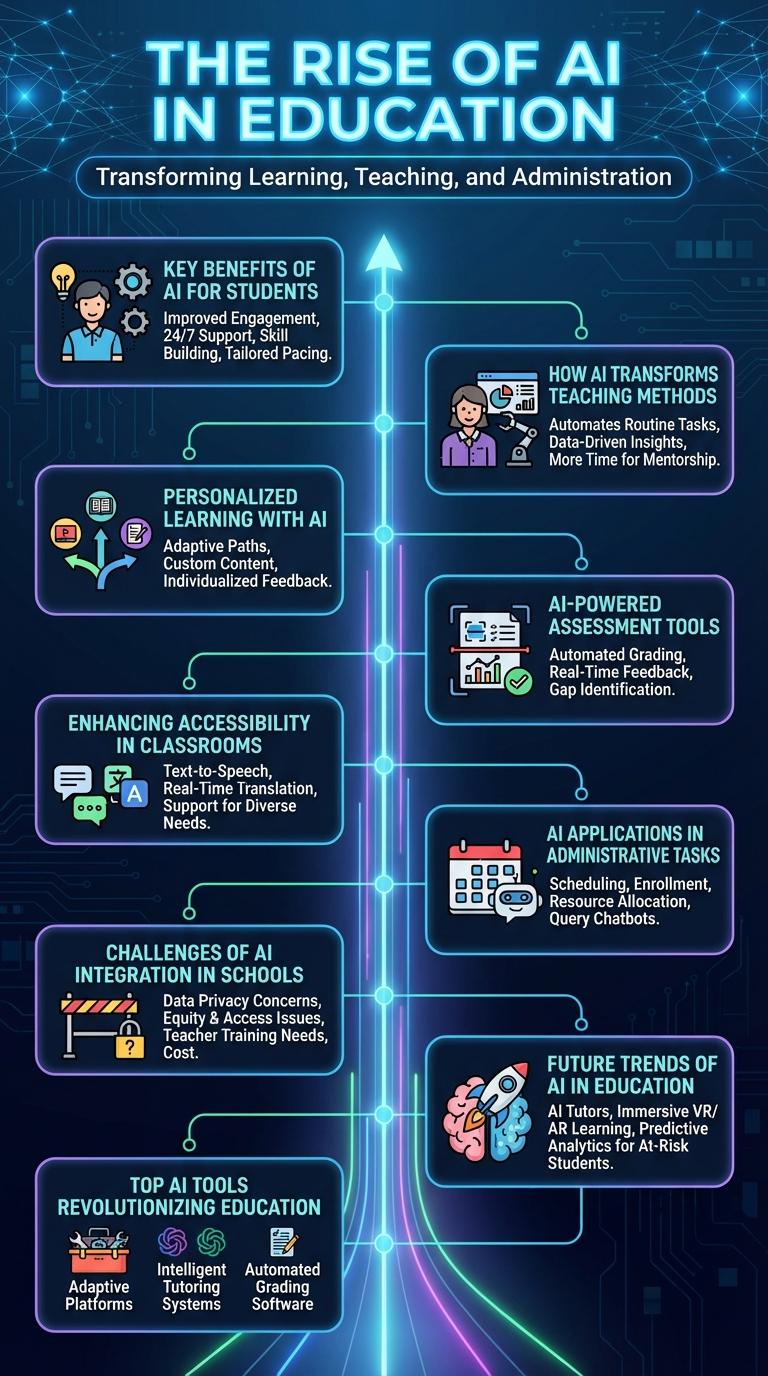
Artificial intelligence is transforming education by personalizing learning experiences and enhancing administrative efficiency. AI-powered tools analyze student data to tailor lessons, identify learning gaps, and provide real-time feedback. This infographic highlights key statistics and trends demonstrating AI's impact on modern classrooms.
The Rise of AI in Education
The rise of AI in education is transforming traditional learning methods by integrating intelligent technologies that personalize student experiences. AI-powered tools analyze data to tailor content, improve engagement, and optimize academic performance.
Educational institutions increasingly adopt AI-driven platforms for tutoring, grading, and administrative tasks, enhancing efficiency and accessibility. This technological shift supports adaptive learning environments, preparing students for a digital future.
Key Benefits of AI for Students
Artificial Intelligence (AI) transforms education by delivering personalized learning experiences that adapt to individual student needs. AI tools enhance engagement and improve educational outcomes, making learning more efficient and accessible.
- Personalized Learning - AI customizes lessons based on student performance, ensuring tailored content and pacing.
- Instant Feedback - Automated assessments provide students with immediate insights to correct mistakes and improve skills.
- Accessibility Enhancement - AI-powered tools support diverse learning needs, including language translation and assistive technologies.
How AI Transforms Teaching Methods
Artificial Intelligence is revolutionizing education by personalizing learning experiences and enhancing instructional methods. AI tools empower educators to deliver more effective, data-driven teaching strategies.
- Personalized Learning - AI analyzes student performance to customize lessons that address individual weaknesses and strengths.
- Automated Grading - AI systems quickly assess assignments and provide instant feedback, enabling teachers to focus on instruction.
- Intelligent Tutoring Systems - AI-powered tutors offer real-time assistance, adapting explanations to each student's learning pace.
Personalized Learning with AI
Artificial Intelligence (AI) transforms education by enabling personalized learning experiences tailored to individual student needs. Adaptive algorithms analyze student data to customize content, pace, and assessment strategies effectively.
AI-driven tools identify learning gaps and suggest targeted resources, improving student engagement and outcomes. Personalized learning powered by AI fosters a more inclusive and efficient educational environment.
AI-Powered Assessment Tools
How are AI-powered assessment tools transforming education? AI-powered assessment tools enable precise, real-time evaluation of student performance, adapting to individual learning styles. These tools help educators identify knowledge gaps efficiently and provide personalized feedback to enhance learning outcomes.
Enhancing Accessibility in Classrooms
Artificial Intelligence (AI) transforms classrooms by making education more accessible to students with diverse learning needs. AI-powered tools offer personalized learning experiences, assistive technologies, and real-time language translation to break down traditional barriers. These innovations promote inclusivity, ensuring every student gains equal opportunities to succeed academically.
AI Applications in Administrative Tasks
Artificial Intelligence (AI) is revolutionizing administrative tasks in education by automating routine processes and improving data management. Schools and universities leverage AI to enhance efficiency and reduce manual workload for administrators.
AI-powered tools streamline student enrollment, attendance tracking, and grading systems. Predictive analytics help in resource allocation and student performance monitoring. Automated scheduling and communication systems improve coordination between staff, students, and parents.
Challenges of AI Integration in Schools
Integrating AI into schools faces significant challenges such as limited access to quality digital infrastructure and insufficient teacher training on AI tools. Ethical concerns arise around student data privacy and biases embedded in AI algorithms. Schools must balance these issues while ensuring AI supports personalized learning without replacing essential human interaction.
Future Trends of AI in Education
Artificial Intelligence is transforming the educational landscape by personalizing learning experiences and enhancing administrative efficiency. Emerging AI technologies are set to revolutionize classroom engagement and accessibility worldwide.
- Adaptive Learning Systems - AI-driven platforms tailor educational content to individual student needs, improving learning outcomes.
- Intelligent Tutoring - Virtual tutors provide real-time support and feedback, simulating one-on-one instruction.
- Data-Driven Insights - AI analyzes student performance data to inform curriculum improvements and early intervention strategies.
Future AI advancements will foster more inclusive, efficient, and effective educational environments globally.