
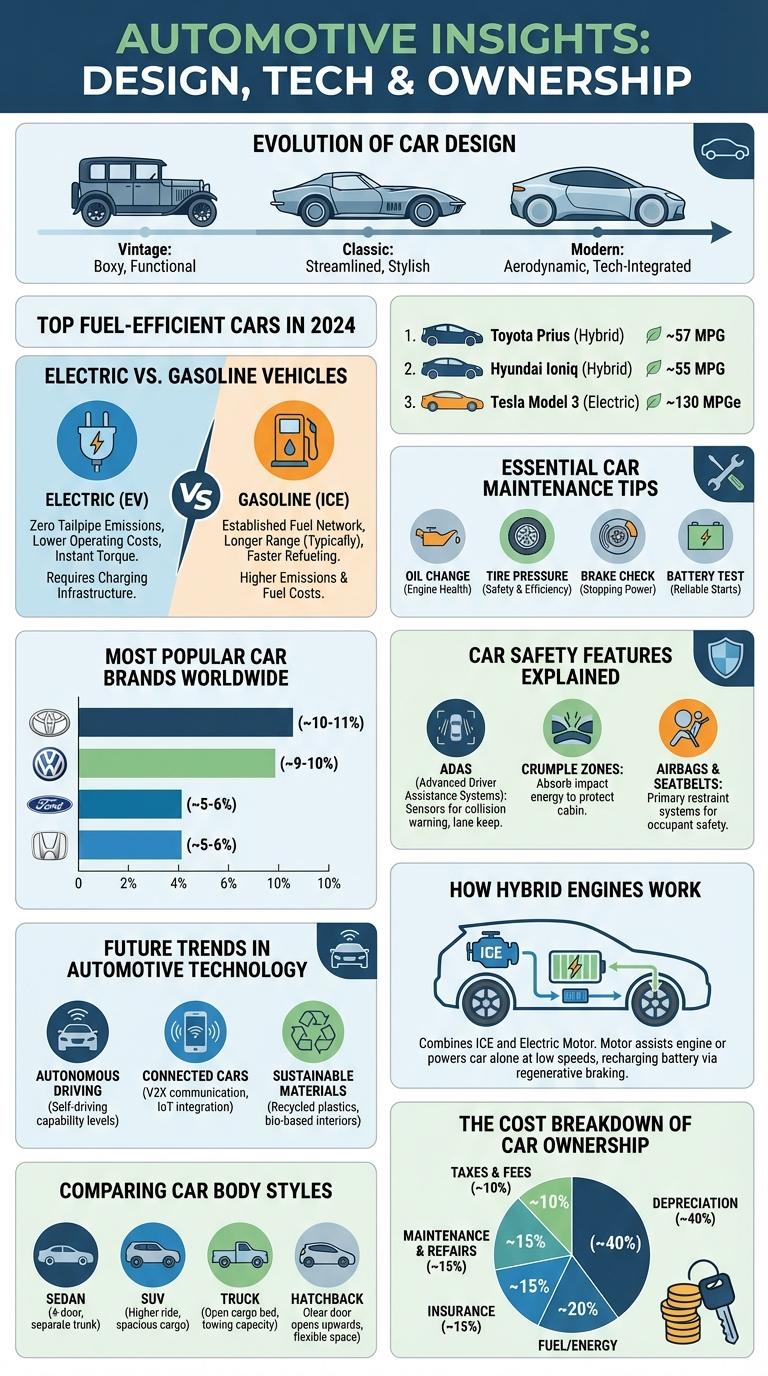
Cars have revolutionized transportation, blending engineering innovation with sleek design. Infographics provide a clear visual representation of automotive trends, specifications, and historical milestones. This graphical format simplifies complex data, making it easier to understand the evolution and impact of automobiles.
Evolution of Car Design
| Era | Key Design Features |
|---|---|
| 1880s-1910s | Boxy shapes, exposed engines, wooden wheels, open cabins |
| 1920s-1930s | Streamlined forms, introduction of fenders, enclosed cabins, chrome accents |
| 1940s-1950s | Rounded curves, tail fins, two-tone paint, larger grilles |
| 1960s-1970s | Muscle car influence, sharper edges, aerodynamic profiles, sportier look |
| 1980s-Present | Sleek shapes, advanced materials, integrated bumpers, emphasis on fuel efficiency |
Top Fuel-Efficient Cars in 2024
In 2024, fuel efficiency stands as a crucial factor for car buyers prioritizing sustainability and cost savings. Leading models like the Toyota Prius, Hyundai Ioniq, and Honda Insight offer exceptional miles-per-gallon (MPG) ratings, blending performance with eco-friendliness. These vehicles utilize advanced hybrid technology and aerodynamics to maximize fuel economy without compromising style or comfort.
| Car Model | Fuel Efficiency (MPG) |
|---|---|
| Toyota Prius | 56 MPG |
| Hyundai Ioniq | 58 MPG |
| Honda Insight | 52 MPG |
| Ford Escape Hybrid | 41 MPG |
| Kia Niro | 50 MPG |
Electric vs. Gasoline Vehicles
Electric vehicles (EVs) produce zero tailpipe emissions, reducing air pollution and greenhouse gases compared to gasoline vehicles. Gasoline cars typically have greater driving range but emit more carbon dioxide and require fossil fuels. Advances in battery technology are improving EV range and charging times, making them a viable alternative to traditional gasoline-powered cars.
Essential Car Maintenance Tips
Proper car maintenance ensures safety, enhances performance, and extends the vehicle's lifespan. Regular checks prevent costly repairs and improve fuel efficiency.
Key maintenance tasks include oil changes, tire rotations, brake inspections, and fluid level checks. Staying on schedule with these tasks keeps your car running smoothly and reliably.
Most Popular Car Brands Worldwide
The global automotive market features a diverse range of car brands, each with unique design philosophies and engineering standards. Consumer preferences shape the popularity rankings, influenced by factors like reliability, innovation, and brand heritage.
Toyota leads as the most popular car brand worldwide, known for fuel efficiency and durable models. Volkswagen follows closely, recognized for its extensive lineup and global manufacturing presence. Other top brands include Ford, Honda, and Hyundai, each commanding significant market shares due to innovation and affordability.
Car Safety Features Explained
Car safety features are critical technologies designed to protect passengers and reduce the risk of accidents. Understanding these features helps drivers make informed decisions for safer driving experiences.
Modern vehicles incorporate advanced safety systems that enhance both passive and active protection on the road.
- Anti-lock Braking System (ABS) - Prevents wheel lockup during braking to maintain steering control and reduce stopping distances.
- Airbags - Deploy automatically in a collision to cushion and protect occupants from severe injuries.
- Electronic Stability Control (ESC) - Helps maintain vehicle stability by detecting and reducing loss of traction during sudden maneuvers.
Future Trends in Automotive Technology
The automotive industry is rapidly evolving with advancements in electric vehicles (EVs) and autonomous driving technology. These innovations promise enhanced safety, efficiency, and environmental sustainability in transportation.
Smart connectivity and artificial intelligence are transforming car ecosystems, enabling real-time data exchange and predictive maintenance. Future cars will emphasize eco-friendly materials and energy-efficient designs to reduce carbon footprints.
How Hybrid Engines Work
Hybrid engines combine a gasoline engine with an electric motor to improve fuel efficiency and reduce emissions. These systems optimize power delivery by switching between or simultaneously using both power sources.
- Electric Motor - Provides instant torque and powers the car at low speeds using energy stored in the battery.
- Gasoline Engine - Operates efficiently at higher speeds and recharges the battery during driving.
- Regenerative Braking - Captures kinetic energy during braking to recharge the battery, enhancing overall efficiency.
Comparing Car Body Styles
Car body styles influence both functionality and aesthetics, catering to diverse driving needs. Understanding these differences aids buyers in making informed decisions aligned with preferences and uses.
- Sedan - A traditional four-door vehicle balancing comfort, fuel efficiency, and passenger space.
- SUV - Known for elevated ground clearance and spacious interiors, ideal for off-road and family use.
- Hatchback - Compact with a rear door that opens upwards, providing versatile cargo options.
- Coupe - Sportier two-door design emphasizing performance and style over rear-seat space.
- Convertible - Features a retractable roof, combining open-air driving with elegant design.
Choosing the right car body style depends on lifestyle, driving conditions, and personal taste.