
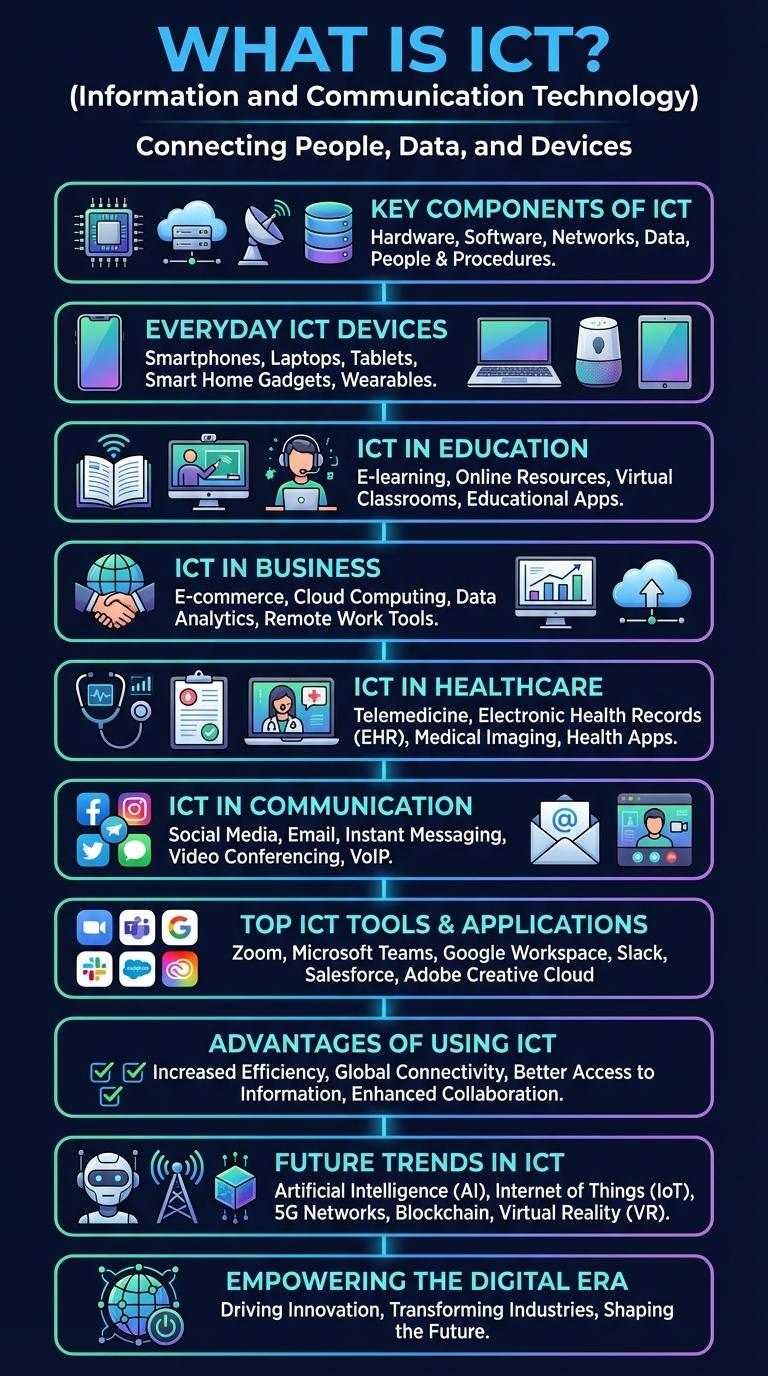
An infographic about ICT examples visually highlights key components and applications of information and communication technology. It simplifies complex concepts such as cloud computing, cybersecurity, and digital communication tools for easier understanding. This approach enhances learning by combining textual and visual elements to effectively convey the significance of ICT in everyday life.
What is ICT?
| Term | Description |
| ICT (Information and Communication Technology) | Encompasses technologies used to handle information and facilitate communication electronically. |
| Examples | Computers, internet, telecommunications, software, and data management systems. |
| Purpose | Enable data processing, storage, transmission, and access to information anytime, anywhere. |
| Applications | Education, business, healthcare, government, and entertainment sectors. |
| Impact | Enhances connectivity, productivity, and access to information globally. |
Key Components of ICT
Information and Communication Technology (ICT) includes key components such as hardware, software, networks, and data. Hardware comprises devices like computers, smartphones, and servers that facilitate digital communication. Software includes applications and operating systems that enable data processing, while networks connect devices to share information efficiently.
Everyday ICT Devices
Everyday ICT devices play a crucial role in enhancing communication, productivity, and entertainment. These devices integrate information and communication technology seamlessly into daily activities.
- Smartphones - Portable devices that combine telephony, internet access, and multimedia functions for constant connectivity.
- Laptops - Compact computers designed for mobile work, education, and multimedia consumption.
- Smart TVs - Televisions with internet capability that support streaming, apps, and interactive content.
ICT in Education
Information and Communication Technology (ICT) plays a vital role in modern education by enhancing learning experiences and improving access to educational resources. Digital tools such as e-books, online courses, and interactive whiteboards enable personalized and collaborative learning environments.
Schools utilize ICT to facilitate remote learning and provide students with immediate feedback through educational software. The integration of ICT in education increases student engagement, supports diverse learning styles, and helps develop essential digital skills for the future workforce.
ICT in Business
How does ICT transform modern business operations? Information and Communication Technology (ICT) streamlines business processes by enhancing communication, data management, and customer engagement. Businesses leverage ICT tools like cloud computing and CRM systems to increase efficiency and drive growth.
What are key examples of ICT applications in business? Common ICT applications include enterprise resource planning (ERP) software, e-commerce platforms, and mobile apps. These technologies enable real-time data access, automated workflows, and improved decision-making.
How does ICT improve customer relationships in business? ICT tools facilitate personalized marketing, instant support via chatbots, and seamless omnichannel experiences. Using these technologies, companies build stronger customer loyalty and satisfaction.
What role does ICT play in business security? ICT solutions such as firewalls, encryption, and authentication protect sensitive business data. Robust cybersecurity measures reduce risks of breaches and ensure business continuity.
How do small and medium businesses benefit from ICT? ICT lowers operational costs, expands market reach through online presence, and enhances collaboration via digital platforms. These advantages empower SMEs to compete effectively in the global market.
ICT in Healthcare
Information and Communication Technology (ICT) plays a crucial role in transforming healthcare systems worldwide. ICT enhances patient care through improved data management and communication tools.
- Electronic Health Records (EHR) - Digital storage of patient data allows for quick access and sharing among healthcare providers.
- Telemedicine - Remote consultations enable patients to receive medical advice without visiting healthcare facilities.
- Health Information Systems - Integrated platforms streamline hospital operations, from appointment scheduling to billing.
ICT innovations continue to improve healthcare delivery, accessibility, and patient outcomes.
ICT in Communication
Information and Communication Technology (ICT) plays a crucial role in modern communication by enabling the rapid exchange of information across diverse platforms. Technologies such as email, video conferencing, and instant messaging have revolutionized how individuals and businesses connect.
ICT in communication enhances collaboration and supports remote work by providing tools that facilitate real-time interaction. Mobile devices and social media platforms extend connectivity beyond geographical boundaries, fostering global communication. Security technologies within ICT ensure the protection of sensitive information during digital communication.
Top ICT Tools and Applications
Information and Communication Technology (ICT) tools enhance productivity, communication, and data management across various industries. Popular ICT applications include cloud computing platforms, video conferencing software, and collaborative project management tools. These technologies enable seamless remote collaboration, efficient data access, and improved organizational workflows.
Advantages of Using ICT
Information and Communication Technology (ICT) enhances efficiency by automating tasks and improving communication channels. It enables faster access to information and seamless collaboration across different locations.
Using ICT reduces operational costs and supports innovative solutions in various sectors such as education, healthcare, and business. It also promotes digital literacy and expands opportunities for learning and professional growth.