
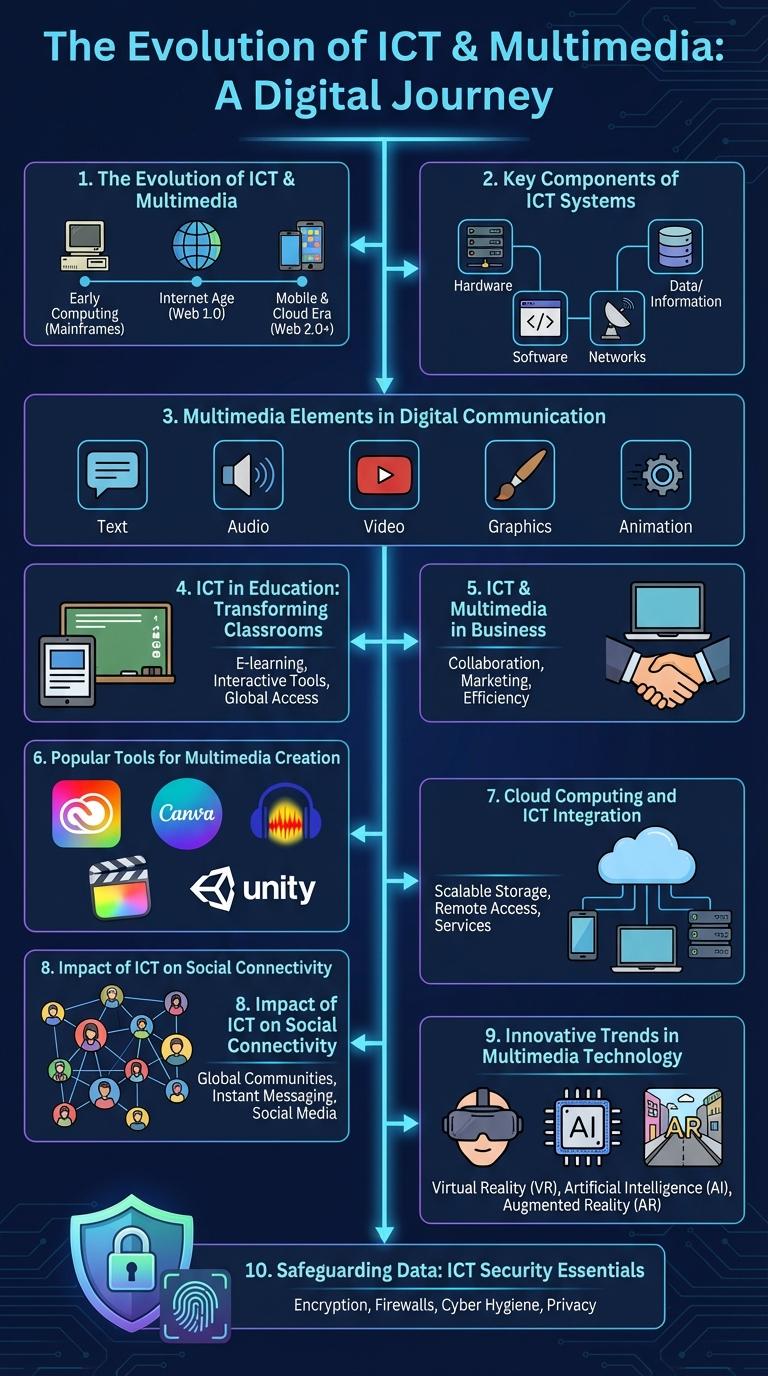
ICT and multimedia technologies have transformed digital communication and content creation across various industries. These tools enhance interactive experiences and streamline information sharing through innovative platforms and applications. Understanding the integration of ICT and multimedia is essential for leveraging their full potential in education, entertainment, and business sectors.
The Evolution of ICT & Multimedia
Information and Communication Technology (ICT) and multimedia have transformed dramatically from basic telecommunication systems to integrated digital platforms. Innovations in hardware, software, and connectivity continue to drive the evolution of interactive media and communication tools.
- Early Telecommunications - The invention of the telephone and radio laid the foundation for modern digital communication.
- Digital Revolution - The shift from analog to digital technologies enabled the rise of computers and the internet.
- Multimedia Integration - Combining text, audio, video, and graphics created immersive user experiences in education and entertainment.
Key Components of ICT Systems
Information and Communication Technology (ICT) systems integrate hardware, software, and networks to enable efficient data processing and communication. Multimedia enhances these systems by combining text, audio, images, and video for richer user experiences.
- Hardware - Physical devices like computers, servers, and networking equipment form the foundation of ICT systems.
- Software - Applications and operating systems manage hardware functions and deliver multimedia content.
- Networks - Communication infrastructures such as the internet and intranets connect devices and enable data exchange.
- Data - Raw information processed and stored to support decision-making and multimedia presentations.
- Users - Individuals and organizations that utilize ICT systems and multimedia tools to accomplish tasks.
Understanding these key components is essential to leveraging ICT and multimedia effectively in modern digital environments.
Multimedia Elements in Digital Communication
Multimedia elements play a crucial role in enhancing digital communication by integrating various content types such as text, images, audio, and video. These elements make information more engaging and easier to understand.
Interactive features like animations and hyperlinks allow users to navigate content efficiently, increasing user engagement. High-quality multimedia improves message retention and supports diverse learning styles.
ICT in Education: Transforming Classrooms
Information and Communication Technology (ICT) is revolutionizing education by providing interactive and personalized learning experiences. Multimedia tools such as videos, animations, and virtual simulations enhance student engagement and improve understanding of complex concepts. Digital classrooms enable real-time collaboration and access to global resources, transforming traditional teaching methods.
ICT & Multimedia in Business
ICT and multimedia technologies play a crucial role in modern business operations by enhancing communication, improving marketing strategies, and streamlining workflows. Businesses leverage multimedia tools such as video conferencing, digital advertising, and interactive presentations to engage customers and boost productivity. Efficient use of ICT facilitates data management, supports remote work, and drives innovation across various industries.
Popular Tools for Multimedia Creation
Information and Communication Technology (ICT) plays a crucial role in multimedia creation by providing diverse tools that enhance content development. Popular multimedia tools combine ease of use with powerful features for varied digital projects.
These tools support video editing, graphic design, animation, and sound production across multiple platforms.
- Adobe Creative Cloud - A comprehensive suite for photo editing, video production, and graphic design popular among professionals.
- Canva - A user-friendly graphic design platform ideal for creating presentations, social media graphics, and posters.
- Final Cut Pro - A high-performance video editing software favored for film and video post-production tasks.
- Audacity - An open-source audio editor used for recording and editing sound in multimedia projects.
- Blender - A free and open-source tool for 3D modeling, animation, and visual effects widely used in multimedia creation.
Cloud Computing and ICT Integration
Cloud computing revolutionizes ICT by providing scalable, on-demand access to computing resources via the internet. It enables seamless data storage, processing, and collaboration, reducing the need for physical infrastructure.
ICT integration leverages cloud technology to unify hardware, software, and networks across educational and business environments. This synergy enhances communication, improves data management, and supports innovative multimedia applications.
Impact of ICT on Social Connectivity
Information and Communication Technology (ICT) has revolutionized social connectivity by enabling instant communication across the globe. Multimedia tools enrich interactions with text, audio, and video, fostering deeper connections among individuals and communities.
Social media platforms, powered by ICT, facilitate real-time sharing of life events and ideas, enhancing global networking. Video conferencing technologies reduce geographical barriers, promoting collaboration in both personal and professional spheres. Enhanced connectivity through ICT increases access to diverse cultures and perspectives, supporting social inclusion and awareness.
Innovative Trends in Multimedia Technology
| Innovative Trend | Description |
|---|---|
| Artificial Intelligence Integration | AI enhances multimedia content creation, enabling adaptive learning, personalized user experiences, and automated video editing. |
| Augmented Reality (AR) and Virtual Reality (VR) | AR and VR immerse users in interactive environments for gaming, education, and remote collaboration, enhancing engagement and realism. |
| 5G Connectivity | 5G networks enable high-speed, low-latency streaming, supporting real-time multimedia applications and increased data transmission efficiency. |
| Cloud-based Multimedia Services | Cloud platforms facilitate scalable storage, processing, and distribution of multimedia content accessible from any device globally. |
| Interactive and Immersive Content | Technologies like 360-degree videos and holographic displays provide engaging user experiences beyond traditional media formats. |