
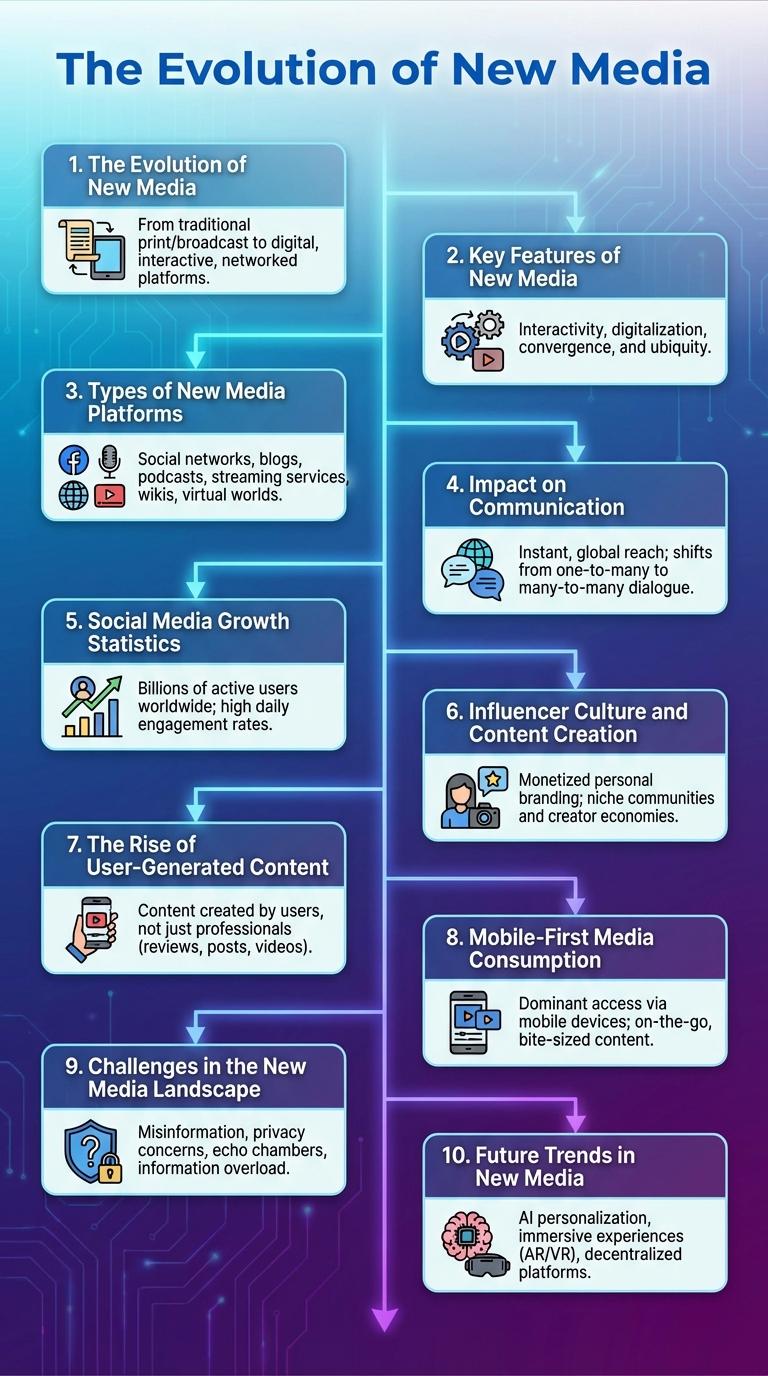
New media revolutionizes how information is created, shared, and consumed across digital platforms. It encompasses social media, blogs, podcasts, and other interactive channels that enhance real-time communication and user engagement. This infographic visualizes key trends, technologies, and impacts shaping the evolving media landscape.
The Evolution of New Media
New media has transformed communication by integrating digital technologies and interactive platforms. The evolution of new media highlights significant shifts in content creation, distribution, and user engagement.
- Early Digital Era - Introduction of the internet enabled basic digital communication and information sharing.
- Social Media Boom - Platforms like Facebook and Twitter revolutionized user-generated content and real-time interaction.
- Mobile Media Growth - Smartphones facilitated constant connectivity and access to multimedia anywhere.
- Streaming and On-Demand - Services such as Netflix and YouTube changed traditional media consumption patterns.
- Emerging Technologies - AI, VR, and AR are shaping immersive and personalized media experiences.
Key Features of New Media
| Key Feature | Description |
|---|---|
| Interactivity | Enables user participation through comments, shares, and customization, enhancing engagement and feedback. |
| Multimedia Integration | Combines text, audio, video, and images into a cohesive digital experience for richer communication. |
| On-Demand Access | Allows users to access content anytime from multiple devices, promoting convenience and flexibility. |
| Social Connectivity | Facilitates connection and collaboration among users through social networks and online communities. |
| User-Generated Content | Empowers users to create and share their own content, diversifying perspectives and media sources. |
Types of New Media Platforms
New media platforms have revolutionized how we communicate and consume content. These platforms use digital technology to enable interactive and user-generated content.
Popular types of new media platforms include social media, blogs, and video sharing sites. Social media platforms like Facebook and Instagram connect billions of users worldwide. Blogs offer in-depth articles and opinions, while video platforms such as YouTube provide a rich variety of visual content.
Impact on Communication
How has new media transformed communication in today's world?
New media platforms enable instant global interaction, breaking down traditional communication barriers. These tools promote real-time information sharing, enhancing personal and professional connectivity.
Social Media Growth Statistics
Social media platforms have experienced unprecedented growth, with over 4.9 billion active users worldwide as of 2024. Facebook, Instagram, TikTok, and LinkedIn continue to dominate, driving engagement and digital advertising revenues. Mobile usage accounts for nearly 99% of social media traffic, emphasizing the importance of mobile-first content strategies.
Influencer Culture and Content Creation
New media has revolutionized the way content is created and consumed, giving rise to influencer culture as a significant force in digital marketing. Content creation has become more democratized, enabling individuals to build personal brands and engage large audiences.
- Influencer Reach - Influencers leverage social media platforms to connect with millions of followers worldwide, influencing trends and consumer behavior.
- Content Diversity - Content creators produce varied formats including videos, blogs, and podcasts catering to niche audiences and interests.
- Monetization Opportunities - Influencers and creators generate revenue through brand partnerships, sponsored content, and merchandise sales.
The Rise of User-Generated Content
User-generated content (UGC) has transformed the digital landscape by empowering individuals to create and share their own media. Platforms like YouTube, Instagram, and TikTok have become hubs where users drive content creation and audience engagement.
The rise of UGC has led to increased authenticity and community interaction, influencing marketing strategies globally. Brands leverage this trend by integrating UGC into campaigns to build trust and foster deeper connections with consumers.
Mobile-First Media Consumption
Mobile-first media consumption has transformed how audiences access content in the digital age. Smartphones now dominate as the primary device for news, entertainment, and social interaction.
- Smartphone Usage Surpasses Desktop - Over 60% of global web traffic originates from mobile devices, highlighting the shift towards mobile-first browsing.
- Short-Form Content Flourishes - Platforms like TikTok and Instagram promote microvideos tailored for on-the-go consumption on mobile screens.
- App-Based Media Engagement - 90% of mobile time is spent within apps, emphasizing the importance of mobile apps for content delivery.
Brands and publishers prioritizing mobile-optimized content reach larger, more engaged audiences in today's connected world.
Challenges in the New Media Landscape
The new media landscape faces challenges such as data privacy concerns, misinformation proliferation, and rapid technology changes. Platforms struggle to balance user engagement with ethical content moderation and regulatory compliance. Adapting to shifting audience behaviors and emerging formats remains essential for sustainable growth.