
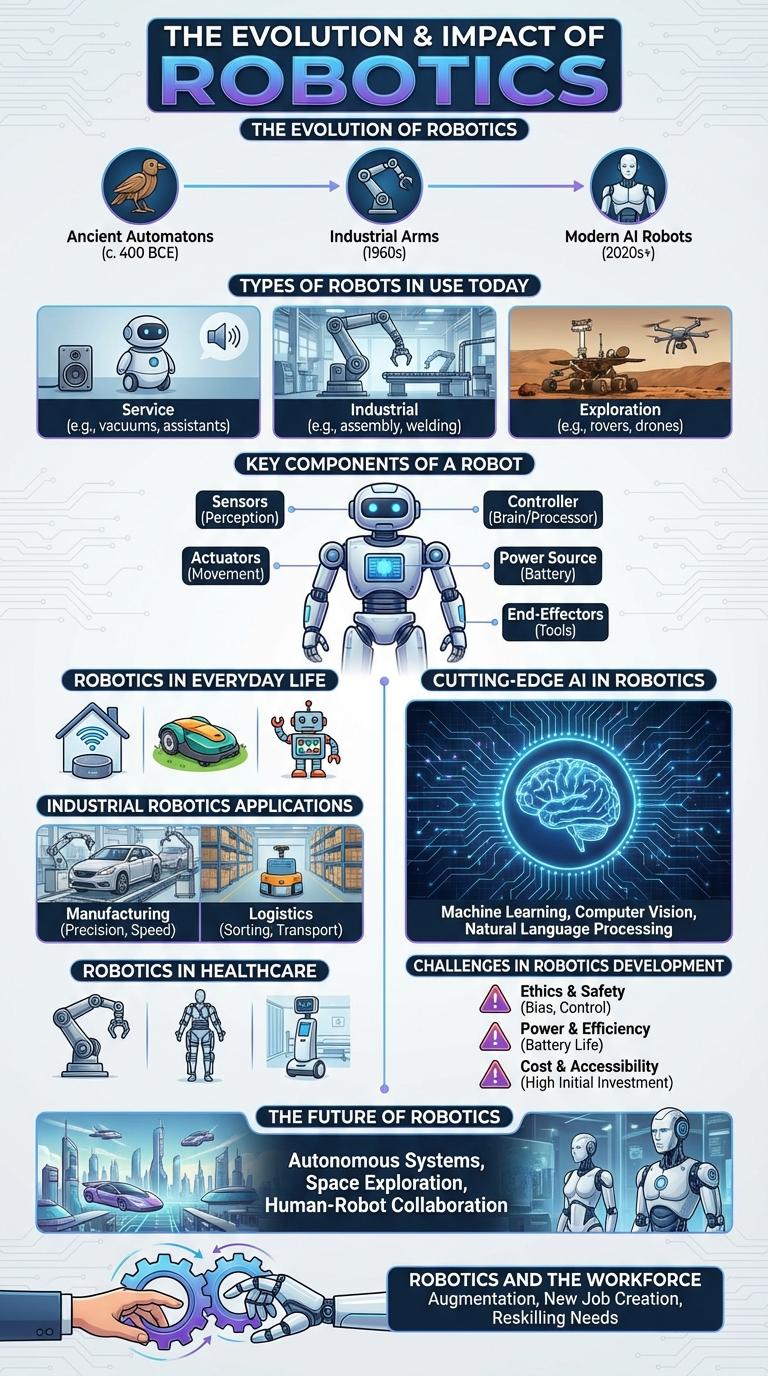
Robotics combines engineering, computer science, and artificial intelligence to create machines capable of performing tasks autonomously or with minimal human intervention. Infographics visualize complex information about robotics technology, applications, and industry trends in an easily digestible format. Understanding these key aspects through compelling visuals helps highlight the impact of robotics across various sectors.
The Evolution of Robotics
How has robotics evolved over time? Robotics began with simple mechanical automata and has advanced to intelligent machines powered by artificial intelligence. Today, robots perform complex tasks in industries, healthcare, and daily life, showcasing rapid technological progress.
Types of Robots in Use Today
Robotics technology encompasses various types of robots designed for specific tasks across industries. These robots enhance efficiency, precision, and safety in environments from manufacturing to healthcare.
Industrial robots perform repetitive tasks such as welding and assembly, increasing productivity in factories. Service robots assist in healthcare, cleaning, and customer service by interacting with humans and performing specialized functions.
Key Components of a Robot
Robotics integrates mechanical, electronic, and computational systems to perform complex tasks. Understanding key components is essential for designing and operating efficient robots.
- Sensors - Devices that detect environmental inputs and convert them into data for processing.
- Actuators - Mechanisms that enable movement or control based on commands from the robot's system.
- Controllers - The brain of the robot that processes sensor data and sends signals to actuators.
- Power Supply - Provides necessary energy to all robot components for continuous operation.
- End Effectors - Tools or devices attached to the robot's arm to interact with objects or perform tasks.
Mastering these components forms the foundation of effective robotic design and functionality.
Robotics in Everyday Life
Robotics has seamlessly integrated into everyday life, transforming how people interact with technology. From household chores to personal assistance, robots enhance convenience and efficiency.
Robots assist in cleaning homes through robotic vacuum cleaners and lawn mowers, saving time and effort. Personal assistant robots help manage schedules, control smart home devices, and provide companionship. In healthcare, robotic devices support patient care and rehabilitation, improving quality of life.
Industrial Robotics Applications
| Industrial Robotics Applications | Description |
|---|---|
| Automotive Manufacturing | Robots perform welding, painting, and assembly tasks to enhance precision and efficiency in car production. |
| Electronics Assembly | Robotic arms handle delicate components, ensuring fast and accurate assembly of electronic devices. |
| Material Handling | Automated robots transport materials and products within factories, optimizing workflow and reducing manual labor. |
| Packaging and Palletizing | Robots efficiently package products and organize pallets, increasing speed and uniformity in distribution centers. |
| Food Processing | Robotics systems perform tasks like sorting, cutting, and packaging food, ensuring hygiene and consistency. |
Cutting-Edge AI in Robotics
Cutting-edge AI in robotics drives innovation by enabling machines to learn, adapt, and perform complex tasks with high precision. Advanced algorithms process vast data sets to improve decision-making and autonomy in robotic systems.
Integration of deep learning and computer vision allows robots to recognize objects and environments accurately. This technology enhances automation in industries such as manufacturing, healthcare, and logistics, boosting efficiency and safety.
Robotics in Healthcare
Robotics in healthcare is revolutionizing surgical procedures by enhancing precision and reducing recovery times. Robotic systems assist in minimally invasive surgeries, improving patient outcomes and lowering the risk of complications. These technologies are also used in rehabilitation, diagnostics, and patient care to increase efficiency and accuracy in medical treatments.
Challenges in Robotics Development
Robotics development faces multiple challenges that impact the efficiency and effectiveness of robotic systems. Overcoming these hurdles is essential for advancing automation in various industries.
- Complexity in Sensor Integration - Combining data from diverse sensors to achieve accurate environmental perception remains a significant challenge.
- Autonomy and Decision-Making - Developing reliable algorithms for autonomous navigation and task execution requires advanced artificial intelligence.
- Energy Efficiency - Enhancing battery life and managing power consumption are critical for prolonged robotic operations without recharging.
The Future of Robotics
The future of robotics is poised to revolutionize industries by integrating advanced artificial intelligence and machine learning. Autonomous robots will enhance efficiency in manufacturing, healthcare, and logistics, transforming workflow and productivity. Innovations in human-robot interaction will enable seamless collaboration, making robots indispensable in daily life and work.