
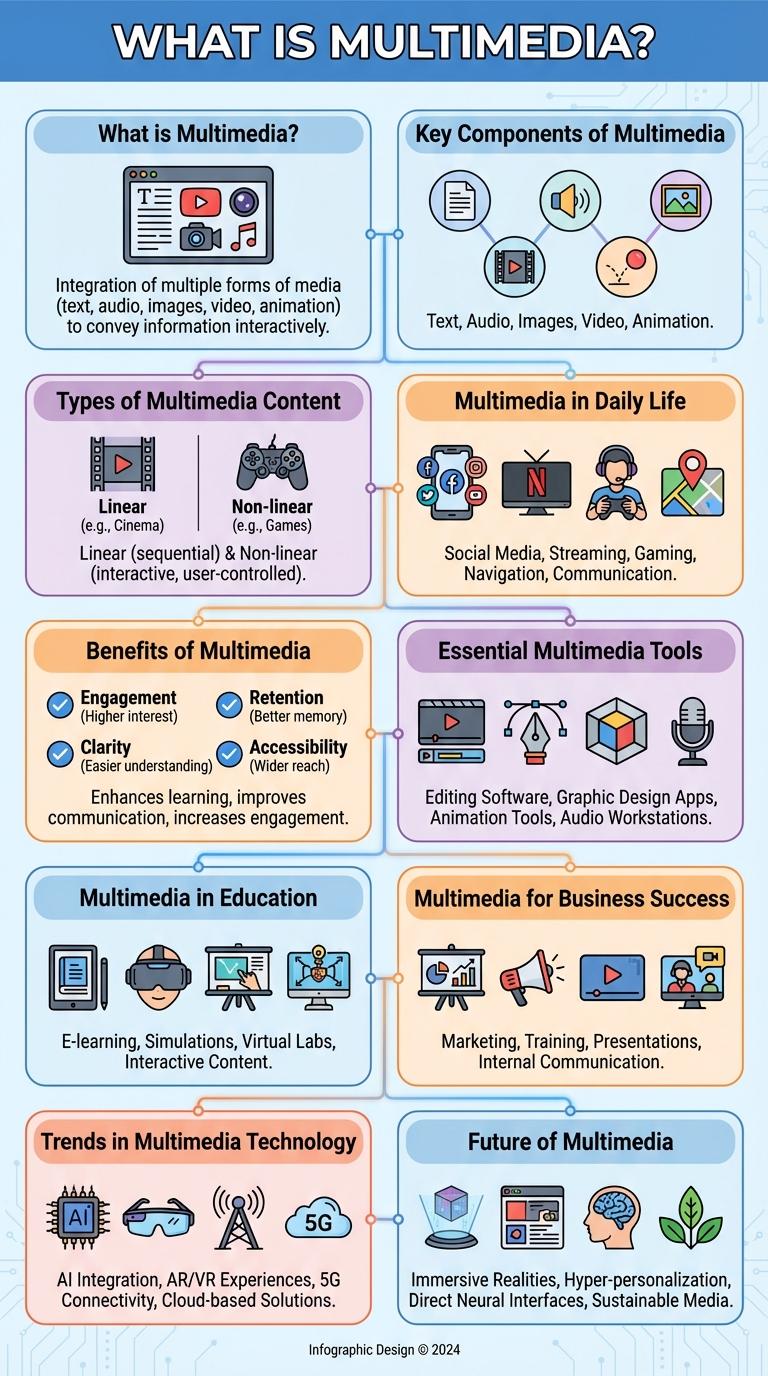
Multimedia combines text, images, video, and audio to create dynamic and engaging content that enhances communication. Infographics about multimedia visually represent key concepts and trends, making complex information easier to understand. These visual tools highlight the impact of multimedia in education, marketing, and digital storytelling.
What is Multimedia?
Multimedia is the integration of multiple forms of content such as text, images, audio, video, and animations into a single interactive platform. It enhances communication and engagement by combining these diverse elements to convey information more effectively. Multimedia is widely used in education, entertainment, advertising, and digital media to create rich user experiences.
Key Components of Multimedia
Multimedia combines various content forms such as text, images, audio, video, and animations to create engaging and interactive experiences. Each component plays a vital role in delivering information effectively across digital platforms.
Text provides the foundational information, while images enhance understanding through visual representation. Audio and video add depth by appealing to auditory and visual senses, and animations increase user engagement with dynamic content.
Types of Multimedia Content
Multimedia combines various types of content to enhance communication and engagement. It uses different media formats to deliver information effectively.
- Text - The foundational element of multimedia, conveying information through written words.
- Images - Visual content like photos and illustrations that support and enrich textual information.
- Audio - Sound elements including music, narration, and sound effects to complement visual content.
- Video - Moving images that integrate audio and visuals to provide dynamic storytelling.
- Animations - Computer-generated visuals that create interactive and engaging experiences.
Understanding these types helps create rich, diverse multimedia projects.
Multimedia in Daily Life
Multimedia integrates various content forms such as text, images, audio, and video for enriched communication. It plays a critical role in enhancing interaction and information delivery in everyday scenarios.
- Education - Multimedia tools like interactive videos and animations improve learning engagement and comprehension.
- Entertainment - Streaming platforms use multimedia elements to deliver immersive experiences through music, movies, and games.
- Communication - Social media and messaging apps incorporate multimedia to convey messages more effectively with visuals and audio.
Benefits of Multimedia
Multimedia integrates various content forms like text, images, audio, and video to enhance communication and learning experiences. It creates engaging and interactive environments that cater to diverse learning styles and preferences.
Using multimedia improves information retention by combining visual and auditory stimuli, making complex concepts easier to understand. It supports creativity and innovation by allowing users to express ideas through multiple formats. Multimedia also increases accessibility, enabling content delivery across different devices and platforms.
Essential Multimedia Tools
Multimedia integrates various content forms such as text, images, audio, and video to create engaging digital experiences. Essential multimedia tools include Adobe Photoshop for image editing, Audacity for audio processing, and Adobe Premiere Pro for video production. These tools enable designers and creators to develop dynamic content for marketing, education, and entertainment.
Multimedia in Education
| Multimedia Element | Educational Benefit |
|---|---|
| Video Lectures | Enhances student engagement through visual and auditory learning |
| Interactive Simulations | Facilitates hands-on experience and concept understanding |
| Audio Podcasts | Supports flexible learning and auditory reinforcement |
| Animations | Clarifies complex processes using visual storytelling |
| Quizzes and Assessments | Provides immediate feedback and monitors student progress |
Multimedia for Business Success
How does multimedia drive business success?
Multimedia combines text, images, audio, and video to create engaging and memorable marketing content. This integration enhances brand visibility, customer engagement, and communication efficiency.
What are key multimedia tools used in business?
Businesses use video presentations, interactive websites, social media content, and digital advertisements to connect with their audience. These tools enable dynamic storytelling and data visualization for better impact.
Why is multimedia important for customer engagement?
Multimedia captures attention more effectively than traditional media by appealing to multiple senses. It fosters emotional connections and improves information retention, leading to higher customer loyalty.
How does multimedia improve internal business communication?
Multimedia facilitates training sessions, corporate announcements, and collaborative projects with clearer and more interactive content. This results in faster understanding and improved teamwork.
Which multimedia trends are shaping business strategies in 2024?
Artificial intelligence, augmented reality, and 360-degree videos are transforming how businesses create and share multimedia content. These trends enhance personalization and immersive experiences for customers.
Trends in Multimedia Technology
Multimedia technology continuously evolves, integrating advanced features to enhance user engagement and experience. Emerging trends emphasize immersive, interactive, and AI-driven content delivery methods.
Recent advancements highlight the fusion of multimedia with augmented reality, virtual reality, and artificial intelligence, driving innovation across industries.
- Immersive Experiences - Virtual Reality (VR) and Augmented Reality (AR) create highly interactive and realistic environments for users.
- Artificial Intelligence Integration - AI powers content personalization, automated editing, and enhanced media analytics.
- 5G Connectivity - High-speed 5G networks enable seamless streaming and real-time multimedia content interaction.