
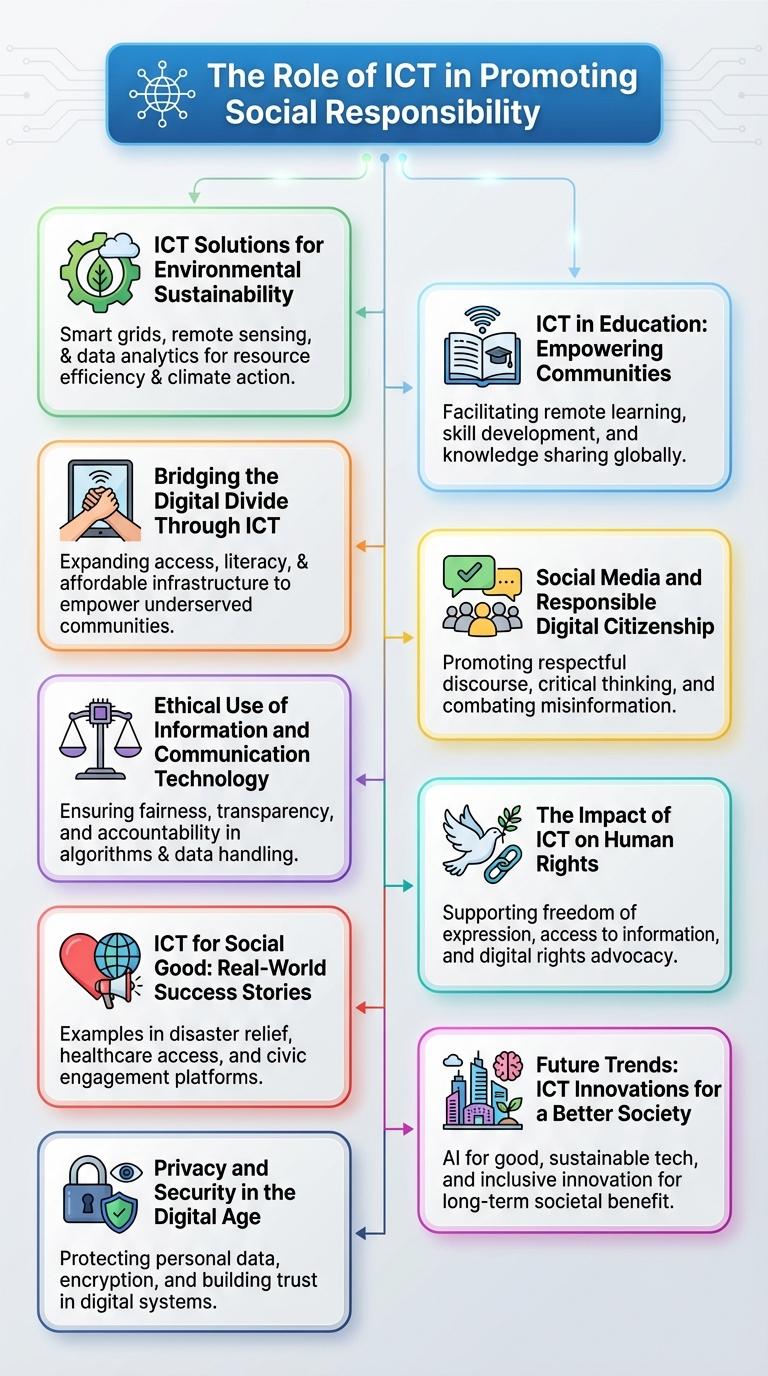
ICT enhances social responsibility by enabling transparent communication and promoting sustainable practices. Infographics effectively illustrate the impact of technology on communities and environmental stewardship. Visual data representation helps stakeholders understand the critical role of ICT in fostering ethical business and social initiatives.
The Role of ICT in Promoting Social Responsibility
Information and Communication Technology (ICT) plays a pivotal role in advancing social responsibility by enhancing transparency and enabling widespread access to important social data. ICT tools facilitate collaboration among communities, organizations, and governments to address societal challenges effectively.
ICT supports social responsibility by promoting ethical business practices through improved communication and real-time monitoring of corporate actions. It empowers non-profit organizations to reach larger audiences and mobilize support for social causes. Moreover, ICT fosters inclusion by bridging digital divides and providing marginalized groups with access to education and resources.
ICT Solutions for Environmental Sustainability
Information and Communication Technology (ICT) plays a pivotal role in promoting environmental sustainability by enabling efficient resource management and reducing carbon footprints. Smart grids, IoT devices, and data analytics optimize energy consumption, leading to significant reductions in waste and emissions. Businesses leverage ICT solutions to monitor environmental impact, support green initiatives, and drive sustainable development worldwide.
Bridging the Digital Divide Through ICT
Information and Communication Technology (ICT) plays a crucial role in bridging the digital divide by providing access to digital resources and connectivity to underserved communities. Expanding infrastructure and affordable technology empower individuals to participate in the digital economy and access essential services.
Social responsibility initiatives focus on training, digital literacy, and inclusive policies to ensure equitable technology access for all. These efforts contribute to reducing social inequalities and promoting sustainable development through ICT.
Ethical Use of Information and Communication Technology
The ethical use of Information and Communication Technology (ICT) is essential for promoting trust and fairness in digital environments. Responsible ICT practices help protect user privacy and ensure the security of information.
- Data Privacy - Protecting personal data from unauthorized access maintains user confidentiality and trust.
- Digital Inclusion - Ensuring equal access to ICT resources reduces social inequality and empowers marginalized communities.
- Cybersecurity - Implementing robust security measures prevents data breaches and safeguards critical information.
- Transparency - Clear communication about data usage policies fosters user confidence and accountability.
- Environmental Impact - Sustainable ICT practices minimize e-waste and reduce carbon footprints.
Ethical ICT use supports social responsibility by balancing technological advancement with human rights and environmental preservation.
ICT for Social Good: Real-World Success Stories
ICT drives social responsibility by enabling innovative solutions that address global challenges such as education, healthcare, and environmental sustainability. Organizations and communities harness digital technologies to improve access to information, enhance communication, and foster inclusive growth. Real-world success stories include telemedicine platforms expanding healthcare access, mobile education apps improving literacy, and data analytics supporting disaster response efforts.
Privacy and Security in the Digital Age
Information and Communication Technology (ICT) plays a critical role in enhancing privacy and security in the digital age. Effective data protection measures prevent unauthorized access and ensure user confidentiality.
Cybersecurity frameworks help organizations safeguard sensitive information against cyber threats and breaches. Promoting digital literacy empowers individuals to protect their personal data and adopt safe online practices.
ICT in Education: Empowering Communities
Information and Communication Technology (ICT) transforms education by providing equitable access to learning resources and fostering digital literacy. Empowering communities through ICT enhances social responsibility by bridging educational gaps and promoting lifelong learning.
ICT in education supports inclusive learning environments and drives community development.
- Access to Digital Resources - ICT provides students in remote areas with access to online textbooks, courses, and educational videos, reducing educational disparities.
- Interactive Learning Tools - Digital platforms enable interactive lessons and real-time feedback, increasing student engagement and comprehension.
- Community Empowerment - ICT initiatives train local educators and learners to use technology effectively, fostering sustainable community growth.
Social Media and Responsible Digital Citizenship
Social media plays a crucial role in shaping modern digital citizenship by influencing how individuals interact online responsibly. Responsible digital citizenship involves ethical behavior, privacy protection, and positive engagement on social media platforms.
Understanding and practicing social responsibility in ICT ensures safer and more respectful online communities.
- Digital Literacy - Enhances users' ability to critically evaluate information and avoid spreading misinformation on social media.
- Privacy Awareness - Encourages safeguarding personal data and respecting others' privacy settings.
- Positive Engagement - Promotes respectful communication and constructive interactions among social media users.
The Impact of ICT on Human Rights
How does Information and Communication Technology (ICT) influence human rights globally? ICT empowers individuals by providing access to information and enabling freedom of expression, essential components of human rights. It also poses challenges through surveillance and data privacy concerns that can threaten these rights.
| Aspect | Impact on Human Rights |
|---|---|
| Freedom of Expression | ICT platforms promote open communication and social dialogue worldwide. |
| Access to Information | Digital technologies facilitate widespread access to educational and governmental resources. |
| Privacy | Mass data collection raises issues related to individual privacy rights. |
| Surveillance | Governments and corporations may exploit ICT tools to monitor and restrict citizens. |
| Digital Inclusion | Efforts to reduce the digital divide support equal participation in society. |