
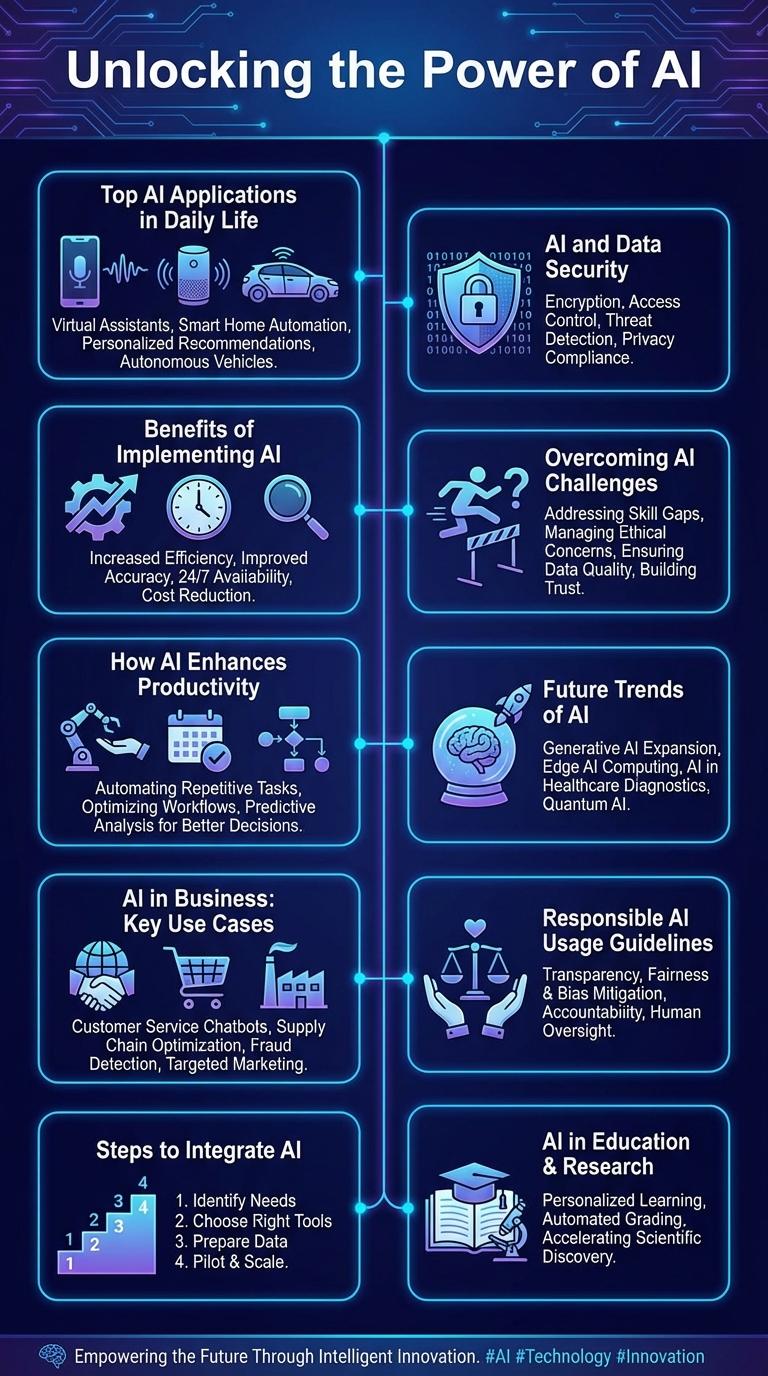
Using AI enhances data visualization by transforming complex information into clear, actionable insights that improve decision-making processes. Infographics powered by AI enable real-time data analysis and dynamic updates, making content more engaging and easier to comprehend. This technology optimizes communication by highlighting key trends and patterns with precision and clarity.
Unlocking the Power of AI
Unlocking the power of AI transforms industries by enhancing decision-making and automating complex tasks. AI technologies analyze vast amounts of data to reveal insights that drive innovation and efficiency.
Businesses leveraging AI experience increased productivity and improved customer experiences through personalized solutions. Understanding AI's potential enables organizations to stay competitive in an evolving digital landscape.
Top AI Applications in Daily Life
Artificial Intelligence (AI) has become an integral part of daily life, enhancing convenience and efficiency across various domains. Key AI applications include virtual assistants, personalized recommendations, smart home devices, healthcare diagnostics, and autonomous vehicles. These technologies leverage machine learning and data analytics to improve user experiences and streamline everyday tasks.
Benefits of Implementing AI
Implementing AI in businesses enhances efficiency by automating repetitive tasks and providing precise data analysis. This leads to faster decision-making and reduced operational costs.
AI-powered tools improve customer experiences through personalized interactions and 24/7 support. Companies adopting AI report higher productivity and increased competitive advantage.
How AI Enhances Productivity
| AI Feature | Productivity Benefit |
|---|---|
| Automation | Reduces repetitive tasks, freeing up time for strategic activities |
| Data Analysis | Processes large datasets quickly to generate actionable insights |
| Personalization | Customizes workflows and recommendations to individual user needs |
| Collaboration Tools | Enhances communication and coordination with AI-driven platforms |
| Predictive Maintenance | Minimizes downtime by forecasting equipment issues in advance |
AI in Business: Key Use Cases
Artificial Intelligence (AI) is transforming business operations across industries by automating processes and enhancing decision-making. Companies leverage AI to improve efficiency, customer experiences, and data analysis.
- Customer Service Automation - AI-powered chatbots handle inquiries and support tasks, reducing response times and operational costs.
- Predictive Analytics - AI analyzes historical data to forecast trends and guide strategic business decisions.
- Supply Chain Optimization - Machine learning models optimize inventory management and streamline logistics.
- Personalized Marketing - AI customizes campaigns based on customer behavior to increase engagement and sales.
- Fraud Detection - AI systems monitor transactions in real-time to identify and prevent fraudulent activities.
Steps to Integrate AI
Integrating AI begins with identifying key business processes that can benefit from automation and intelligent analysis. Next, gather quality data and choose suitable AI models tailored to specific needs. Finally, implement the AI system with continuous monitoring and optimization to ensure effective performance.
AI and Data Security
Artificial Intelligence (AI) is transforming data security by enhancing threat detection and response capabilities. Integrating AI-driven tools reduces vulnerabilities and safeguards sensitive information across digital platforms.
AI and Data Security collaborate to identify cyber threats in real time, preventing breaches efficiently and minimizing data loss.
- AI-Powered Threat Detection - Machine learning algorithms analyze patterns to detect unusual activity and potential cyberattacks instantly.
- Automated Incident Response - AI systems automatically respond to security alerts, reducing human error and response time during data breaches.
- Data Privacy Enhancement - AI enforces encryption and access controls to protect user data from unauthorized access and ensure regulatory compliance.
Overcoming AI Challenges
Artificial Intelligence (AI) offers transformative benefits across industries but faces significant challenges in implementation and adoption. Overcoming these barriers is essential to unlock the full potential of AI technologies.
Key challenges include data quality issues, algorithmic bias, and lack of transparency in AI models. Addressing these requires robust data management, bias mitigation strategies, and explainable AI techniques. Continued investment in research and ethical standards ensures more reliable and fair AI systems.
Future Trends of AI
Artificial Intelligence is rapidly evolving, shaping the future of industries and everyday life. Emerging AI technologies promise greater automation, personalization, and decision-making capabilities.
- AI-Driven Automation - Increasing use of AI to automate complex tasks enhances productivity and efficiency across sectors.
- Explainable AI - Development of transparent AI models ensures better trust and understanding of AI decisions.
- AI and Edge Computing - Integration of AI with edge devices enables faster data processing close to data sources.
Innovations in AI will continue to transform business models, improve user experiences, and drive new technological breakthroughs.