
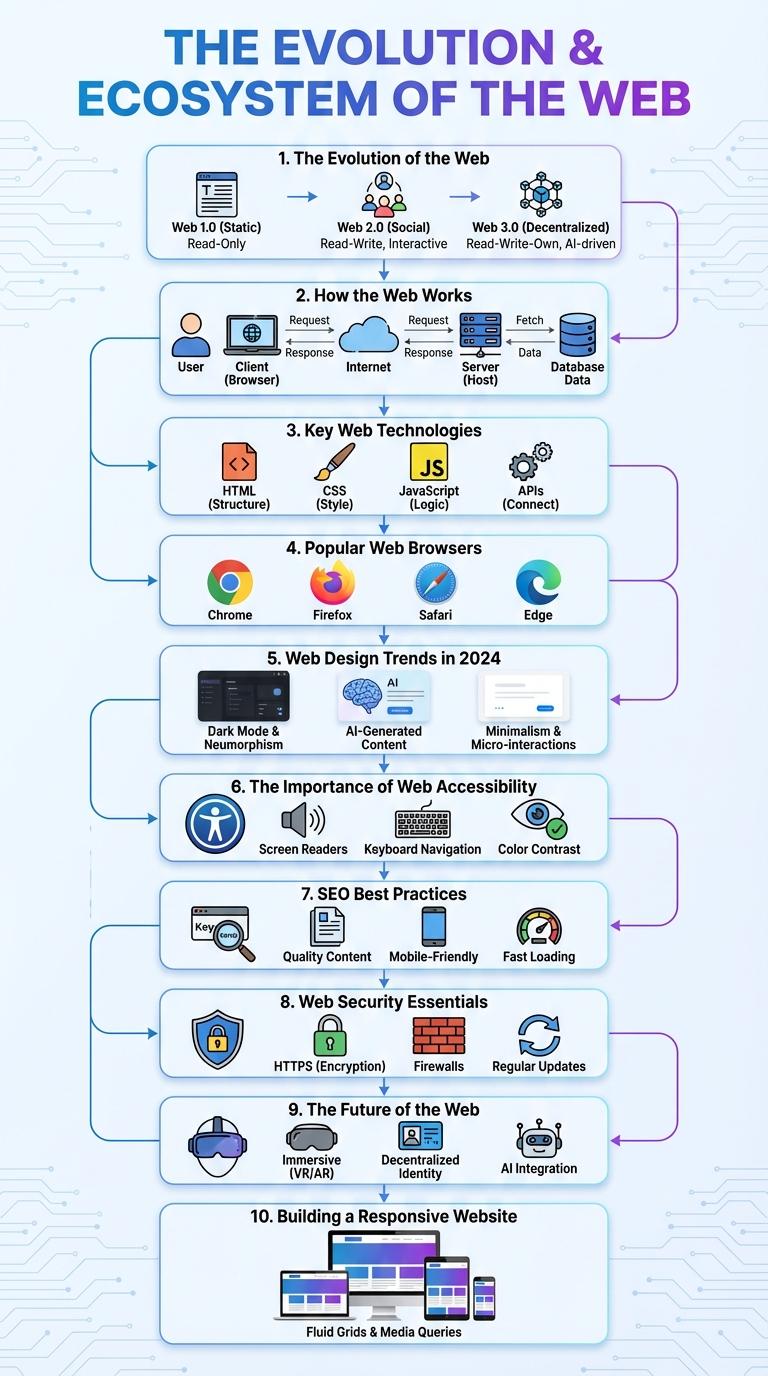
Web infographics present complex data through visually engaging graphics that simplify information for easier understanding. They combine design elements like icons, charts, and typography to communicate web-related concepts effectively. These tools enhance user engagement by making technical content more accessible and memorable.
The Evolution of the Web
The Evolution of the Web highlights the transformation from static pages to dynamic, interactive platforms. It showcases key milestones that shaped the internet landscape over decades.
The journey began with Web 1.0, characterized by basic HTML pages and limited user interaction. Web 2.0 introduced social media, user-generated content, and richer web applications. Today's Web 3.0 focuses on decentralization, AI integration, and enhanced user privacy.
How the Web Works
| Component | Description |
|---|---|
| Web Browser | Software that requests, retrieves, and displays web content from servers using HTTP or HTTPS protocols. |
| Web Server | Computer that stores website files and responds to browser requests by sending the requested resources. |
| HTTP/HTTPS Protocol | Communication standards that define how browsers and servers exchange data securely and efficiently. |
| Domain Name System (DNS) | Transforms human-readable website addresses into IP addresses, enabling browsers to locate web servers. |
| IP Address | Unique numerical label assigned to each web server to identify its location on the internet. |
Key Web Technologies
What are the key technologies driving the modern web? The web relies on foundational technologies like HTML, CSS, and JavaScript to create and style content. These technologies enable interactive, dynamic, and visually appealing websites across all devices.
Popular Web Browsers
Popular web browsers are essential tools for accessing the internet, providing users with fast, secure, and user-friendly experiences. The most widely used browsers include Google Chrome, Safari, Firefox, Microsoft Edge, and Opera.
Google Chrome dominates the market with a global share exceeding 65%, known for its speed and extensive extension library. Safari leads on Apple devices, while Firefox and Edge offer strong privacy features and continuous updates.
Web Design Trends in 2024
Web design in 2024 emphasizes user-centric interfaces and immersive digital experiences. Innovations in aesthetics and functionality drive engaging websites optimized for diverse devices.
- Dark Mode Dominance - Increased adoption of dark themes reduces eye strain and enhances visual appeal across websites.
- Neumorphism Revival - Soft shadows and subtle gradients create tactile, 3D-like interfaces that boost user interaction.
- AI-Powered Personalization - Websites leverage artificial intelligence to deliver tailored content and improve user engagement.
The Importance of Web Accessibility
Web accessibility ensures that websites are usable by people of all abilities and disabilities, removing barriers that prevent interaction with, or access to, websites. It includes designing for screen readers, keyboard navigation, and providing alternative text for images.
Accessible websites reach a broader audience, including individuals with visual, auditory, motor, or cognitive impairments. Compliance with accessibility standards like WCAG enhances user experience and is often required by law.
SEO Best Practices
SEO best practices enhance website visibility by optimizing content, structure, and technical elements to rank higher in search engine results. Key strategies include keyword research, quality content creation, mobile optimization, and fast page loading speeds. Implementing these practices increases organic traffic, improves user experience, and boosts overall online presence.
Web Security Essentials
Web security is crucial for protecting data and maintaining trust in online environments. Implementing foundational security measures reduces vulnerabilities and defends against cyber threats.
- Use HTTPS - Encrypts data between the user and the server to prevent interception.
- Strong Password Policies - Enforces complex passwords to guard account access.
- Regular Software Updates - Patches security flaws to maintain system integrity.
The Future of the Web
The Future of the Web envisions a more intelligent, connected, and immersive online experience driven by advancements in AI, 5G, and edge computing. Web 3.0 aims to create decentralized platforms that empower users with greater control over their data and digital identities. Emerging technologies like virtual reality, blockchain, and semantic web will transform how individuals interact, transact, and share information globally.