
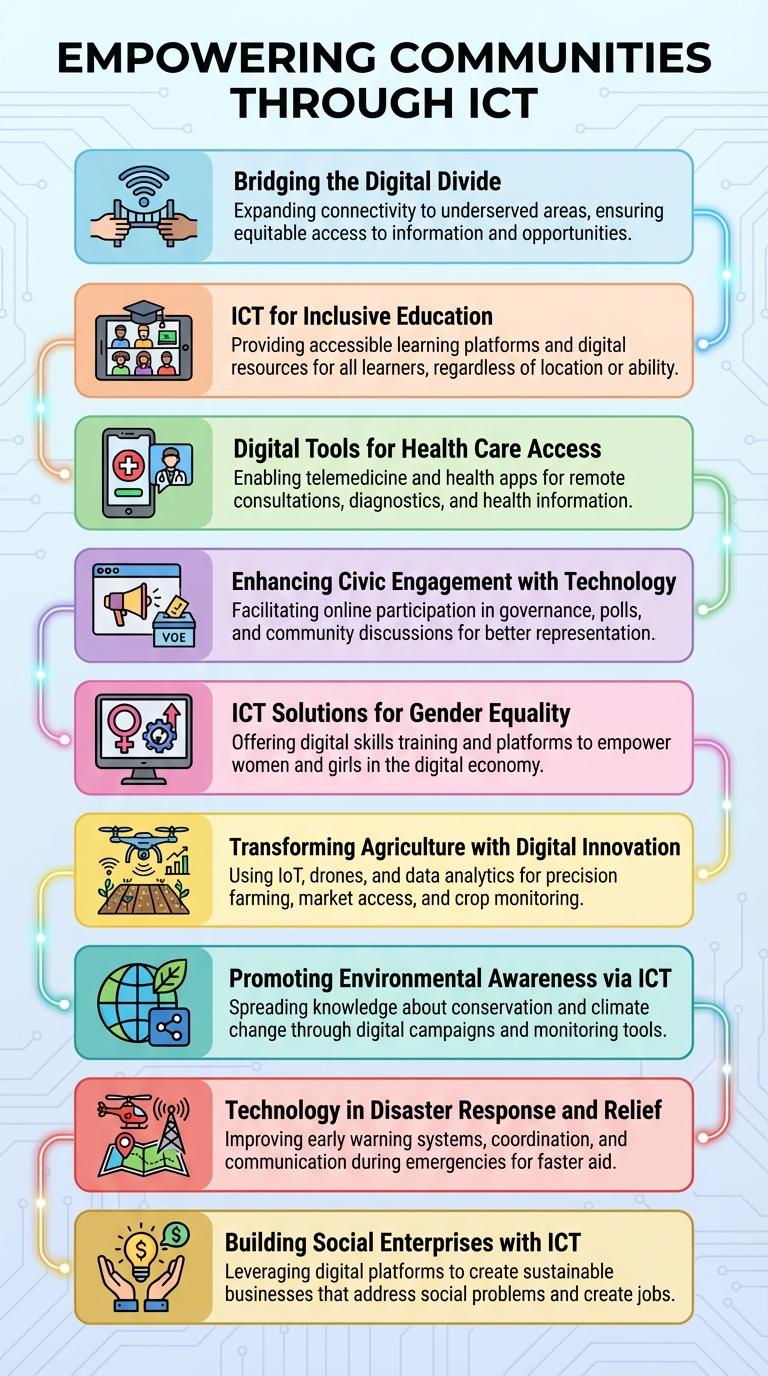
ICT drives social change by enhancing communication, access to information, and community engagement. Innovative digital tools empower marginalized groups, fostering education, health, and economic opportunities. Visualizing these impacts through an infographic highlights the transformative power of technology in society.
Empowering Communities Through ICT
Information and Communication Technology (ICT) plays a crucial role in fostering social change by empowering communities. It enables access to information, enhances education, and drives economic development.
- Improved Access to Education - ICT tools provide remote learning opportunities and educational resources to underserved populations.
- Enhanced Community Engagement - Social media and digital platforms facilitate communication and mobilization for social causes.
- Economic Empowerment - ICT supports entrepreneurship and job creation by connecting people to digital markets and services.
Bridging the Digital Divide
ICT for social change plays a crucial role in bridging the digital divide by providing access to technology and internet connectivity in underserved communities. Mobile devices, affordable internet, and community training programs empower individuals with digital skills and resources. Bridging this gap enhances education, healthcare, and economic opportunities, fostering inclusive social development.
ICT for Inclusive Education
How does ICT promote inclusive education for all learners?
ICT tools provide accessible learning materials tailored to diverse needs, enabling students with disabilities to participate fully. These technologies foster collaboration and engagement, breaking down barriers to education.
What types of ICT support inclusive classrooms effectively?
Assistive devices like screen readers, speech-to-text software, and interactive whiteboards enhance learning experiences. Online platforms offer personalized content and real-time feedback, accommodating varied learning styles.
Why is ICT integration vital for inclusive education policies?
Incorporating ICT ensures equitable access to quality education across different socio-economic backgrounds. It supports teachers with resources and training to address diverse classroom challenges efficiently.
How do educators benefit from ICT in inclusive settings?
ICT provides tools for lesson customization, student monitoring, and communication with parents. This empowers educators to create adaptive learning environments that meet individual learner needs.
What impact does ICT have on learners with special educational needs?
ICT enhances independence and confidence by offering tailored support and interactive learning opportunities. It bridges communication gaps and promotes social inclusion within educational communities.
Digital Tools for Health Care Access
Digital tools revolutionize health care access by connecting patients with remote medical professionals through telemedicine platforms. Mobile health applications enable real-time monitoring and management of chronic diseases, enhancing patient outcomes and reducing hospital visits. Data analytics and AI-driven diagnostics improve early detection and personalized treatment, making health care more efficient and accessible worldwide.
Enhancing Civic Engagement with Technology
Information and Communication Technology (ICT) plays a critical role in enhancing civic engagement by providing accessible platforms for public participation and dialogue. Social media, mobile apps, and online forums enable citizens to voice their opinions, mobilize for causes, and hold governments accountable.
Technology empowers communities by increasing transparency and facilitating real-time communication between stakeholders and policymakers. Digital tools support inclusive decision-making processes, ensuring broader representation in social and political activities.
ICT Solutions for Gender Equality
| ICT Solution | Impact on Gender Equality |
|---|---|
| Mobile Learning Platforms | Increase access to education for women and girls in remote areas |
| Online Mentorship Networks | Connect women with role models and career guidance in technology fields |
| Gender-Sensitive Data Analytics | Highlight gender disparities and inform inclusive policymaking |
| Digital Financial Services | Empower women through access to banking, microloans, and economic independence |
| Safe Social Media Platforms | Provide secure spaces for women to share experiences and advocate for rights |
Transforming Agriculture with Digital Innovation
Digital innovation is revolutionizing agriculture, driving social change by enhancing productivity and sustainability. ICT tools empower farmers with real-time data, improving decision-making and resource management.
- Precision Farming - Uses GPS and IoT sensors to optimize crop yields and reduce waste.
- Mobile Advisory Services - Provides farmers with weather forecasts, pest alerts, and market prices via mobile apps.
- Blockchain for Traceability - Ensures transparency and trust in the supply chain from farm to consumer.
Integrating ICT in agriculture creates more resilient farming communities and promotes inclusive economic growth.
Promoting Environmental Awareness via ICT
Information and Communication Technology (ICT) plays a crucial role in promoting environmental awareness and driving sustainable social change. Digital platforms empower communities to access, share, and act on critical environmental information.
- Real-Time Environmental Monitoring - ICT enables the collection and dissemination of real-time data on air quality, water pollution, and climate conditions to inform the public and policymakers.
- Educational Campaigns via Social Media - Digital campaigns on social media leverage ICT to educate millions on eco-friendly practices and the importance of sustainability.
- Community Engagement Platforms - ICT facilitates online forums and apps that connect users with local environmental initiatives and volunteer opportunities to foster collective action.
Technology in Disaster Response and Relief
Information and Communication Technology (ICT) plays a crucial role in disaster response and relief by enabling real-time data sharing and coordination among emergency teams. Mobile applications, satellite communication, and social media platforms help disseminate critical information to affected communities efficiently.
ICT tools enhance the accuracy of disaster mapping and resource allocation, improving response times and reducing casualties. Technologies such as drone surveillance and AI-driven analytics support faster damage assessment and targeted relief efforts, saving lives and resources.