
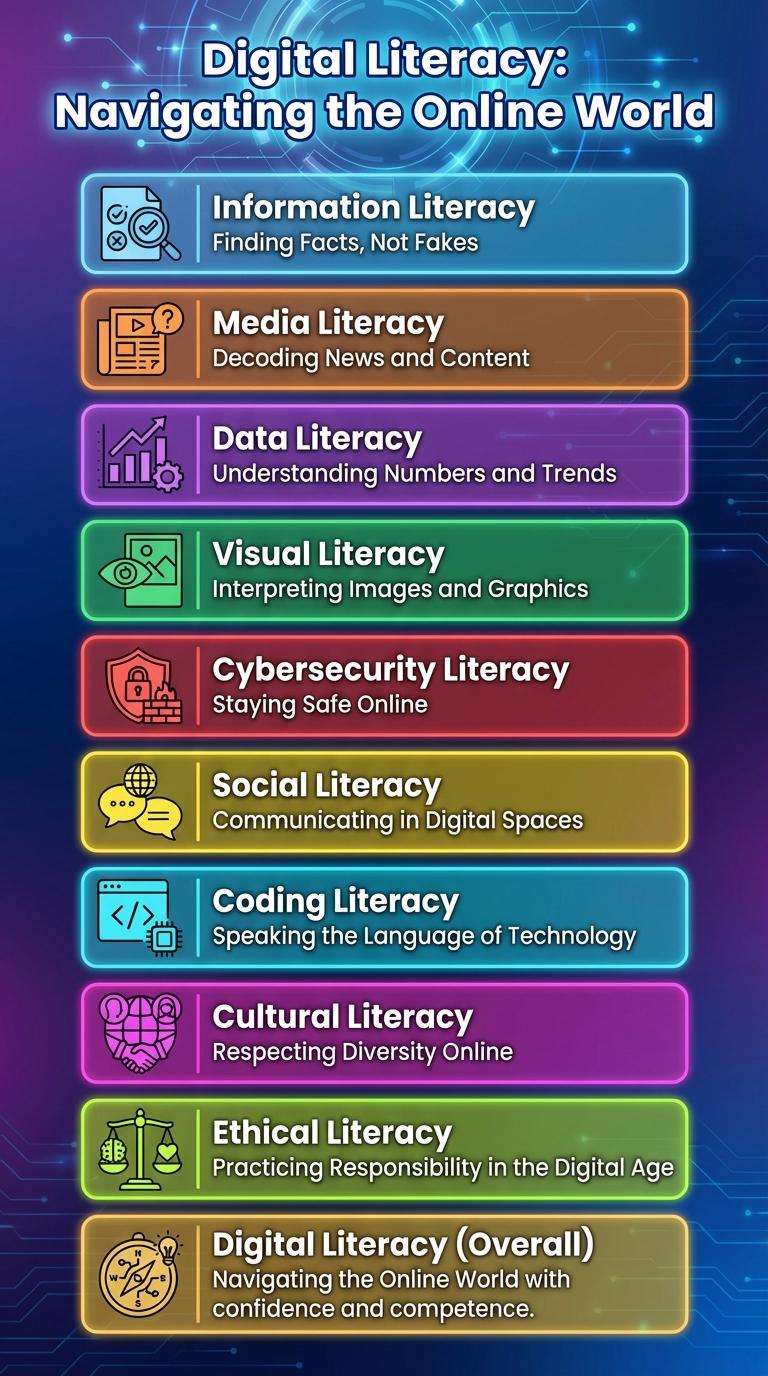
Mastering essential literacies in the digital age is crucial for navigating today's technology-driven world. These skills encompass digital literacy, critical thinking, and information evaluation, enabling individuals to effectively access, interpret, and create content online. Understanding and developing these literacies empowers users to engage responsibly and confidently in digital environments.
Digital Literacy: Navigating the Online World
Digital literacy is the ability to effectively find, evaluate, and communicate information using digital platforms. It involves understanding online safety, recognizing credible sources, and using technology tools responsibly. Mastering digital literacy empowers individuals to navigate the vast online world confidently and safely.
Information Literacy: Finding Facts, Not Fakes
How can you distinguish reliable information from misinformation online? Information literacy empowers you to evaluate sources critically and verify facts before trusting content. Developing these skills helps combat fake news and supports informed decision-making in the digital age.
Media Literacy: Decoding News and Content
Media literacy is crucial for navigating the vast amount of information encountered daily online. It empowers individuals to critically evaluate news sources and digital content for accuracy and bias.
- Critical Evaluation - Develop skills to identify credible news and distinguish facts from opinion or misinformation.
- Understanding Bias - Recognize the influence of bias in news reporting and digital content creation.
- Source Verification - Learn methods to verify the origin and authenticity of online information before sharing or acting on it.
Data Literacy: Understanding Numbers and Trends
Data literacy involves the ability to read, analyze, and interpret data effectively. Understanding numbers and trends enables individuals to make informed decisions in personal and professional contexts. Mastering data literacy is crucial for navigating the digital age, where data-driven insights drive innovation and strategy.
Visual Literacy: Interpreting Images and Graphics
| Essential Literacy | Focus: Visual Literacy - Interpreting Images and Graphics |
|---|---|
| Definition | Ability to understand, analyze, and interpret visual information such as images, charts, and graphs. |
| Key Skills | Recognizing symbols, understanding color usage, analyzing visual context, interpreting data visuals, and identifying biases in imagery. |
| Importance | Enhances comprehension of digital media, supports critical thinking, aids effective communication, and improves decision-making. |
| Applications | Social media analysis, data visualization interpretation, advertising comprehension, educational content understanding, and news evaluation. |
| Tools & Resources | Infographic creators, image analysis software, online courses on visual literacy, and critical media literacy programs. |
Cybersecurity Literacy: Staying Safe Online
Cybersecurity literacy is crucial for protecting personal information and maintaining privacy in the digital world. Understanding online threats and safe practices helps users avoid cyberattacks and data breaches.
- Recognize Phishing - Identify deceptive emails and messages designed to steal sensitive information.
- Create Strong Passwords - Use complex, unique passwords to secure accounts from unauthorized access.
- Use Two-Factor Authentication - Add an extra layer of security by requiring a second form of verification.
Social Literacy: Communicating in Digital Spaces
Social literacy in the digital age involves effectively communicating and interacting within online environments. It requires understanding digital etiquette, tone, and cultural differences to build meaningful connections.
Mastering social literacy helps individuals engage confidently on social media platforms, forums, and collaborative tools. Recognizing misinformation and responding respectfully to diverse opinions are key skills. These abilities enhance personal relationships and professional networking in virtual spaces.
Coding Literacy: Speaking the Language of Technology
Coding literacy is the ability to understand and write computer code, serving as the foundation for interacting with digital technology. It enables individuals to create software, automate tasks, and solve problems using programming languages such as Python, Java, and JavaScript.
Mastering coding literacy empowers people to participate actively in the digital economy and innovation. It enhances critical thinking, creativity, and opens up career opportunities in technology-driven industries.
Cultural Literacy: Respecting Diversity Online
Cultural literacy in the digital age involves understanding and respecting the diverse perspectives and backgrounds present online. It promotes inclusive communication and helps prevent misunderstandings in virtual interactions.
Respecting diversity online fosters a safer and more welcoming digital environment for all users. Practicing cultural literacy enhances collaboration and broadens global awareness in digital communities.