
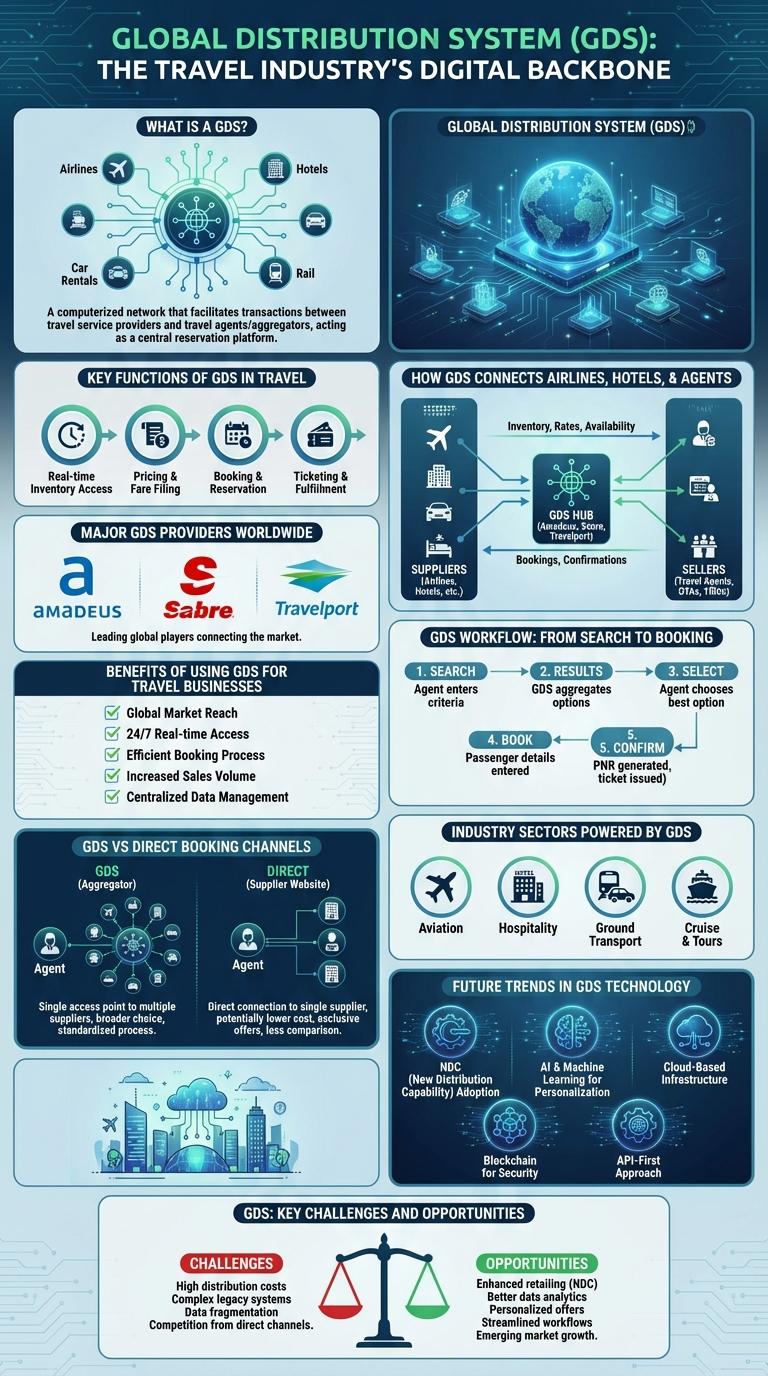
Global Distribution Systems (GDS) connect travel agents and service providers, streamlining bookings for flights, hotels, and car rentals worldwide. This infographic breaks down how GDS platforms enhance travel industry efficiency through real-time access to inventory and pricing. Understanding GDS functionality can optimize travel agency operations and improve customer experience.
What is a Global Distribution System (GDS)?
A Global Distribution System (GDS) is a computerized network that facilitates transactions between travel service providers and travel agencies. It connects airlines, hotels, car rentals, and other travel-related services in a centralized platform.
- Centralized Booking - GDS enables travel agents to book multiple services from different suppliers through a single interface.
- Real-Time Availability - GDS provides up-to-date information on prices, availability, and schedules for travel products.
- Global Reach - GDS offers access to a wide range of international travel inventory and markets.
GDS platforms are essential tools for the travel industry to streamline booking and increase sales efficiency worldwide.
Key Functions of GDS in Travel
Global Distribution Systems (GDS) serve as centralized platforms that connect travel service providers with agents and customers worldwide. They streamline the booking and reservation processes across various travel sectors.
- Real-Time Inventory Access - GDS provides instant access to airline seats, hotel rooms, and car rentals inventory for immediate booking confirmation.
- Multi-Channel Integration - GDS integrates with travel agencies, online portals, and corporate booking tools to offer seamless travel solutions.
- Price Comparison - It aggregates pricing from multiple suppliers, enabling travelers and agents to find competitive rates efficiently.
Major GDS Providers Worldwide
Global Distribution Systems (GDS) streamline travel bookings by connecting agents with airlines, hotels, and car rental providers worldwide. Major GDS providers include Amadeus, Sabre, and Travelport, each offering extensive global reach and real-time inventory access. These platforms enable efficient travel management and comprehensive service integration across the travel industry.
How GDS Connects Airlines, Hotels, and Agents
How does a Global Distribution System (GDS) streamline travel bookings?
A GDS acts as a unified platform linking airlines, hotels, and travel agents worldwide. It consolidates real-time data to enable seamless booking transactions and inventory management.
In what way do airlines benefit from GDS integration?
Airlines use GDS to distribute flight schedules, seat availability, and fares efficiently. This expands their market reach by connecting with thousands of travel agents instantly.
How do hotels leverage GDS for improved occupancy rates?
Hotels list room availability, prices, and packages on the GDS platform, attracting global travelers through travel agencies. This enhances visibility and accelerates booking confirmations.
What role do travel agents play within the GDS network?
Travel agents access a comprehensive database of flight, hotel, and car rental options through GDS. This enables them to provide customized itineraries quickly, increasing customer satisfaction.
| Entity | GDS Role |
|---|---|
| Airlines | Real-time distribution of flights and fares |
| Hotels | Global room availability and pricing display |
| Travel Agents | Access to integrated travel inventory for bookings |
| GDS Platform | Centralized data hub connecting all participants |
Benefits of Using GDS for Travel Businesses
Global Distribution Systems (GDS) streamline travel bookings by connecting travel agents with multiple service providers in real-time. This technology enhances efficiency and accuracy in managing reservations for flights, hotels, and car rentals.
Using GDS allows travel businesses to access a vast inventory of travel options, increasing their competitive edge. It improves customer satisfaction by providing seamless booking experiences and instant confirmations. GDS platforms also offer detailed analytics, enabling businesses to optimize pricing and tailor offers to market demand.
GDS Workflow: From Search to Booking
Global Distribution Systems (GDS) streamline the travel booking process by connecting travel agents with airline, hotel, and car rental inventories. The workflow begins with a search query, where users input travel preferences and dates. The system then displays real-time availability and pricing, allowing agents to finalize bookings efficiently.
GDS vs Direct Booking Channels
Global Distribution Systems (GDS) connect travel agents and consumers to a vast inventory of airline, hotel, and car rental options worldwide. Direct booking channels allow travelers to reserve accommodations or services directly from providers, often offering exclusive deals.
GDS aggregates multiple providers, enhancing visibility across international markets while direct booking channels focus on brand loyalty and personalized customer experience.
- Reach and Exposure - GDS offers extensive global reach by linking numerous travel agencies, whereas direct booking targets repeat customers and site visitors.
- Cost Structure - GDS involves commission fees paid by suppliers, while direct bookings reduce third-party costs resulting in higher profit margins.
- Control Over Brand - Direct booking channels provide full control over the user experience, unlike GDS, which standardizes listings across platforms.
Industry Sectors Powered by GDS
Global Distribution Systems (GDS) revolutionize multiple industry sectors by providing seamless connectivity and real-time data exchange. These platforms enable efficient booking, inventory management, and customer service across diverse markets.
Key sectors powered by GDS include travel, hospitality, car rental, and insurance industries. By integrating GDS technology, businesses enhance operational efficiency and expand their global reach.
Future Trends in GDS Technology
| Future Trend | Description |
|---|---|
| Artificial Intelligence Integration | Enhances personalized travel recommendations and automates booking processes. |
| Cloud-Based Platforms | Offers scalability and real-time data synchronization across global distribution channels. |
| Blockchain Technology | Improves transaction security, transparency, and reduces fraud in travel bookings. |
| Mobile-First Interfaces | Provides seamless user experiences for travelers booking through smartphones and tablets. |
| API Expansion | Enables greater connectivity between GDS, airlines, hotels, and third-party travel services. |