
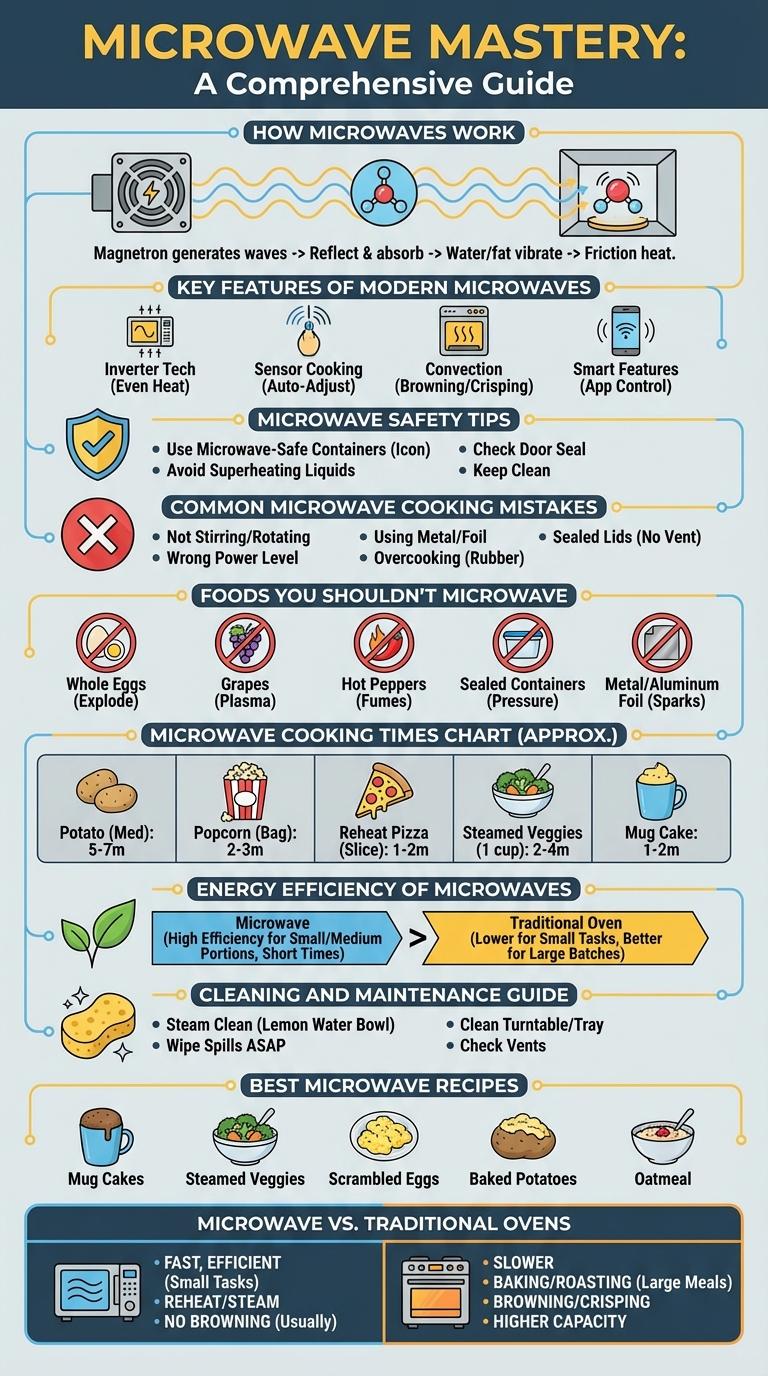
Microwaves use electromagnetic waves to heat food quickly and efficiently. Their convenience and speed have made them a staple in kitchens worldwide. Understanding the technology and safe usage tips can enhance both cooking results and appliance longevity.
How Microwaves Work
Microwaves heat food by emitting electromagnetic waves that cause water molecules in the food to vibrate rapidly. This vibration generates heat through friction, warming the food evenly and quickly. The microwave's magnetron is the key component that produces these waves at a specific frequency optimized for water absorption.
Key Features of Modern Microwaves
Modern microwaves combine advanced technology with user-friendly features to enhance cooking efficiency. These appliances offer precise control and convenience for everyday meal preparation.
- Inverter Technology - Provides consistent and even heating by regulating power output continuously.
- Sensor Cooking - Automatically adjusts cooking time and power based on moisture and humidity levels detected.
- Multi-Stage Cooking - Allows programming of a sequence of different power levels and times for complex recipes.
Microwave Safety Tips
Microwave ovens are a convenient kitchen appliance but require proper use to ensure safety. Always use microwave-safe containers to prevent harmful chemical leaching and avoid metal objects that can cause sparks. Regularly clean the microwave interior to prevent food buildup, which can ignite and cause fires.
Common Microwave Cooking Mistakes
Microwaves are convenient kitchen appliances that save time and effort in cooking. However, improper usage can lead to uneven heating and food safety issues.
Common microwave cooking mistakes include using metal containers, which cause sparks and damage. Another frequent error is overheating food, leading to dry textures or burns.
Foods You Shouldn't Microwave
What foods should you avoid microwaving? Some foods can release harmful chemicals or lose their texture when microwaved. Eggs in shells, for example, can explode due to steam buildup inside.
Why shouldn't you microwave breast milk? Heating breast milk in a microwave can create hot spots that might burn a baby's mouth. It also destroys valuable nutrients and antibodies in the milk.
Is it safe to microwave processed meats? Microwaving processed meats like hot dogs can cause uneven heating, increasing the risk of bacteria surviving. Chemical compounds may also form, which can be harmful.
Can you microwave grapes or whole fruits? Microwaving grapes or certain whole fruits may cause them to spark or even catch fire due to their water and sugar content. This can damage your microwave and pose a fire hazard.
What about microwaving leafy greens? Leafy greens like spinach can produce harmful nitrates when microwaved, which may convert into potentially carcinogenic compounds. Steaming or sauteing is a safer cooking option.
Microwave Cooking Times Chart
Microwave ovens provide a quick and convenient way to cook and reheat food. Understanding microwave cooking times is essential for achieving perfectly cooked meals without overcooking or undercooking.
This infographic presents a comprehensive microwave cooking times chart for common foods such as vegetables, poultry, and frozen meals. Times vary based on wattage, with standard microwaves ranging from 700 to 1200 watts. Following these recommended times helps maintain food texture, flavor, and safety during microwave preparation.
Energy Efficiency of Microwaves
| Energy Efficiency Aspect | Details |
|---|---|
| Energy Consumption | Microwaves typically use 600 to 1200 watts, consuming less energy than conventional ovens. |
| Cooking Time | Shorter cooking durations reduce overall energy use compared to stovetops and conventional ovens. |
| Heat Production | Microwaves heat food directly using electromagnetic waves, minimizing heat loss. |
| Energy Efficiency Ratio | Microwaves convert approximately 50-60% of input energy into cooking heat, higher than many traditional methods. |
| Environmental Impact | Lower energy consumption results in reduced carbon footprint when compared to electric ovens and gas stoves. |
Cleaning and Maintenance Guide
Keeping your microwave clean enhances its efficiency and prolongs its lifespan. Regular maintenance prevents unpleasant odors and ensures safe operation.
- Use a Vinegar Solution - Clean the interior by steaming a vinegar and water mixture for 5 minutes, then wipe with a soft cloth.
- Remove and Clean Turntable - Detach the glass turntable and wash it with warm, soapy water to remove food debris effectively.
- Wipe Door Seals - Gently clean door seals with a damp cloth to maintain a proper seal and prevent microwave leakage.
Perform these cleaning steps weekly to maintain optimal microwave performance and hygiene.
Best Microwave Recipes
Microwaves revolutionize kitchen convenience with quick and easy cooking options. They enable a variety of delicious recipes that save time and retain nutrition.
Best microwave recipes include steamed vegetables, microwave mug cakes, and quick scrambled eggs. These recipes optimize flavor and texture while requiring minimal effort and ingredients.