
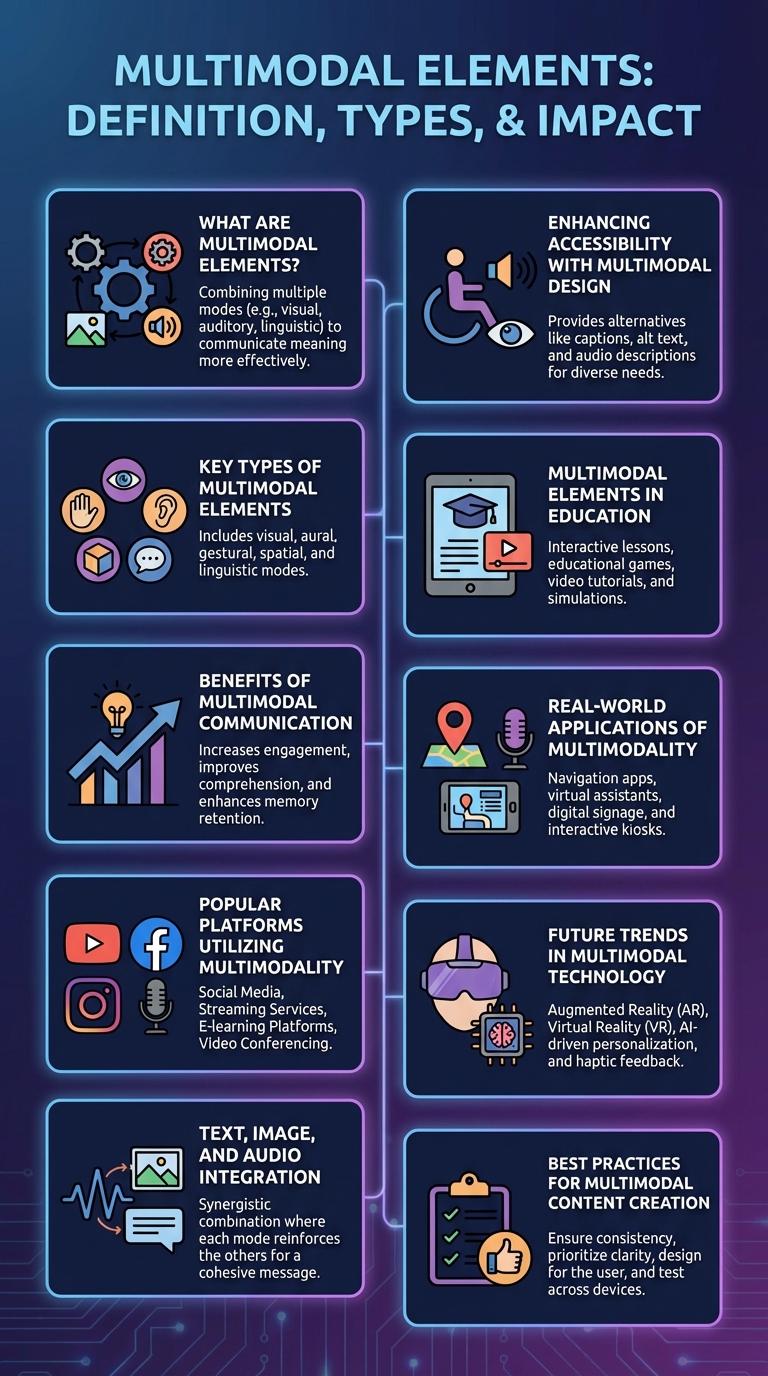
Multimodal elements combine text, images, audio, and video to create engaging and interactive content. Incorporating diverse modes enhances communication effectiveness by appealing to multiple senses and learning styles. Infographics use these elements to present complex information clearly and attractively.
What Are Multimodal Elements?
Multimodal elements combine different modes of communication to enhance understanding and engagement. These elements integrate visual, auditory, textual, and spatial components.
- Visual Elements - Include images, colors, and layout that capture attention and convey messages quickly.
- Auditory Elements - Comprise sounds, music, and spoken words that add emotional or contextual layers.
- Textual Elements - Consist of written content, typography, and captions that provide detailed information.
Multimodal elements work together to create rich and effective communication experiences.
Key Types of Multimodal Elements
Multimodal elements combine different modes of communication to enhance understanding and engagement. These elements are essential in creating effective visuals and content across digital and print media.
- Text - Provides written information and context to support other modes.
- Images - Convey visual information quickly and evoke emotions.
- Audio - Adds sound elements such as voice, music, or effects to enrich the message.
- Video - Combines moving images and sound for dynamic storytelling.
- Gestures - Uses body language and hand movements to complement verbal communication.
Benefits of Multimodal Communication
Multimodal communication integrates text, images, audio, and video to enhance message clarity and engagement. This approach caters to diverse learning styles, making information more accessible and memorable.
Using multiple modes increases content retention by stimulating different cognitive processes simultaneously. It also fosters better interaction and collaboration across various platforms and audiences.
Popular Platforms Utilizing Multimodality
Which popular platforms effectively utilize multimodal elements? Multimodal platforms integrate text, images, audio, and video to enhance user interaction and engagement. Leading examples include YouTube, Instagram, TikTok, and Microsoft Teams, each leveraging diverse content formats for communication and entertainment.
Text, Image, and Audio Integration
Multimodal elements combine Text, Image, and Audio Integration to create rich, engaging content that enhances user experience. Text provides clear information, while images offer visual context and draw attention. Audio adds an interactive layer, supporting accessibility and deeper understanding.
Enhancing Accessibility with Multimodal Design
Multimodal design integrates various modes of communication such as text, images, audio, and video to create accessible content. This approach ensures information reaches diverse audiences, including those with disabilities.
Enhancing accessibility through multimodal elements addresses different learning styles and sensory needs. Features like alt text for images, captions for videos, and audio descriptions improve comprehension and engagement. Multimodal design supports inclusivity by making digital content usable for people with visual, auditory, or cognitive impairments.
Multimodal Elements in Education
Multimodal elements in education integrate visual, auditory, and kinesthetic modes to enhance learning experiences. These elements include videos, diagrams, audio recordings, and interactive activities that cater to diverse learning styles. Incorporating multimodal resources improves comprehension, engagement, and retention for students across various educational levels.
Real-World Applications of Multimodality
Multimodal elements integrate text, images, sound, and video to enhance communication effectiveness across various platforms. Real-world applications leverage these combinations to provide richer, more engaging user experiences.
In education, multimodality supports diverse learning styles by combining visual aids, spoken explanations, and interactive content. Marketing campaigns use multimodal strategies to capture audience attention through synchronized visuals and audio.
Future Trends in Multimodal Technology
| Future Trend | Description |
|---|---|
| Advanced AI Integration | Enhanced machine learning models enable more accurate interpretation and synthesis of varied data types like text, voice, and images. |
| Real-time Multimodal Interaction | Systems support seamless communication and feedback across multiple sensory channels simultaneously for improved user engagement. |
| Personalized Multimodal Experiences | Adaptive interfaces tailor content delivery based on individual user preferences and contextual data. |
| Cross-device Multimodality | Integration across smartphones, wearables, and IoT devices enables continuous and synchronized multimodal data exchange. |
| Multimodal Data Security | Robust encryption and privacy measures protect complex data streams comprising multiple input formats. |