
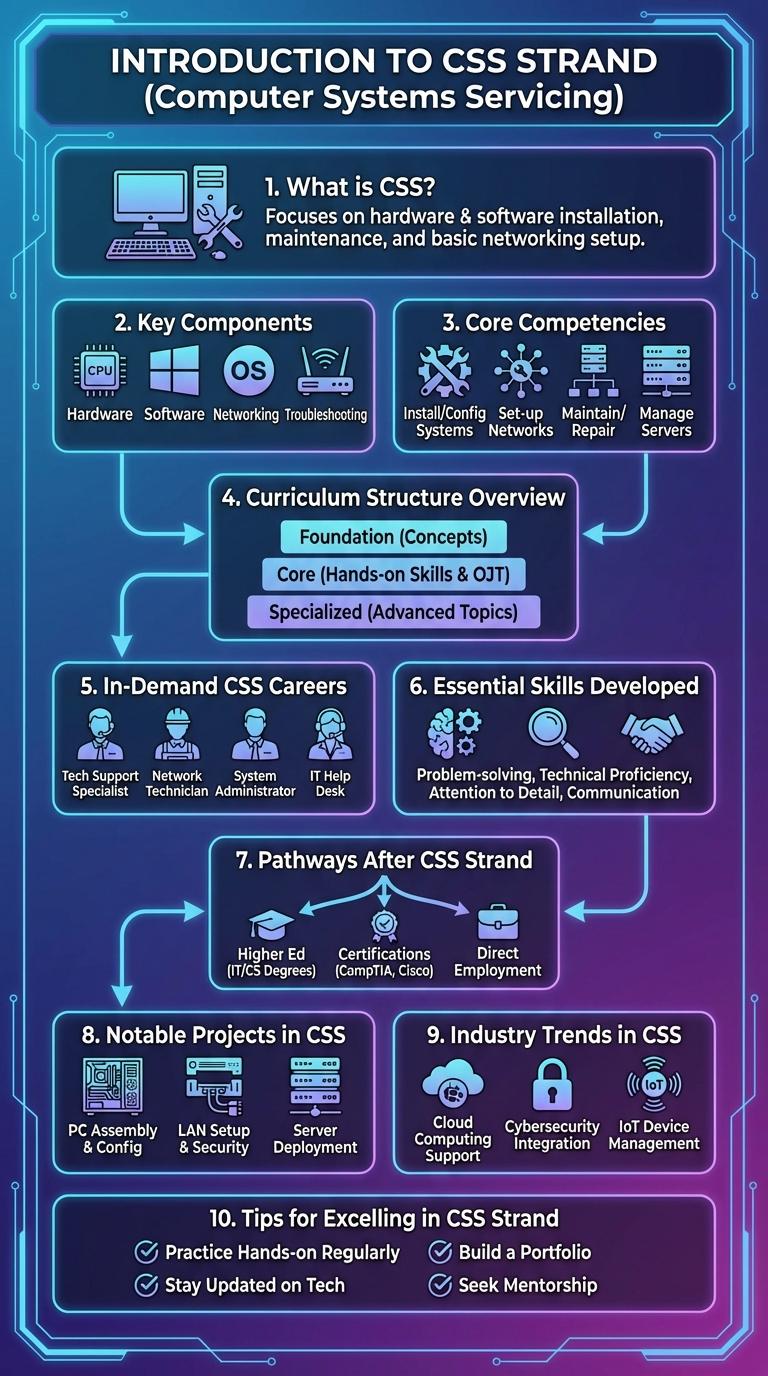
CSS strand visually breaks down the principles and techniques essential for mastering web design and development. Key concepts such as selectors, properties, and responsive design are clearly illustrated to enhance understanding and practical application. This infographic serves as a concise guide for both beginners and experienced developers looking to refine their CSS skills.
Introduction to CSS Strand
The CSS Strand stands for Computer Systems Servicing, a comprehensive technical course designed to equip students with skills in computer installation, troubleshooting, and repair. It introduces learners to basic computer hardware and software concepts, preparing them for IT-related careers.
Students gain hands-on experience in configuring operating systems, networking, and system maintenance. The strand also covers customer service and technical support, bridging practical knowledge with workplace readiness.
Key Components of CSS Strand
| Key Component | Description |
|---|---|
| Web Development | Foundation of creating websites using HTML, CSS, and JavaScript. |
| Programming | Learning languages such as Java, Python, and C# to build software and applications. |
| Animation and Graphics Design | Techniques for visual content creation including 2D and 3D animation. |
| Network Fundamentals | Basic principles of computer networking, including LAN, WAN, and internet protocols. |
| Database Management | Skills in organizing, storing, and retrieving data using database systems like MySQL. |
Core Competencies in CSS
The CSS Strand focuses on developing skills essential for success in various technical and business environments. Core competencies include critical thinking, problem-solving, and effective communication tailored for corporate settings.
Students learn project management, teamwork, and digital literacy to enhance workplace readiness. Mastery of these competencies ensures adaptability and efficiency in complex, real-world challenges.
Curriculum Structure Overview
The CSS strand curriculum is designed to develop technical skills and practical knowledge in computer systems and software development. It integrates theory with hands-on projects to prepare students for technology-related careers.
The curriculum covers foundational principles, advanced techniques, and real-world applications essential for computer programming and system management.
- Core Subjects - Includes programming languages, networking, and database management to build a solid technical base.
- Project-Based Learning - Emphasizes practical assignments and real-time problem solving to enhance applied skills.
- Industry-Relevant Skills - Focuses on current technologies and best practices to align student competencies with market demands.
In-Demand CSS Careers
CSS skills open doors to in-demand careers like Front-End Developer, UI/UX Designer, and Web Designer. Mastery of CSS frameworks and responsive design increases job opportunities in tech companies and digital agencies. Growing demand for mobile-friendly websites fuels the need for CSS experts in today's job market.
Essential Skills Developed
What essential skills do students develop in the CSS strand? The Computer Systems Servicing (CSS) strand equips students with practical and technical skills in hardware and software troubleshooting. Students gain hands-on experience in installing, configuring, and maintaining computer systems.
| Essential Skills | Development Focus |
|---|---|
| Hardware Servicing | Diagnosing and repairing computer components |
| Software Installation | Setting up operating systems and essential applications |
| Networking Basics | Establishing and maintaining wired and wireless networks |
| Troubleshooting | Systematic problem-solving in computing environments |
| Customer Support | Communicating technical information effectively to users |
How do these skills benefit students' future careers? Mastery of CSS core competencies prepares students for technical roles in IT support and system administration. These foundational abilities enhance employability in a rapidly evolving digital workforce.
Pathways After CSS Strand
The CSS (Creative and Services Strand) opens diverse career and educational opportunities for students seeking practical and creative fields. It prepares learners for both immediate employment and specialized higher education programs.
Graduates can pursue multiple pathways aligned with their skills in design, hospitality, and service industries.
- Higher Education - Enroll in college courses related to hospitality management, fashion design, or multimedia arts for advanced learning.
- Technical-Vocational Training - Obtain certifications in baking, hairstyling, or animation through TESDA-accredited programs to enhance employability.
- Employment - Seek entry-level positions in hotels, restaurants, salons, or creative agencies requiring hands-on skills.
Notable Projects in CSS
CSS Strand stands out for its innovative and impactful projects in the tech industry. These notable projects showcase practical applications of advanced web development techniques, enhancing user experience and design aesthetics.
The "Responsive Design Overhaul" project revolutionized website adaptability across various devices, improving accessibility and engagement. Another key project, "CSS Grid Enhancement," introduced new layouts that simplified complex design structures. The "Animation Framework" project contributed dynamic visual effects, making interactions more interactive and appealing.
Industry Trends in CSS
CSS industry trends emphasize the rise of CSS-in-JS, enabling developers to write styles directly within JavaScript for better component encapsulation. The adoption of CSS variables and custom properties enhances theme management and supports dynamic styling across applications. Frameworks like Tailwind CSS gain popularity for utility-first approaches, accelerating responsive design and reducing stylesheet bloat.