
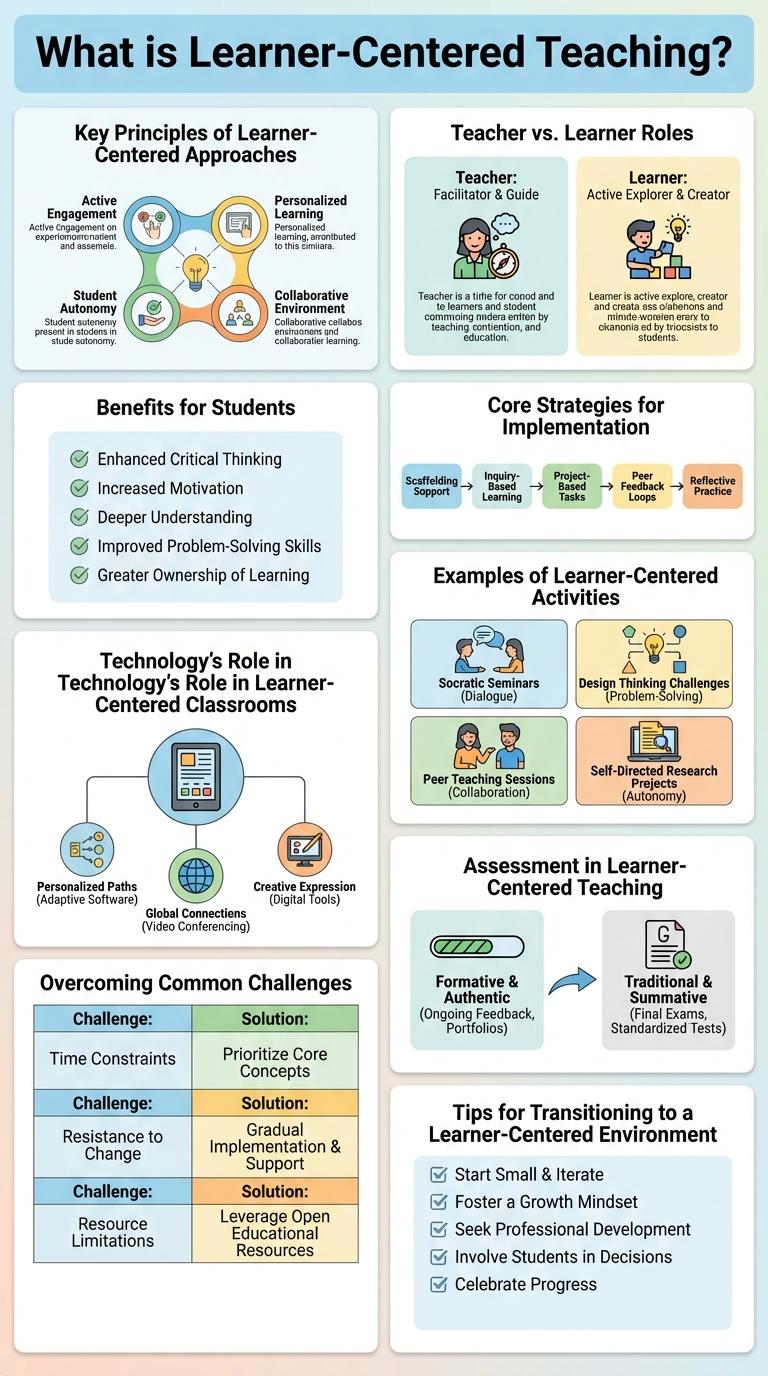
Learner-centered teaching emphasizes active student engagement and personalized learning experiences to enhance comprehension and retention. This approach fosters critical thinking and collaboration by shifting focus from traditional lectures to interactive activities tailored to diverse learning styles. Infographics effectively illustrate these strategies, highlighting key benefits and practical applications for educators.
What is Learner-Centered Teaching?
| Aspect | Description |
|---|---|
| Definition | An educational approach emphasizing the student's active role in the learning process. |
| Focus | Customization of teaching methods to meet individual learner needs, interests, and abilities. |
| Goal | Enhance critical thinking, problem-solving skills, and deep understanding through active engagement. |
| Teacher's Role | Facilitator and guide who supports learners in constructing knowledge rather than simply delivering content. |
| Benefits | Improved motivation, retention, and lifelong learning habits among students. |
Key Principles of Learner-Centered Approaches
What defines learner-centered teaching?
Learner-centered teaching prioritizes the needs, abilities, and interests of students. It encourages active participation and personalized learning experiences.
How does learner-centered teaching enhance student engagement?
This approach involves students in decision-making and problem-solving activities. It fosters deeper understanding and motivation by making learning relevant to their lives.
What role does the instructor play in learner-centered teaching?
Instructors act as facilitators or guides rather than traditional lecturers. They support students' critical thinking and collaborative skills through tailored guidance.
Why is collaboration important in learner-centered approaches?
Collaboration builds communication and social skills essential for real-world success. Group work and peer feedback create a dynamic and supportive learning environment.
How does learner-centered teaching accommodate diverse learning styles?
It integrates various teaching methods to address visual, auditory, and kinesthetic preferences. This flexibility helps all students access and retain information effectively.
Teacher vs. Learner Roles
Learner-centered teaching shifts the focus from the teacher as the sole knowledge provider to the learner as an active participant in their education. Teachers act as facilitators, guiding students through exploration and critical thinking rather than delivering direct instruction. Learners engage in self-directed activities, collaborate with peers, and apply concepts to real-world scenarios, enhancing deeper understanding and retention.
| Teacher Roles | Learner Roles |
|---|---|
| Facilitator of learning | Active participant |
| Designer of learning experiences | Self-directed learner |
| Provider of feedback | Collaborator with peers |
| Assessor of understanding | Critical thinker |
| Resource for guidance | Problem solver |
Benefits for Students
Learner-centered teaching significantly enhances student engagement and motivation by focusing on individual needs and learning styles. This approach fosters critical thinking and deeper understanding, making education more meaningful.
Students benefit from increased autonomy and responsibility in their learning process, which builds confidence and self-regulation skills. Collaborative learning opportunities encourage communication and teamwork, essential for real-world success. Overall, learner-centered teaching promotes lifelong learning habits and academic achievement.
Core Strategies for Implementation
Learner-centered teaching emphasizes active student engagement and personalized learning experiences. Core strategies for implementation focus on fostering critical thinking and collaboration among students.
Instructors create flexible learning environments that adapt to diverse student needs. Techniques include incorporating formative assessments and promoting reflective practices to enhance understanding.
Examples of Learner-Centered Activities
Learner-centered teaching emphasizes active participation and personal engagement in the learning process. This approach helps students develop critical thinking, collaboration, and self-reflection skills.
Here are some examples of learner-centered activities that foster deeper understanding and autonomy:
- Group Discussions - Students actively exchange ideas to build collective knowledge and improve communication skills.
- Problem-Based Learning - Learners solve real-world problems, enhancing critical thinking and application of knowledge.
- Peer Teaching - Students explain concepts to classmates, reinforcing their own understanding and boosting confidence.
Technology's Role in Learner-Centered Classrooms
Technology enhances learner-centered classrooms by providing interactive and personalized learning experiences. It facilitates collaboration and critical thinking, empowering students to take ownership of their education.
Using digital tools helps educators tailor instruction to individual needs and track student progress effectively.
- Interactive Learning Platforms - Engage students with multimedia content that adapts to their learning pace and style.
- Collaborative Tools - Enable real-time communication and teamwork among students regardless of location.
- Data Analytics - Provide actionable insights into student performance, guiding targeted interventions.
- Virtual and Augmented Reality - Create immersive environments that enhance understanding of complex concepts.
- Mobile Learning - Offers flexible access to educational resources anytime, supporting continuous learning outside the classroom.
Assessment in Learner-Centered Teaching
Assessment in learner-centered teaching emphasizes continuous feedback and self-reflection to enhance student growth. It includes diverse methods such as peer review, formative assessments, and authentic tasks aligned with real-world applications. This approach fosters active learner engagement and supports personalized learning paths for improved outcomes.
Overcoming Common Challenges
Learner-centered teaching promotes active engagement and personalized learning experiences. This approach often faces challenges such as resistance to change and varying student readiness.
Effective strategies to overcome these challenges include fostering open communication and providing clear guidance. Encouraging collaboration and continuous feedback enhances student motivation and participation.