
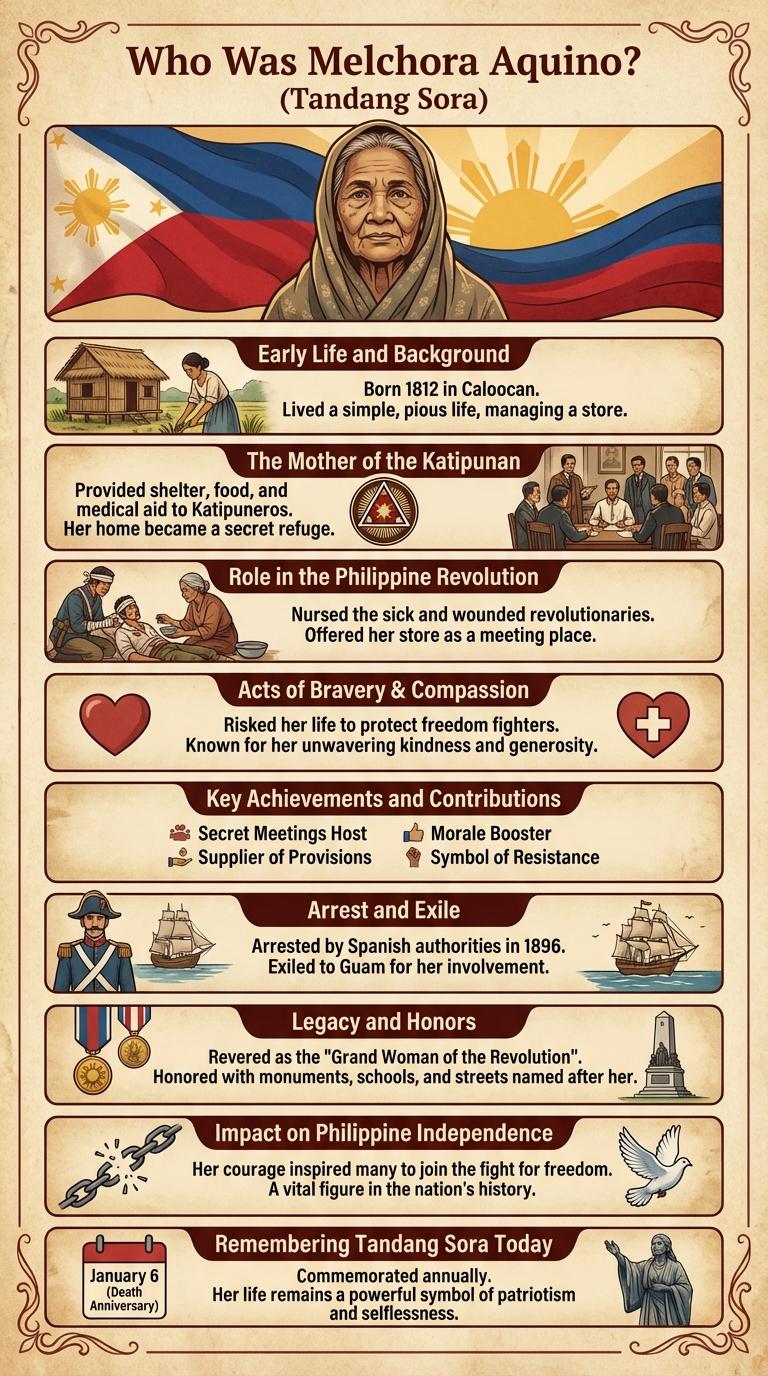
Melchora Aquino, known as the "Mother of the Philippine Revolution," played a vital role in supporting Filipino revolutionaries during the fight for independence. Her unwavering courage and compassion earned her a place of honor in Philippine history. This infographic highlights key moments and contributions that solidified her legacy as a national heroine.
Who Was Melchora Aquino?
Melchora Aquino, known as the "Mother of the Philippine Revolution," played a vital role in the fight for Philippine independence. She provided care and support to Filipino revolutionaries during the 1896 Philippine Revolution.
- Early Life - Born in 1812 in the town of Caloocan, she was a respected community leader and caregiver.
- Role in Revolution - Aquino offered food, shelter, and medical aid to Katipuneros battling Spanish colonial forces.
- Legacy - Honored as a national hero, her home became a symbol of resistance and compassion.
Melchora Aquino's dedication earned her the title "Tandang Sora," reflecting her enduring impact on Philippine history.
Early Life and Background
Melchora Aquino, also known as "Tandang Sora," was born on January 6, 1812, in Barrio Banlat, Caloocan, Philippines. She came from a modest family and was raised with strong Catholic values and a spirit of community service.
Her early life was marked by hard work as a vendor and caretaker, which shaped her resilience and empathy. These qualities later fueled her significant role during the Philippine Revolution against Spanish rule.
The Mother of the Katipunan
| Melchora Aquino: The Mother of the Katipunan | |
|---|---|
| Full Name | Melchora Aquino |
| Title | The Mother of the Katipunan |
| Birthdate | January 6, 1812 |
| Role in Philippine Revolution | Provided shelter, medical aid, and food to Katipunan revolutionaries; known for sustaining the morale of Filipino revolutionaries during the fight against Spanish colonial rule. |
| Legacy | Recognized as a key supporter and nurturer of the Katipunan; remains a symbol of maternal care and patriotism in Philippine history. |
| Death | February 19, 1919 |
Role in the Philippine Revolution
Melchora Aquino, known as the "Mother of the Philippine Revolution," played a vital role in supporting Filipino revolutionaries against Spanish colonial rule. She provided food, shelter, and medical care to wounded Katipuneros, making her a key figure in the revolution's grassroots support network.
Her home served as a refuge and meeting place for revolutionaries, strengthening the Katipunan's efforts. Aquino's bravery and compassion inspired many Filipinos, earning her lasting recognition in Philippine history.
Acts of Bravery & Compassion
Melchora Aquino, known as the "Mother of the Philippine Revolution," showed extraordinary bravery during the fight for independence from Spanish rule. She provided shelter, food, and medical aid to wounded Filipino revolutionaries despite the risk of arrest. Her compassion and courage earned her great respect and a lasting legacy in Philippine history.
Key Achievements and Contributions
Melchora Aquino, known as the "Mother of the Philippine Revolution," played a vital role in the fight for Philippine independence during the late 19th century. Her contributions as a revolutionary supporter and caregiver have left a lasting legacy in the country's history.
Her dedication symbolized courage and patriotism, inspiring future generations.
- Support for Katipunan Revolutionaries - Provided food, shelter, and medical care to Filipino revolutionaries fighting against Spanish colonial rule.
- Symbol of Filipino Patriotism - Earned the nickname "Tandang Sora" as a revered figure of resilience and national pride.
- Endurance and Sacrifice - Imprisoned and exiled by Spanish authorities for aiding the revolutionary movement, demonstrating unwavering commitment.
Arrest and Exile
Melchora Aquino, known as the "Mother of the Philippine Revolution," faced arrest due to her support for Filipino revolutionaries. Her exile marked a significant period of struggle yet unwavering patriotism.
Captured by Spanish colonial authorities, Melchora's arrest highlighted her role in aiding Katipunan members. Exiled to Guam, she continued to inspire Filipinos despite harsh conditions.
- Arrest in 1896 - Detained for providing food and shelter to revolutionaries during the Philippine Revolution.
- Health Decline - Her poor health worsened while imprisoned, reflecting the harsh treatment she endured.
- Exile to Guam - Removed by Spanish authorities in 1897 to prevent her influence among revolutionaries.
- Influence in Exile - Maintained morale of fellow exiles, symbolizing resistance and hope.
- Return to Philippines - Released after Spanish defeat; resumed role as a respected national figure.
Legacy and Honors
Melchora Aquino, known as the "Mother of the Philippine Revolution," played a crucial role in supporting Filipino revolutionaries during the fight for independence. Her unwavering dedication to the cause earned her a lasting legacy in Philippine history.
Melchora Aquino's home became a refuge for wounded Katipuneros, showcasing her compassion and bravery. She is honored with a monument in Quezon City, symbolizing her enduring impact. Her legacy continues to inspire Filipino patriots and is commemorated annually on National Women's Day.
Impact on Philippine Independence
Melchora Aquino, known as the "Mother of the Philippine Revolution," played a crucial role in supporting the Philippine struggle for independence. Her care for wounded Katipuneros and moral support inspired many revolutionaries, strengthening their resolve against Spanish colonial rule. Aquino's contributions symbolized women's vital participation in the fight for freedom, making her a lasting icon of Philippine independence.