
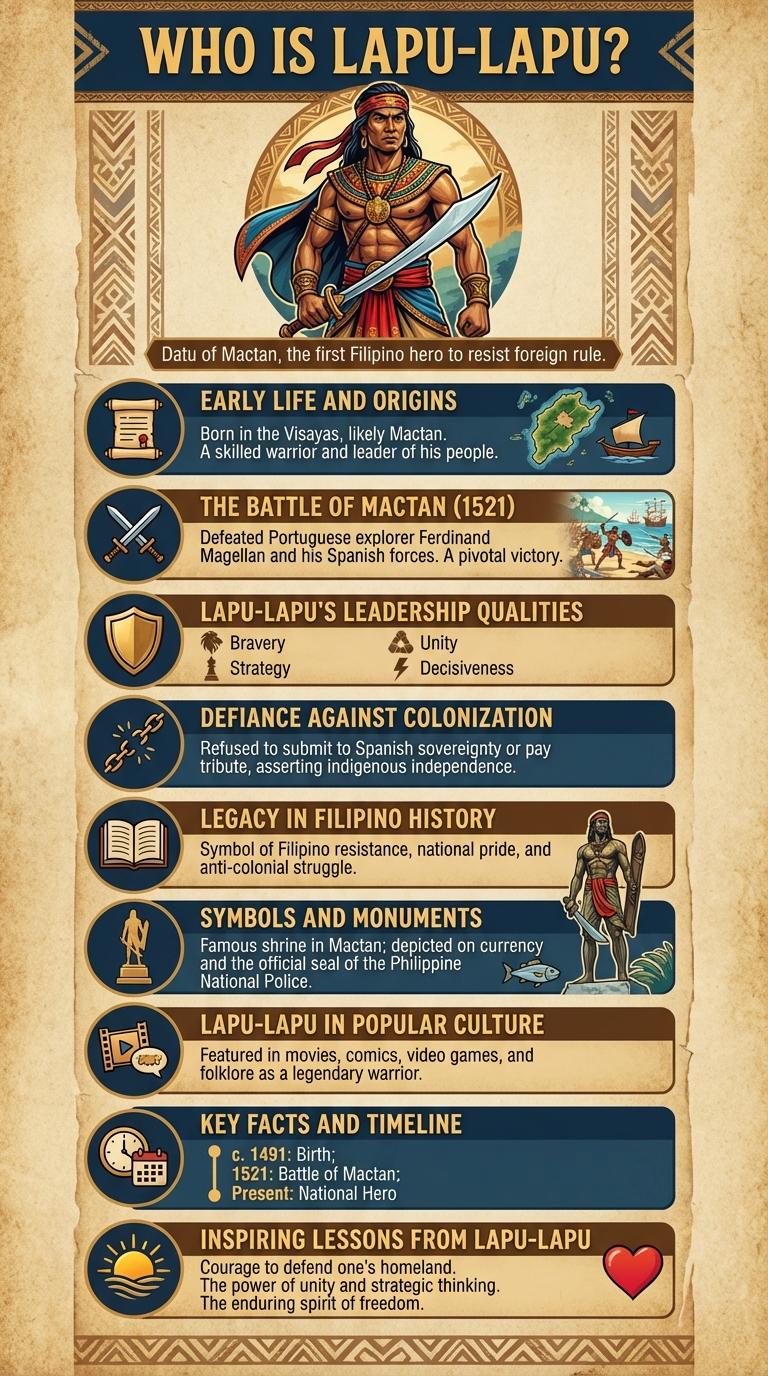
Lapu-Lapu is a historic Filipino hero renowned for his victory over Ferdinand Magellan in the Battle of Mactan, symbolizing Filipino bravery and resistance against foreign colonization. This infographic highlights key facts about his life, the significance of the battle, and his lasting legacy in Philippine history. Visual elements provide a concise understanding of his role and impact on national identity.
Who is Lapu-Lapu?
Lapu-Lapu is a Filipino hero known for resisting Spanish colonization in the 16th century. He is recognized as the first Filipino to oppose foreign invaders successfully.
- Chieftain of Mactan Island - Lapu-Lapu ruled Mactan Island, located in the Visayas region of the Philippines.
- Leader of the Battle of Mactan - He led his warriors in the 1521 Battle of Mactan against Portuguese explorer Ferdinand Magellan.
- Symbol of Filipino Resistance - Lapu-Lapu is celebrated as a symbol of courage and defiance against colonization in Filipino history.
Early Life and Origins
| Aspect | Details |
|---|---|
| Name | Lapu-Lapu |
| Birthplace | Mactan Island, Philippines |
| Ethnicity | Austronesian |
| Early Role | Datu (local chieftain) of Mactan |
| Historical Period | Early 16th century (c. 1475 - 1542) |
The Battle of Mactan
Lapu Lapu was a native chieftain of Mactan Island known for resisting Spanish colonization. The Battle of Mactan marked a significant event where he led his warriors to defeat Ferdinand Magellan's forces in 1521.
The battle symbolizes Filipino bravery and resistance against foreign conquest during the early colonial period.
- Location - The battle took place on April 27, 1521, on Mactan Island in the Philippines.
- Key Figures - Lapu Lapu led the native warriors while the Spanish forces were commanded by Portuguese explorer Ferdinand Magellan.
- Outcome - Lapu Lapu's forces successfully repelled the Spaniards, resulting in Magellan's death on the battlefield.
Lapu-Lapu's Leadership Qualities
Lapu-Lapu demonstrated exceptional courage and unwavering determination as a leader. His ability to unite his people against foreign invaders highlighted his inspiring leadership qualities.
He showed strategic thinking during the Battle of Mactan, effectively defending his territory. Lapu-Lapu's strong sense of loyalty and bravery continues to symbolize Filipino resistance and patriotism.
Defiance Against Colonization
Lapu-Lapu was a prominent Filipino chieftain known for his staunch defiance against Spanish colonization. He led the indigenous warriors in the Battle of Mactan on April 27, 1521, where they successfully resisted the forces of Portuguese explorer Ferdinand Magellan. This historic victory marked one of the earliest acts of resistance against European colonization in the Philippines.
Legacy in Filipino History
Lapu-Lapu is a pivotal figure in Filipino history, known for his resistance against foreign colonization. His legacy symbolizes Filipino bravery and nationalism.
- First Filipino Hero - Lapu-Lapu is celebrated as the first native chieftain who defended the Philippines from Spanish conquest in 1521.
- Battle of Mactan - He led his warriors to victory against Portuguese explorer Ferdinand Magellan, marking a significant event in the fight for sovereignty.
- Symbol of Resistance - Lapu-Lapu represents the enduring Filipino spirit of independence and courage against foreign domination.
Today, Lapu-Lapu's legacy is honored nationwide as an icon of Filipino identity and pride.
Symbols and Monuments
Lapu-Lapu, a Filipino hero, symbolizes bravery and resistance against colonization. His legacy is celebrated through various symbols and monuments across the Philippines.
The most iconic monument is the Lapu-Lapu Shrine in Mactan, Cebu, marking the site of the historic Battle of Mactan. Statues and images of Lapu-Lapu often depict him wielding a kampilan sword, representing strength and courage.
Lapu-Lapu in Popular Culture
Who is Lapu-Lapu in popular culture? Lapu-Lapu is celebrated as a symbol of Filipino bravery and resistance against foreign invaders. He is prominently featured in films, literature, and public monuments throughout the Philippines.
How is Lapu-Lapu represented in movies and television? Many Filipino films and TV shows depict Lapu-Lapu as a heroic warrior leader who defeated Ferdinand Magellan in the Battle of Mactan in 1521. These portrayals reinforce national pride and historical awareness.
What role do monuments and statues play in remembering Lapu-Lapu? Statues such as the Lapu-Lapu Shrine in Cebu City serve both as tourist attractions and reminders of his legacy. These landmarks inspire Filipinos to honor their heritage and valor.
Does Lapu-Lapu appear in Philippine literature? Yes, numerous books and poems recount his courage and resistance, often including his story in school curricula. His legacy serves as a source of inspiration for Filipino writers and students.
How is Lapu-Lapu commemorated in festivals? Festivals like the Kadaugan sa Mactan celebrate Lapu-Lapu's victory with reenactments and cultural presentations. These events promote community spirit and preserve historical traditions.
Key Facts and Timeline
Lapu-Lapu was a native chieftain of Mactan Island in the Philippines, known for his resistance against Spanish colonization. He is famously recognized for defeating Ferdinand Magellan in the Battle of Mactan in 1521.
Lapu-Lapu's victory marked the first successful resistance against foreign invaders in Philippine history. He is considered a national hero symbolizing bravery and sovereignty. His legacy is celebrated annually on Lapu-Lapu Day.
| Year | Event |
|---|---|
| 1521 | Battle of Mactan: Lapu-Lapu defeats Ferdinand Magellan. |
| 1961 | Declared a National Hero by the Philippines' Republic Act No. 5694. |
| 1981 | Lapu-Lapu City officially established in Cebu province. |
| 2018 | Ranking as one of the top historical figures in Philippine culture and education. |