
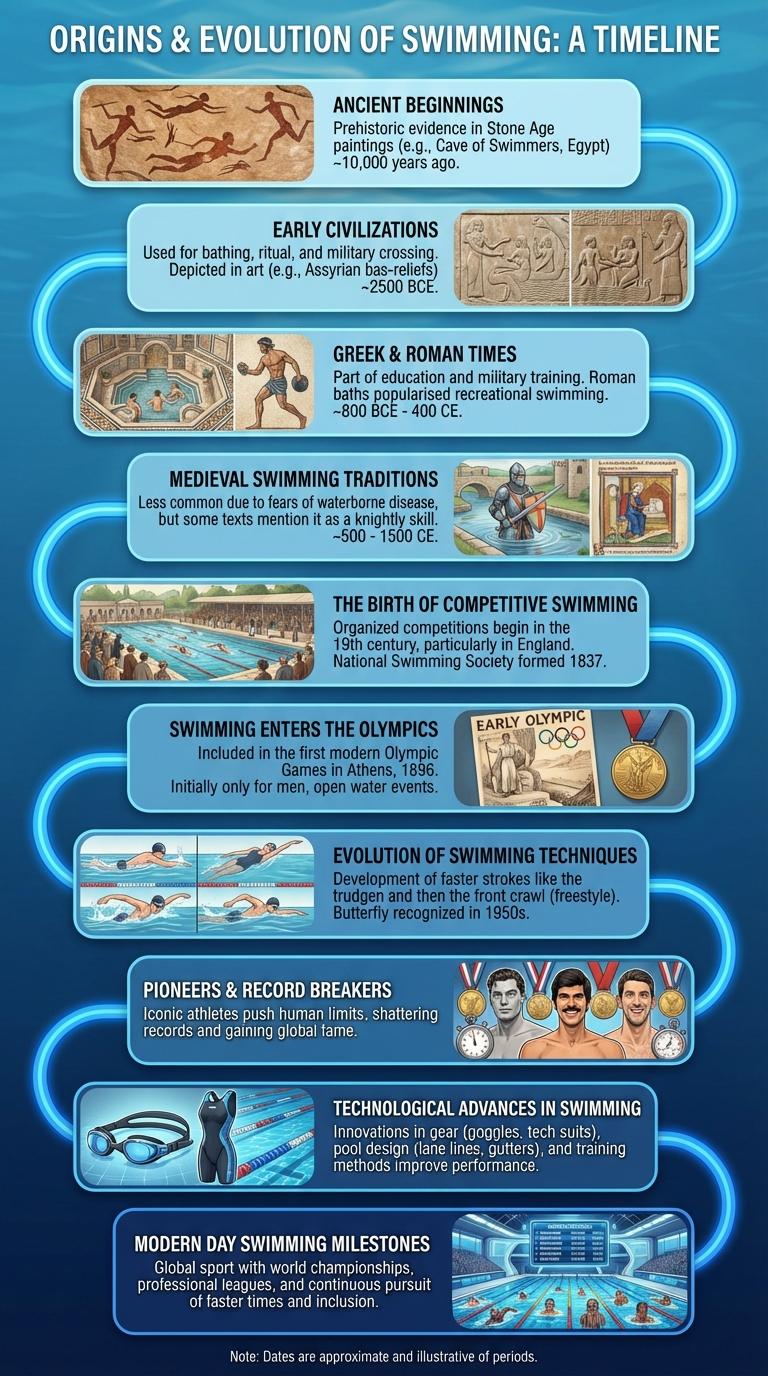
Swimming has evolved from ancient survival skill to modern competitive sport, reflecting diverse cultural influences and technological advancements. Early civilizations utilized basic swimming techniques for hunting and transportation, which gradually transformed into organized recreational and competitive activities. Today's swimming landscape is shaped by centuries of innovation, training methodologies, and global sporting events.
Origins of Swimming: Ancient Beginnings
Swimming is one of the oldest human activities, with evidence dating back over 10,000 years. Early cave paintings and artifacts suggest that prehistoric humans used swimming for survival and transportation.
The earliest records from ancient civilizations like Mesopotamia, Egypt, and Greece show organized swimming techniques and competitions. Swimming was not only a vital skill but also held cultural and military significance in ancient societies.
Swimming in Early Civilizations
Swimming has been a vital skill for humans since prehistoric times, used for survival, transportation, and recreation. Early civilizations documented swimming practices, revealing its importance across different cultures and epochs.
Ancient artifacts and writings highlight the role of swimming in daily life and military training. This historical foundation shaped modern swimming techniques and competitions.
- Ancient Cave Paintings - Some of the earliest evidence of swimming dates back over 10,000 years, found in European cave paintings.
- Mesopotamian Records - Clay tablets describe swimming lessons, hinting at organized training in early civilizations.
- Egyptian Wall Art - Tomb paintings depict people swimming in the Nile River for leisure and skill development.
- Greek and Roman Influence - Swimming was included in military exercises and public baths, emphasizing fitness and hygiene.
- Japanese Tradition - Ancient texts outline swimming methods used for fishing and ritual purposes.
Swimming in Greek and Roman Times
Swimming has been practiced since ancient times, with significant importance in Greek and Roman cultures. Greeks considered swimming a vital skill for soldiers, while Romans integrated it into their daily life and military training.
Evidence from Greek pottery and Roman mosaics illustrates various swimming techniques used during antiquity. Public baths in Rome often featured swimming pools, highlighting swimming as both a recreational and practical activity.
Medieval Swimming Traditions
Medieval swimming traditions reflected both practical skills and cultural practices across Europe. Swimming was often linked to survival, military training, and bathing rituals during this period.
- Survival Skills - Swimming taught essential water safety for crossing rivers and avoiding drowning in medieval communities.
- Military Training - Knights and soldiers practiced swimming to enhance endurance and tactical movement during warfare.
- Bathing Customs - Public bathhouses served as social hubs where swimming formed part of hygiene and relaxation routines.
The Birth of Competitive Swimming
Competitive swimming originated in the early 19th century as swimming clubs held races to showcase skill and speed. The formalization of swimming competitions led to standardized rules and the inclusion of swimming in major sporting events.
- First Recorded Competition - The earliest known swimming race took place in London in 1837, marking the start of organized swimming contests.
- Formation of Swimming Clubs - Clubs such as the Royal Life Saving Society promoted swimming safety and held races to encourage participation.
- Olympic Inclusion - Swimming became an official Olympic sport at the 1896 Athens Games, establishing international competitive standards.
These milestones laid the foundation for modern competitive swimming, emphasizing technique, training, and global competition.
Swimming Enters the Olympics
The history of swimming as a competitive sport dates back to ancient civilizations, where it served both practical and recreational purposes. Swimming officially entered the Olympic Games in 1896, marking a significant milestone in its recognition as a professional sport. The inclusion of swimming in the Olympics paved the way for the development of various swimming styles and international competitions.
Evolution of Swimming Techniques
How have swimming techniques evolved over time? Swimming techniques have developed significantly from ancient times, starting with simple dog-paddle strokes to complex competitive styles. Each era introduced new methods enhancing speed, efficiency, and endurance in the water.
| Era | Key Technique Innovations |
|---|---|
| Ancient Period | Basic strokes like dog-paddle and breaststroke, primarily for survival and transportation. |
| 19th Century | Introduction of the front crawl, inspired by Native American swimming styles, increasing speed. |
| Early 20th Century | Development of the butterfly stroke as a variation of breaststroke for competitive advantage. |
| Mid 20th Century | Refinement of flip turns and breathing techniques, improving race efficiency. |
| Modern Era | Integration of biomechanics and hydrodynamics, leading to optimized stroke mechanics and training methods. |
What factors have influenced improvements in swimming techniques? Advances in scientific understanding of human physiology and fluid dynamics played a crucial role. Innovations in swimwear and training technology further propelled the evolution of competitive swimming styles.
Pioneers and Record Breakers
Swimming has ancient origins, with evidence of early swimmers dating back to prehistoric times. Key pioneers such as Captain Matthew Webb, the first person to swim across the English Channel in 1875, set new standards in endurance swimming. Record breakers like Michael Phelps have redefined the sport, winning 23 Olympic gold medals and pushing competitive swimming to new heights.
Technological Advances in Swimming
| Technology | Impact on Swimming |
|---|---|
| Goggles (1910s) | Improved underwater visibility, reduced eye irritation, enhanced training and performance. |
| Flip Turn (1950s) | Enabled faster and more efficient wall turns, reducing lap times significantly in competitive swimming. |
| Fastskin Swimsuits (2000s) | Reduced water drag, mimicking shark skin, led to numerous world records and performance boosts. |
| Advanced Pool Design | Deep pools with overflow gutters and optimal lane widths minimized turbulence, improving race fairness and speed. |
| Underwater Video Analysis | Provided detailed stroke and technique feedback, enabling precise training adjustments and performance improvements. |