
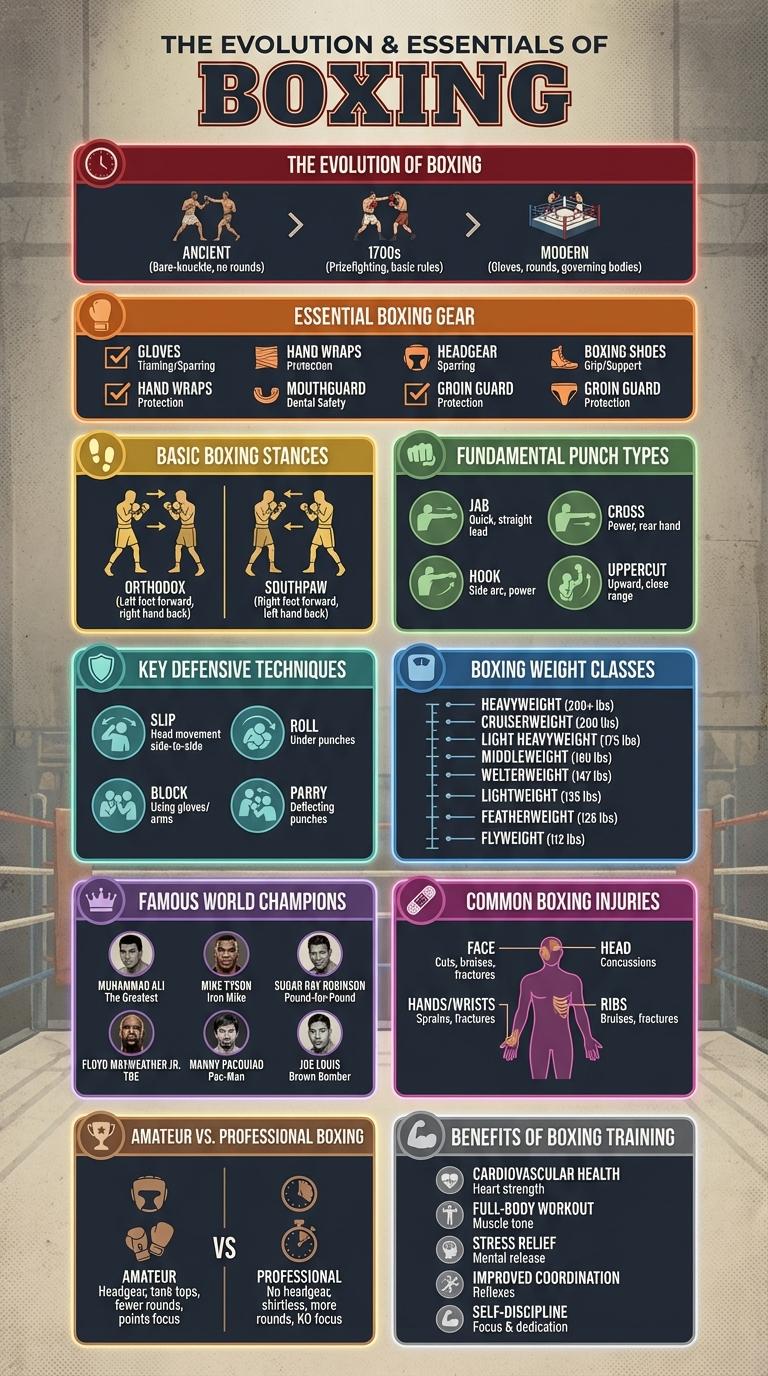
Boxing combines physical strength, agility, and strategy in a dynamic combat sport that has captivated audiences worldwide. This infographic highlights key statistics, historical milestones, and training techniques essential to understanding the sport's evolution and appeal. Visualizing the intensity and skill involved offers a comprehensive glimpse into boxing's enduring legacy.
The Evolution of Boxing
Boxing has transformed significantly from ancient bare-knuckle fighting to the modern sport governed by strict rules. Its development reflects cultural shifts and advances in safety and technique.
- Ancient Beginnings - Boxing originated in Ancient Greece as a brutal, unregulated combat sport during the Olympic Games.
- Introduction of Gloves - The 18th century saw the adoption of gloves, leading to more strategic and safer matches.
- Modern Rules - The Marquess of Queensberry Rules in 1867 standardized rounds, weight classes, and fouls, shaping contemporary boxing.
Today, boxing continues to evolve with international competitions and advancements in training and safety regulations.
Essential Boxing Gear
Boxing requires essential gear to ensure safety and enhance performance. Proper equipment protects fighters and allows them to train effectively.
Key items include boxing gloves, hand wraps, mouthguards, headgear, and boxing shoes. Each piece plays a crucial role in preventing injuries during a match or training session.
Basic Boxing Stances
| Boxing Stance | Key Features |
|---|---|
| Orthodox Stance | Left foot forward, right foot back, weight balanced; used by right-handed boxers |
| Southpaw Stance | Right foot forward, left foot back, weight balanced; preferred by left-handed boxers |
| Peek-a-Boo Stance | Hands held high close to the face, elbows in; emphasizes defense with fast counter punches |
| Philly Shell (Shoulder Roll) | Lead shoulder raised, back hand ready to counter; effective for blocking and slipping punches |
| Square Stance | Feet parallel and equally spaced; improves power but reduces mobility compared to traditional stances |
Fundamental Punch Types
Boxing relies on several fundamental punch types that form the foundation of a fighter's arsenal. Mastering these punches is crucial for both offense and defense in the ring.
The jab, cross, hook, and uppercut are the primary punches every boxer must learn. Each punch serves a unique purpose and varies in execution and impact.
Key Defensive Techniques
What are the essential defensive techniques in boxing? Mastering key defensive skills is crucial to avoid punches and maintain control in the ring. Effective defense enhances a boxer's ability to counterattack and sustain endurance.
| Technique | Description |
| Slip | Quickly moving the head to the side to avoid a punch without losing balance. |
| Parry | Using the hand to deflect or redirect an incoming punch away from the target. |
| Bob and Weave | Lowering the body and moving in a U-shaped pattern to evade punches and stay in close range. |
| Block | Using the gloves or forearms to absorb and stop the impact of an opponent's strike. |
| Footwork | Moving the feet strategically to maintain distance, angle, and balance during defense. |
Boxing Weight Classes
Boxing features various weight classes to ensure fair and competitive matches. These classes help match fighters of similar size and strength, promoting safety and skill-based outcomes.
Weight classes range from the lightest, Minimumweight, to the heaviest, Heavyweight, each with specific weight limits. Common divisions include Flyweight, Lightweight, Welterweight, Middleweight, and Cruiserweight. The classification system varies slightly among professional organizations but maintains core standards globally.
Famous World Champions
Boxing has produced some of the most iconic and legendary athletes in sports history. World champions in boxing are celebrated for their skill, determination, and impact on the sport globally.
- Muhammad Ali - Known as "The Greatest," Ali was a three-time world heavyweight champion and a cultural icon.
- Mike Tyson - The youngest heavyweight champion in history, Tyson dominated the sport with his aggressive style.
- Floyd Mayweather Jr. - Undefeated in his professional career, Mayweather won multiple world titles across five weight classes.
- Sugar Ray Robinson - Often regarded as the best pound-for-pound boxer ever, Robinson excelled in both middleweight and welterweight divisions.
- Manny Pacquiao - The only eight-division world champion, Pacquiao's speed and power earned him global fame.
Common Boxing Injuries
Boxing frequently results in injuries such as cuts, bruises, and fractures due to the intense physical contact involved in the sport. Common injuries include broken noses, hand fractures, and concussions, which highlight the need for proper protective gear. Understanding these injuries helps fighters and coaches prioritize safety measures and effective treatment strategies.
Amateur vs. Professional Boxing
Boxing is a combat sport with two main divisions: amateur and professional, each with distinct rules and objectives. Understanding the differences helps fans appreciate the skills and dedication required in both arenas.
- Match Duration - Amateur bouts typically last 3 rounds of 3 minutes each, while professional fights can extend up to 12 rounds.
- Protective Gear - Amateur boxers wear headgear and larger gloves to reduce injury risk, unlike professionals who compete without head protection.
- Scoring System - Amateur boxing emphasizes point scoring for clean hits, whereas professional boxing focuses on overall damage and ring control.