
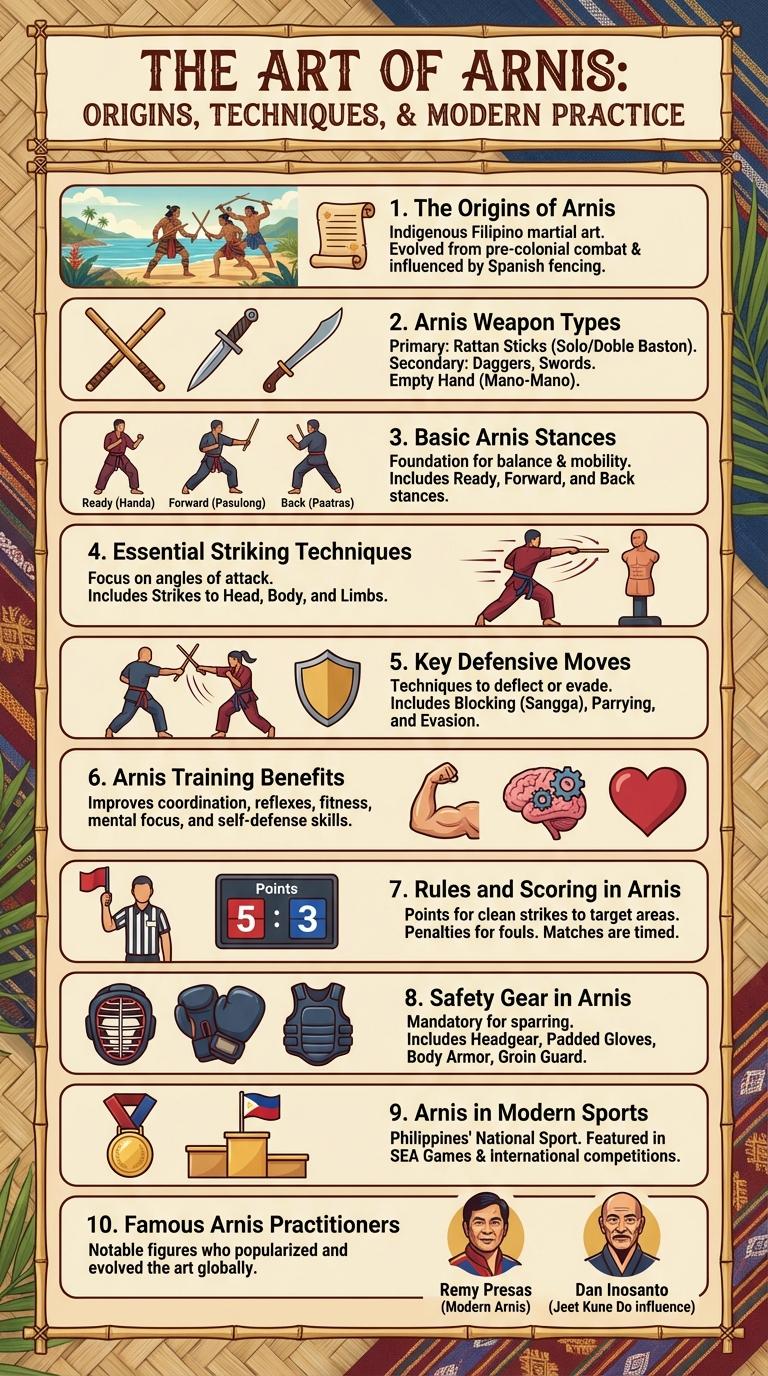
Arnis, a traditional Filipino martial art, emphasizes weapon-based fighting with sticks, knives, and other bladed weapons, as well as empty-hand techniques. This infographic highlights its history, key techniques, and the cultural significance it holds in the Philippines. Visual aids showcase training methods and the evolution of this dynamic and practical combat style.
The Origins of Arnis
Arnis is a traditional Filipino martial art that originated from ancient fighting styles used by indigenous tribes in the Philippines. It emphasizes weapon-based combat, primarily using sticks, knives, and other bladed weapons.
The art evolved through centuries of resistance against foreign invaders and colonization, blending indigenous techniques with influences from Spanish and other Asian martial arts. Arnis is recognized as the national martial art and sport of the Philippines, preserving cultural heritage and promoting self-defense skills.
Arnis Weapon Types
Arnis is a Filipino martial art emphasizing weapon-based fighting techniques. Its diverse weapon types are central to its training and practice.
- Baston - Rattan sticks typically used in pairs for strikes, blocks, and disarm techniques.
- Daga - Bladed weapons like knives or short swords used for close combat and edged strikes.
- Espada y Daga - The combination of a sword and dagger for offensive and defensive maneuvers.
- Improvised Weapons - Everyday objects such as pens or umbrellas adapted for Arnis techniques.
- Empty Hands - Training without weapons focusing on hand-to-hand combat and weapon disarming.
Mastering various Arnis weapons builds versatility and effectiveness in self-defense.
Basic Arnis Stances
Arnis, a traditional Filipino martial art, emphasizes fluid movement and precise stances to enhance combat effectiveness. Mastering basic stances is essential for balance, power, and defense.
- Ready Stance - The practitioner stands with feet shoulder-width apart, knees slightly bent, and hands positioned for quick response.
- Defensive Stance - One foot is placed forward with the body angled, protecting vital areas while preparing to block or counterattack.
- Offensive Stance - Weight shifts forward with a strong grip on the weapon, enabling swift, powerful strikes.
Essential Striking Techniques
Arnis is a Filipino martial art emphasizing weapon-based fighting with sticks, knives, and improvised weapons. It integrates fluid striking techniques designed for both offense and defense.
- Single Stick Strike - A direct, powerful strike aimed to incapacitate an opponent quickly using one stick.
- Double Stick Drill - Uses two sticks simultaneously to attack and defend, enhancing coordination and speed.
- Disarming Techniques - Methods to neutralize an opponent's weapon by controlling or redirecting their strikes.
Key Defensive Moves
Arnis, a traditional Filipino martial art, emphasizes fluid and precise defensive techniques to counter attacks effectively. Mastering key defensive moves is essential for protecting oneself while maintaining control during combat.
Basic blocks such as the "Inside Parry" and "Outside Parry" redirect incoming strikes, minimizing impact. The "Deflect and Counter" technique allows practitioners to neutralize an opponent's attack and quickly respond with a counterstrike.
Arnis Training Benefits
| Benefit | Description |
|---|---|
| Improved Coordination | Arnis develops hand-eye coordination through precise weapon handling and striking techniques. |
| Physical Fitness | Enhanced strength, endurance, and flexibility result from consistent Arnis training routines. |
| Self-Defense Skills | Practical techniques for real-life situations improve confidence and personal safety. |
| Mental Discipline | Focus, concentration, and strategic thinking are cultivated through complex drill patterns. |
| Cultural Awareness | Training instills appreciation of Filipino martial arts heritage and traditions. |
Rules and Scoring in Arnis
Arnis competitions follow strict rules to ensure safety and fairness, including the use of protective gear like helmets, gloves, and body pads. Matches are scored based on the precision and effectiveness of strikes, blocks, and disarms, with points awarded for clean hits on designated target areas. Penalties are given for illegal moves, excessive force, or unsportsmanlike behavior, influencing the final score and outcome of the match.
Safety Gear in Arnis
Arnis, a Filipino martial art, emphasizes the importance of safety gear to protect practitioners during training and sparring. Proper equipment minimizes the risk of injuries while allowing full engagement in the dynamic techniques of Arnis.
Essential safety gear includes padded gloves, helmets with face shields, and forearm guards to shield against strikes. Practitioners often wear mouthguards to protect teeth and avoid concussions from accidental hits. Using quality gear ensures a safer learning environment and promotes confidence in skill development.
Arnis in Modern Sports
What role does Arnis play in modern sports today?
Arnis, the traditional Filipino martial art, has evolved into a competitive sport recognized globally. Modern sporting events showcase its techniques, emphasizing skill, speed, and strategy.
| Aspect | Details |
|---|---|
| Sporting Recognition | Included in the Southeast Asian (SEA) Games since 2019 |
| Competition Categories | Forms (solo demonstrations) and sparring (full-contact matches) |
| Governing Body | World Arnis Federation (WAF) promotes standardized rules |
| Global Reach | Practiced competitively across Asia, Europe, and the Americas |
| Equipment | Use of rattan sticks and protective gear for safety in matches |